

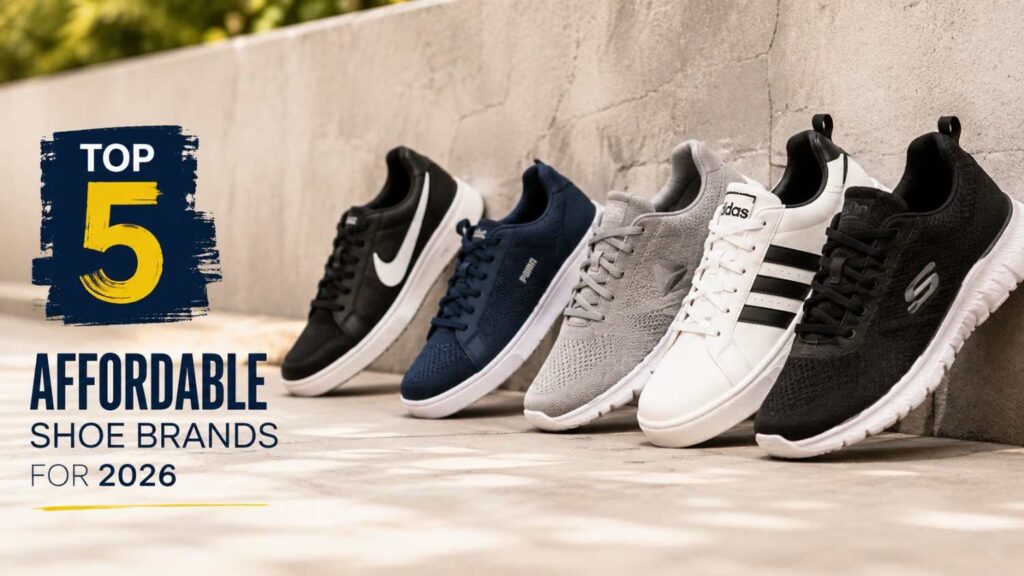
Top 5 Affordable Shoe Brands for 2026
Buying affordable shoes in 2026 does not have to mean settling for uncomfortable footwear or choosing an unknown product simply because it has the lowest price. Many established brands still offer recognizable everyday models at accessible price points, particularly in casual, walking, court-inspired, and canvas sneaker categories. The challenge is identifying which brand gives you the right combination of price, fit, comfort, style, durability, and practical use rather than focusing on cost alone.
That distinction matters because even budget-friendly shoe brands can have very different product ranges. One company may sell a simple lifestyle sneaker for well under $100 while also offering technical running shoes, collaborations, premium materials, or special editions at considerably higher prices. PUMA’s current U.S. range, for example, includes the $90 Suede Classic alongside more expensive footwear, which illustrates why it is more accurate to compare individual product lines than to label an entire brand as universally “cheap.”
In this expanded guide, I compare Skechers, PUMA, Reebok, Vans, and Converse based on the type of value each can offer. The goal is not to claim that these are objectively the five cheapest shoe companies in every country. Instead, the guide focuses on mainstream brands with accessible everyday options and clear use cases. Whether you need affordable walking shoes, retro sneakers, casual canvas footwear, or versatile everyday shoes, the sections below will help you narrow your choice more intelligently.
How We Selected the Best Affordable Shoe Brands
Choosing the best affordable shoes requires a broader evaluation than sorting products from lowest to highest price. A pair that saves money at checkout but causes discomfort, does not match your activity, or remains unworn is not necessarily a good-value purchase. For this comparison, I looked at whether each brand currently offers recognizable everyday footwear at an accessible price point, whether the range covers useful real-world needs, and whether shoppers can verify product details through an official brand website rather than depending on third-party marketplace descriptions.
The second consideration was category relevance. Walking shoes, retro court sneakers, canvas lifestyle shoes, training footwear, and running shoes are designed around different priorities. It would be misleading to compare a lightweight casual sneaker directly with a specialist performance shoe without explaining those differences. That is why each brand in this guide receives a clear “best for” use case. Skechers emphasizes walking-focused products, PUMA covers sport-influenced lifestyle footwear, Reebok has a strong classic court identity, while Vans and Converse remain particularly recognizable in casual canvas and heritage sneaker categories.
Finally, I considered accessibility rather than temporary sale pricing alone. Discounts can create excellent buying opportunities, but a one-week promotion should not be the main reason a brand is considered affordable. Regular or original prices provide a more useful comparison. The result is an editorial value ranking designed to help beginners shop more confidently while still giving experienced buyers enough detail to compare construction, fit, product positioning, and intended use.
| Brand | Representative Model | Regular Price* | Best For | Shoe Type | Key Value Point |
|---|---|---|---|---|---|
| Skechers | GO WALK 8 – Day | $85 | Walking & commuting | Walking shoe | Cushioning-focused everyday comfort |
| PUMA | Suede Classic | $90 | Sporty casual style | Lifestyle sneaker | Retro sports styling at an accessible price |
| Reebok | Club C 85 | $85 | Retro everyday wear | Court-style sneaker | Minimalist leather design |
| Vans | Authentic | $60 | Casual & skate-inspired style | Canvas sneaker | Simple construction and classic styling |
| Converse | Chuck Taylor All Star | $60 | Classic casual wear | Canvas sneaker | Timeless design and broad casual versatility |
What Counts as Affordable in This Guide?
For this article, a representative everyday model around $100 or less serves as a practical U.S. affordability benchmark. This is not a universal definition of inexpensive footwear, and it should not be interpreted as a claim that every model from the five brands falls below that threshold. Regional pricing, taxes, exchange rates, promotions, premium materials, collaborations, and specialized performance technologies can all change what a particular pair costs.
Current official listings illustrate the benchmark clearly. PUMA’s Suede Classic is listed at $90, Vans’ Authentic collection includes standard $60 versions, and Converse lists its classic Chuck Taylor All Star Canvas low top at $60. Skechers’ GO WALK 8 – Day currently shows an original price of $85 before a reduced selling price on the product page. Reebok’s official navigation also includes a dedicated “Shoes Under $100” category, showing that value-focused shopping remains part of its current assortment.
The important point is to compare specific products, not stereotypes about brands. A company can sell both accessible lifestyle sneakers and expensive performance footwear. When shopping, check the regular price, current selling price, product category, materials, and intended activity. That gives you a more realistic picture of value than simply deciding that one logo is automatically “budget” and another is automatically “premium.”
Why Fit and Intended Use Matter More Than Brand Name
A well-known shoe brand cannot compensate for poor fit. Two models carrying the same numerical size may feel noticeably different because their shape, width, upper construction, cushioning, and toe box are not identical. The American Academy of Orthopaedic Surgeons advises consumers to focus on how shoes actually fit rather than relying exclusively on the size marked inside them. Shoes that are too tight, too loose, or insufficiently supportive can create unnecessary stress on the feet and lower limbs.
Intended use is just as important. A canvas lifestyle sneaker can be excellent for casual outfits but may not provide the same structure, cushioning, or activity-specific design as a walking, running, or cross-training shoe. AAOS also distinguishes between different types of athletic footwear, noting that shoes are designed around different movement patterns and activities.
For that reason, I recommend choosing the purpose before the brand. Decide whether your priority is long walks, commuting, casual daily wear, gym use, running, or fashion. Then compare the brands and models that genuinely serve that use. This approach reduces the chance of buying an affordable shoe that appears attractive but performs poorly for what you actually need.
Related Articles
1. Skechers – Best for Affordable Walking Comfort
Skechers earns the first position in this guide because its current product range gives walking and everyday-comfort shoppers a large number of practical choices. Rather than relying on one iconic lifestyle sneaker, the company organizes substantial parts of its footwear lineup around walking, easy-on designs, cushioning, arch-support concepts, and daily-use comfort. Its GO WALK family is specifically marketed for walking and casual use, making Skechers especially relevant for commuters, travelers, people who spend long periods standing, and consumers who simply value comfort more than sneaker-fashion prestige.
The company’s Spring 2026 walking guide highlights several different use cases within the range. GO WALK 8 is positioned for fitness and power walking, Ultra Flex 3.0 is presented for casual walking and travel, and Arch Fit Arcade is described for city walking and casual office use. The men’s GO WALK 8 – Day is positioned for commuting, longer walks, and active weekends. That variety is valuable because “comfortable shoe” can mean different things depending on how much you walk and where you wear it.
Skechers is not automatically the best choice for every activity, particularly if your priority is technical running performance, a minimalist court sneaker, or traditional skate styling. However, among the Top 5 Affordable Shoe Brands for 2026, it offers one of the clearest combinations of mainstream accessibility and walking-specific choices. Shoppers can compare standard, wide, slip-in, cushioned, and support-oriented options instead of being limited to a single construction.
Why Skechers Offers Strong Everyday Value
The value of Skechers’ walking range comes from combining accessible mainstream pricing with features designed around comfort and convenience. The current GO WALK 8 – Day product page lists an original price of $85 and describes an Air-Cooled Goga Mat insole, ULTRA GO midsole cushioning, Ultra Pillars underfoot, a knit upper, and a dual-density traction outsole. The product is also listed in medium and extra-wide widths on the current page.
Those features do not automatically make the shoe right for every foot, but they demonstrate that “affordable” does not have to mean featureless. Skechers also offers models with Hands Free Slip-ins construction and different Arch Fit options, allowing shoppers to prioritize easier entry, cushioning, or added support depending on the model.
From a value perspective, this flexibility matters. A consumer who wants one shoe for commuting, errands, travel, and frequent walking may find more practical use in a comfort-focused pair than in a fashion sneaker purchased for occasional outfits. The more frequently a shoe fits your routine, the easier it becomes to justify the purchase—even if another model has a slightly lower initial price.
Who Should Choose Skechers?
Skechers is most suitable for shoppers whose first priorities are walking comfort, everyday convenience, commuting, travel, or spending extended periods on their feet. People who dislike bending down to adjust conventional laces may also find the brand’s Hands Free Slip-ins models worth investigating, while shoppers who frequently struggle with standard-width footwear can explore the width options available on selected Skechers products.
The brand is also practical for buyers who want choices across several comfort levels rather than one fixed sneaker formula. Some models emphasize lightweight cushioning, others include Arch Fit systems, and certain designs combine casual styling with walking-oriented components. That makes Skechers easier to shop by need instead of purely by appearance.
I would start with Skechers if you regularly walk for transportation, spend much of the day moving, or want comfortable affordable shoes for errands and travel. I would look elsewhere first if your main priority is classic canvas aesthetics, retro tennis styling, or fashion-led sneaker collecting. The strongest buying decision comes from matching the brand’s strengths to your routine rather than assuming first place means universally best.
2. PUMA – Best for Sporty Style at a Reasonable Price
PUMA takes a different approach to affordability because its range spans both lifestyle footwear and serious athletic categories. The company sells sneakers influenced by football, motorsport, court culture, running, training, and broader sportswear trends. As a result, shoppers can find approachable casual models within the same brand that also produces more technically focused shoes at higher price points. This breadth makes PUMA especially useful for consumers who want a recognizable athletic identity without necessarily buying a dedicated performance shoe.
The Suede collection is a strong example of how the brand balances heritage style and mainstream pricing. PUMA’s official U.S. store currently lists several Suede Classic colorways at $90, along with Suede XL versions at the same price. The collection also contains more expensive variations using different materials or design concepts, reinforcing the importance of shopping by model instead of assuming that every shoe within a familiar franchise costs the same.
Among affordable sneakers, PUMA works particularly well for people who want footwear to look sporty without appearing like a modern technical running shoe. The Suede’s lower profile and retro visual language fit easily with jeans, relaxed trousers, shorts, and casual streetwear. At the same time, shoppers who need actual running or training shoes should move into those dedicated categories rather than buying a lifestyle sneaker simply because it comes from an athletic company.
PUMA Suede Classic as the Value Benchmark
The PUMA Suede Classic provides a useful benchmark because it represents a long-established lifestyle silhouette at a current official U.S. price of $90. PUMA’s Suede collection page lists the model in numerous color combinations, including black, navy, and other seasonal options. The same page also makes clear that premium or special versions can cost more, with some variations listed above the Classic’s price.
This makes the Suede Classic relevant for shoppers seeking a recognizable sneaker without paying for a highly technical performance platform. Its value comes largely from styling versatility: the shoe sits comfortably between athletic heritage and everyday casual fashion, making it easier to wear across different outfits than a heavily specialized sports shoe.
However, buyers should keep the product’s lifestyle positioning in mind. A retro sneaker may look athletic because of its brand history, but that does not mean it should automatically replace a modern running shoe for repeated high-impact exercise. If your main activity is walking, running, or gym training, compare PUMA’s purpose-built categories before deciding. The Suede Classic is strongest as an affordable style choice rather than a universal performance solution.
Who Should Choose PUMA?
PUMA is particularly well suited to shoppers who prefer sporty fashion, retro sneakers, lower-profile silhouettes, and casual footwear that still carries a recognizable athletic identity. If you want shoes that work with jeans, cargo trousers, shorts, relaxed tailoring, or streetwear-inspired outfits, a lifestyle model such as the Suede Classic can offer more visual flexibility than a highly technical running shoe.
The brand also makes sense for consumers who like having several categories available under one label. You can shop lifestyle sneakers for everyday wear while separately exploring training, running, or other performance footwear when your activity requires it. PUMA’s official site currently presents both lifestyle and sport-focused collections, emphasizing this broad positioning.
I would choose PUMA over Vans or Converse if you want more obvious sportswear influence, and over Skechers if styling matters more than walking-specific comfort technology. However, do not assume every PUMA model is inexpensive. Compare the particular collection, regular price, fit, materials, and activity before purchasing. The brand’s value is strongest in selected lifestyle ranges rather than across every shoe it produces.
3. Reebok – Best for Affordable Retro Sneakers
Reebok remains a useful choice for shoppers who appreciate retro athletic design but want something cleaner and more understated than many contemporary performance sneakers. The brand’s current official store separates footwear into classics, running, walking, gym and training, basketball, wide shoes, and other categories. It also maintains a “Shoes Under $100” shopping path in its navigation, which makes it relatively straightforward for budget-conscious shoppers to filter the range around a predetermined spending limit.
The Club C family is especially relevant because it embodies the minimalist court-sneaker look that remains easy to wear with a wide variety of casual outfits. Reebok describes the Club C 85 as tennis-inspired footwear from its archives and emphasizes its leather construction, clean styling, classic logos, and court influence. This gives it a different personality from a canvas sneaker such as the Vans Authentic or Converse Chuck Taylor.
Comparing these classic models with broader cheap sneaker options can also help put price, design, and everyday value into perspective.
For shoppers researching the Top 5 Affordable Shoe Brands for 2026, Reebok is therefore most compelling when classic leather sneakers are the priority. The brand also offers performance and collaboration products, so prices can vary considerably across the catalog. Rather than treating all Reebok footwear as budget footwear, I recommend beginning with the core Classics section and using the under-$100 filter if price is the main constraint.
Why the Club C 85 Is a Strong Budget Pick
The Reebok Club C 85 stands out because its design is intentionally uncomplicated. Reebok’s official product page describes it as a tennis-inspired shoe from the brand’s archives, with a supple leather upper, minimalist styling, classic Reebok logos, and an ’80s court influence. Those characteristics help it occupy a useful middle ground between athletic heritage and simple everyday fashion.
That simplicity is valuable because it gives the shoe broad wardrobe compatibility. A clean leather court sneaker can work with jeans, chinos, casual trousers, skirts, and other everyday clothing without making the rest of the outfit feel overly athletic. For buyers who prefer classic footwear, versatility may matter more than dramatic cushioning or trend-driven design.
Reebok also makes budget navigation easier by explicitly including “Shoes Under $100” among its current shopping categories. That does not guarantee every Club C configuration or collaboration will fall below that figure, but it gives price-sensitive shoppers a direct way to explore qualifying footwear. When affordability is the priority, start with standard Club C and Classics models before exploring premium collaborations or limited releases.
Who Should Choose Reebok?
Reebok is best for buyers who want retro court style, relatively understated branding, leather-based casual sneakers, and a design that can move between sporty and everyday outfits. The Club C family is especially suitable for people who find canvas shoes too casual but do not want the visual complexity of modern performance footwear.
The brand is also a sensible choice for shoppers who appreciate heritage athletic design but want an easy starting point for comparison. Reebok’s official categories clearly separate classics from running, walking, basketball, and training shoes, helping consumers distinguish lifestyle choices from activity-specific footwear.
I would consider Reebok before Vans or Converse if you specifically want a leather court sneaker, and before PUMA if you prefer a cleaner tennis-inspired silhouette rather than suede sportswear styling. If your main need is extended walking, however, I would still compare dedicated walking shoes first. Reebok is strongest here as a versatile retro-lifestyle option, not as the automatic winner for every foot or every activity.
4. Vans – Best for Simple Casual and Skate-Inspired Shoes
Vans remains one of the clearest choices for shoppers who want uncomplicated casual shoes with deep skate and streetwear associations. Its current footwear catalog is anchored by recognizable silhouettes such as the Authentic, Old Skool, Slip-On, and Sk8-Hi, while the brand also sells skate-specific, Premium, all-weather, and other specialized models. That combination gives buyers access to simple heritage shoes without limiting the company to one narrow use case.
The Authentic is particularly useful for an affordability comparison because it represents the brand in a straightforward form. Vans currently lists Authentic models at $60, and its dedicated Authentic collection describes the shoe as a low-profile canvas design with the company’s rubber waffle outsole. The collection traces the silhouette back to its original Style 44 identity and positions it as a long-running part of both skate and casual culture.
For value-focused shoppers, Vans makes the most sense when style simplicity matters more than maximum cushioning. A traditional canvas sneaker can be easy to wear, easy to understand, and relatively accessible in price, but it is not built around the same priorities as a walking shoe with extensive cushioning technology. Buyers should therefore decide whether they need everyday casual footwear or extended walking support before choosing the Authentic simply because its price is attractive.
Why the Vans Authentic Stands Out
The Vans Authentic stands out because very little about the design is complicated. Vans’ official Authentic collection currently lists standard versions at $60 and describes the model with sturdy canvas uppers and the brand’s rubber waffle outsole. The company also identifies the Authentic as the original Vans silhouette, first known as Style 44 and associated with the brand’s history since 1966.
For shoppers, that simplicity creates several advantages. The low-profile shape is easy to style, the canvas construction keeps the visual appearance casual, and the wide variety of colors makes it possible to select a subtle neutral or a more expressive design without changing the basic silhouette.
The important limitation is that standard Authentic models should be evaluated as casual or skate-influenced footwear rather than assumed to deliver the same underfoot experience as a dedicated walking shoe. Vans also offers more specialized Skate and Premium constructions with added features, and those variants may cost more. If you mainly want a classic, affordable casual shoe, the standard Authentic remains the clearest value reference.
Who Should Choose Vans?
Vans is ideal for people who prefer skate-inspired style, low-profile casual footwear, straightforward canvas uppers, and recognizable streetwear aesthetics. The Authentic can work particularly well with denim, casual trousers, shorts, and relaxed everyday outfits because its simple shape does not dominate the rest of the clothing.
It may also appeal to shoppers who dislike heavily cushioned or bulky-looking sneakers. Vans describes the Authentic as a versatile design with a grippy waffle outsole and longstanding skate associations, while its modern catalog includes separate Skate versions for consumers who need more skate-specific construction.
I would choose standard Vans primarily for casual wear and style rather than as my first recommendation for long-distance walking. If you expect to spend many hours walking every day, compare the feel directly with a walking-oriented shoe. If your main need is an affordable sneaker for school, casual work environments, social outings, or everyday outfits, however, the Authentic’s $60 current list price makes it one of the most approachable regular-price examples in this guide.
5. Converse – Best for Classic Canvas Sneakers
Converse earns its place because the Chuck Taylor All Star continues to offer one of the most recognizable casual sneaker designs at a comparatively accessible regular price. The current official U.S. store lists the standard Chuck Taylor All Star Canvas low top at $60 and the classic high top at $65. Both retain the familiar canvas construction and vulcanized-rubber aesthetic associated with the line, while the low-top page also notes OrthoLite cushioning and a diamond-pattern rubber outsole.
The appeal of Converse is less about technical performance and more about visual consistency. Many shoe trends change quickly, but the Chuck Taylor silhouette is deliberately simple and recognizable. That makes it easy to combine with denim, shorts, skirts, dresses, casual trousers, and creative streetwear without needing to build an outfit around the shoe.
Converse also sells numerous variations beyond the basic All Star, including leather, platform, custom, seasonal, and premium constructions. Some are discounted, while others carry higher regular prices. Therefore, anyone shopping specifically for budget sneakers should begin with the standard Canvas All Star rather than assuming every Chuck variation costs the same. For shoppers who value timeless casual styling, the basic model remains the clearest point of comparison.
Why Chuck Taylor All Stars Remain Affordable
The standard Chuck Taylor All Star Canvas low top currently lists for $60 on Converse’s U.S. website, while the traditional high top is listed at $65. Those prices place the core models toward the lower end of this guide and make them particularly relevant for shoppers who want recognizable everyday sneakers without moving immediately into premium-price territory.
Converse also keeps the basic construction easy to understand. The current low-top product page lists a canvas upper, OrthoLite underfoot cushioning, a diamond-pattern rubber outsole, and the familiar All Star branding. Standard versions are available in multiple colors, and selected classic models are also offered in wide widths.
As with Vans, the value proposition depends on expectations. Chuck Taylors are lifestyle shoes rather than substitutes for every type of athletic footwear. If your main goal is intensive walking, running, or sport, compare purpose-built shoes. If your priority is simple casual style at an accessible price, the regular Canvas All Star remains one of the easiest products in this comparison to understand and budget for.
Who Should Choose Converse?
Converse is best suited to shoppers who want an instantly recognizable canvas sneaker with a straightforward casual identity. The Chuck Taylor works particularly well for people who prefer simple footwear that can adapt to different personal styles rather than a sneaker that strongly signals one current trend.
The brand can also be useful for buyers who want a choice between low-top and high-top versions while staying close to the same design language. Current official listings show the low top at $60 and the high top at $65, and Converse indicates wide-width availability on selected classic styles.
I would choose Converse over Vans if you specifically prefer the Chuck Taylor shape, ankle-patch heritage, or high-top option. I would choose Vans if skate-inspired design and the waffle outsole are more appealing. Neither choice should be made purely on logo recognition. Try the shoes when possible, check the brand’s fit guidance, and decide whether the shape works for your feet. Style may bring you to the product page, but actual comfort determines whether the shoes become part of your regular wardrobe.
How to Choose Affordable Shoes Without Sacrificing Value
The smartest way to buy affordable footwear is to think beyond the checkout price. A $60 shoe that works with many outfits and gets worn several times a week may deliver excellent practical value. A cheaper pair that causes discomfort or only matches one outfit can become a poor purchase even if the initial cost looked attractive. Budget shopping works best when price, fit, function, construction, and expected frequency of wear are considered together rather than independently.
The first question should always be what you need the shoes to do. A commuter who walks several miles a day has very different requirements from someone who wants a simple sneaker for occasional casual wear. Skechers’ current GO WALK range is explicitly organized around walking use cases, while Vans and Converse emphasize classic lifestyle silhouettes. PUMA and Reebok cover both lifestyle and athletic categories, meaning buyers need to pay attention to the specific product family rather than the brand name alone.
For shoppers who also consider environmental impact alongside price and comfort, this guide to sustainable footwear provides useful context on materials, durability, and more responsible shoe choices.
The second question is whether the shoe actually fits. AAOS guidance emphasizes proper fit and notes that footwear that is too tight or too loose can create problems. Finally, compare regular prices and premium variants so that a temporary discount does not distort your understanding of normal value. The three steps below provide a simple framework.
| Buying Priority | Recommended Brand | Suitable Footwear | Main Advantage | What to Check Before Buying |
|---|---|---|---|---|
| Walking & commuting | Skechers | Walking shoes | Cushioning and walking-focused designs | Fit, width, cushioning, daily walking needs |
| Sporty casual style | PUMA | Lifestyle sneakers | Athletic-inspired styling | Model category and intended use |
| Retro everyday style | Reebok | Court-style sneakers | Classic leather-based designs | Upper material, fit, intended activity |
| Simple casual wear | Vans | Canvas sneakers | Lightweight classic styling | Cushioning and walking requirements |
| Classic wardrobe versatility | Converse | Canvas sneakers | Recognizable timeless design | Width, toe-box space, daily comfort |
| Fixed budget | Vans / Converse | Standard classic models | Around $60 in the cited examples | Regular price vs. premium versions |
| More walking support | Skechers | Walking-focused models | Purpose-oriented walking lineup | Individual fit and foot width |
| Casual fashion first | Vans / Converse | Lifestyle sneakers | Simple, recognizable designs | Comfort if worn for long periods |
Step 1 – Match the Shoe to Your Main Activity
Begin by identifying the activity that will account for most of the shoe’s use. If you walk frequently for commuting, errands, travel, or exercise, start with models designed for walking rather than choosing a flat lifestyle sneaker purely because it looks good. Skechers’ current walking guide, for example, separates products according to fitness walking, casual walking, commuting, travel, and support-related needs.
If your goal is casual everyday wear, a PUMA Suede Classic, Reebok Club C, Vans Authentic, or Converse Chuck Taylor may make more sense because their value lies largely in styling versatility and recognizable lifestyle design.
For running, training, or sport, move into the brand’s dedicated performance section. Athletic brands create different footwear for different movement patterns, and AAOS likewise distinguishes running, trail, cross-training, and other athletic shoe types. Matching the product to the activity prevents a low price from becoming an expensive mistake.
Step 2 – Check Fit Instead of Trusting the Size Label
Shoe size should be treated as a starting point, not a guarantee. Different brands and models can vary in shape, width, toe-room, heel hold, and upper structure, so a size that works perfectly in one sneaker may feel too narrow or too loose in another. AAOS recommends selecting shoes according to actual fit rather than relying entirely on the number printed inside.
When possible, try both shoes and walk in them before deciding. Pay attention to whether your toes have room, whether the heel slips, whether the sides feel compressed, and whether the shoe bends or rubs in uncomfortable places. People who routinely experience tightness should also investigate true wide-width options rather than automatically increasing length.
This is one reason width availability can matter in an affordability guide. Selected Skechers GO WALK products offer alternative widths, while Converse also lists wide-width versions of some Chuck Taylor classics. A shoe that fits correctly at full price may provide better value than a discounted pair that never becomes comfortable.
Step 3 – Compare Regular Prices, Sales, and Premium Versions
Sales can create excellent opportunities, but they should be evaluated against the product’s normal price. A dramatically discounted shoe may look like the best bargain in the market even though its regular price sits well above your normal budget. Conversely, a classic model with a stable accessible price may provide more predictable value without requiring you to wait for a promotion.
Current examples show why the distinction matters. Skechers’ GO WALK 8 – Day product page displays an original price of $85 and a lower current selling price, while Vans’ sale section shows Authentic styles discounted from an initial $60. Temporary offers can improve value, but the original price gives a better indication of the product’s normal positioning.
Premium and collaborative versions also complicate comparisons. Vans, Converse, PUMA, and Reebok all sell variations that can differ significantly from their standard classics in materials, design, construction, or price. When shopping on a budget, compare the basic model first and treat upgrades as optional rather than essential.
Quick Answer About Top 5 Affordable Shoe Brands for 2026
The Top 5 Affordable Shoe Brands for 2026 in this editorial guide are Skechers, PUMA, Reebok, Vans, and Converse. Each brand serves a slightly different type of buyer, which is important because “affordable” should mean more than simply choosing the lowest sticker price. Skechers is particularly relevant for walking-focused comfort, PUMA combines sporty styling with accessible lifestyle models, Reebok remains strong for retro court sneakers, while Vans and Converse offer straightforward casual classics at comparatively approachable prices.
Current official U.S. listings provide useful reference points. PUMA lists the Suede Classic at $90, Vans lists the Authentic at $60, and Converse lists the standard Chuck Taylor All Star Canvas low top at $60. Skechers’ GO WALK 8 – Day has an $85 original price on its current product page, although promotions can reduce the selling price. These figures are snapshots rather than permanent guarantees because prices, promotions, inventory, sizes, and regional availability can change.
My recommendation is to treat these brands as starting points rather than assuming one company is best for everyone. Choose your main activity first, decide whether you need walking comfort, casual versatility, a leather court sneaker, or a simple canvas shoe, and then compare the specific models. Fit, width, cushioning, materials, durability, and how frequently you expect to wear the shoes matter more than brand recognition alone.
Frequently Asked Questions About Top 5 Affordable Shoe Brands for 2026
Questions about affordable footwear usually come down to three concerns: whether a low price can still provide reasonable quality, which brand fits a specific activity, and how much consumers should expect to spend. These questions do not have one universal answer because individual foot shape, activity level, style preference, local pricing, and fit can all change which shoe represents the best value for a particular person.
The most useful approach is to separate brand reputation from model-specific performance. Skechers, PUMA, Reebok, Vans, and Converse each have accessible options, but they do not all solve the same problem. Skechers is particularly strong in walking-oriented products, PUMA and Reebok bridge sports heritage with lifestyle footwear, while Vans and Converse are especially recognizable for classic casual sneakers. Current official U.S. listings also show several core models around or below the $100 level.
The answers below address the most common practical questions around the Top 5 Affordable Shoe Brands for 2026. They are intended as buying guidance rather than medical or individualized footwear advice. Anyone with persistent foot pain, a diagnosed condition, or specialized orthopaedic needs should follow advice from an appropriate healthcare professional rather than relying on a general shopping guide.
What are the best affordable shoe brands?
Skechers, PUMA, Reebok, Vans, and Converse are strong mainstream options for shoppers who want accessible everyday footwear, although each brand serves a different type of buyer. Skechers is especially relevant for walking comfort, PUMA for sport-influenced lifestyle sneakers, Reebok for retro court shoes, and Vans and Converse for classic casual footwear.
Official U.S. listings show several useful value references. The PUMA Suede Classic is currently $90, standard Vans Authentic models are $60, and the Converse Chuck Taylor All Star Canvas low top is $60. Skechers’ GO WALK 8 – Day displays an original price of $85.
The “best” brand ultimately depends on your main activity and fit. Do not choose solely from this ranking. Compare specific models, widths, materials, cushioning, regular prices, and intended use. An affordable shoe provides the most value when you can wear it comfortably and frequently.
Which affordable shoe brand is best for walking?
Among the brands in this article, Skechers is the clearest walking-focused recommendation because the company maintains a dedicated GO WALK line and current 2026 walking guidance organized around activities such as fitness walking, commuting, travel, casual walking, and all-day use.
The GO WALK 8 – Day, for example, includes ULTRA GO cushioning, an Air-Cooled Goga Mat insole, and Ultra Pillars underfoot according to Skechers’ current product page. The same model is offered in more than one width on the page, which can be useful for shoppers who need additional room.
However, no general article can determine the best walking shoe for an individual foot. Fit remains essential. Try the shoe, check width and toe space, and consider how far you normally walk. If you have pain or specific medical needs, seek appropriate professional advice rather than assuming a popular walking model will automatically solve the problem.
Can I buy good shoes for under $100?
Yes. Several well-known brands currently sell mainstream lifestyle or walking models below $100 on their official U.S. websites. Examples include the $60 Vans Authentic, $60 Converse Chuck Taylor All Star low top, $90 PUMA Suede Classic, and Skechers GO WALK 8 – Day with an $85 original price. Reebok also provides an official “Shoes Under $100” shopping category.
The important word is good, because value depends on intended use. A $60 canvas sneaker may be an excellent casual shoe but a poor substitute for technical running footwear. Likewise, a walking shoe should be evaluated for fit and comfort rather than appearance alone.
When comparing shoes under $100, prioritize fit, materials, outsole construction, cushioning where relevant, return policies, and how often you expect to wear them. Buying one suitable pair is usually smarter than buying several discounted pairs that do not match your needs.
Are cheap shoes worth buying?
Cheap shoes can absolutely be worth buying when the lower price comes from a simple design, mainstream materials, an established classic model, or a genuine promotion rather than from poor fit or unsuitable construction. The key is to judge the product rather than assuming that price alone determines quality.
A Vans Authentic or Converse Chuck Taylor, for example, uses a relatively straightforward canvas-based lifestyle construction and currently lists around $60 in standard versions. That lower price does not mean the shoe is intended to compete with a specialized running shoe; it serves a different purpose.
Before buying any inexpensive shoe, ask three questions: Does it fit comfortably? Is it appropriate for the activity? Will I wear it often? If the answer to all three is yes, an affordable pair can provide strong value. If the shoe is uncomfortable or inappropriate for your main activity, even a large discount may not make it a worthwhile purchase.
Are Vans or Converse more affordable?
At the time of this research, the basic versions are extremely close in price. Vans’ official U.S. Authentic collection lists standard Authentic shoes at $60, while Converse lists the standard Chuck Taylor All Star Canvas low top at $60. Converse’s classic high top is listed at $65.
That means price alone may not be enough to choose between the two brands. Vans offers the low-profile Authentic with its characteristic waffle outsole and skate heritage, while Converse offers the familiar Chuck Taylor silhouette in both low- and high-top forms. Fit and styling preference are therefore likely to matter more than a small price difference.
Also compare the exact version you intend to buy. Premium Vans constructions, customized products, Chuck 70 models, platforms, collaborations, and seasonal releases can all cost differently from the basic classics. Use the standard models as the affordability benchmark and treat special versions as separate products.
Should I buy shoes one size bigger for more width?
Buying a longer shoe purely to gain extra width is usually not the best first solution. A shoe that is too long can allow excessive movement, while a narrow shoe can still create pressure even when the length is increased. AAOS emphasizes choosing footwear based on actual fit and notes that shoes that are too tight or too loose can contribute to discomfort and foot problems.
A better approach is to look for the correct width or a model built on a roomier shape. Selected Skechers models provide alternative width choices, and Converse offers wide versions of certain Chuck Taylor classics.
If possible, try shoes later in the day, walk in both shoes, and pay attention to pressure around the forefoot, toe room, heel movement, and overall comfort. People with persistent pain, deformities, diabetes-related foot concerns, or other medical conditions should seek professional footwear or medical guidance rather than solving fit problems only through size changes.
Conclusion
The Top 5 Affordable Shoe Brands for 2026 demonstrate that value can take several different forms. Skechers is particularly strong for walking-oriented comfort and practical everyday use. PUMA gives shoppers sport-inspired lifestyle footwear with accessible options such as the Suede Classic. Reebok remains a strong choice for clean retro court styling, while Vans and Converse provide straightforward casual classics that currently begin around the $60 level for representative standard models.
No single brand, however, should be treated as the automatic winner for every shopper. The best affordable shoes are the ones that suit your activity, fit correctly, work with your wardrobe, and are worn often enough to justify the purchase. Someone who walks extensively may receive more value from a supportive walking shoe, while another person may prefer a simple canvas sneaker for casual daily wear. Price is only one part of that decision.
My final recommendation is to choose the category first, compare specific models second, and look for sales only after you know what you actually need. Check regular prices, width options, materials, cushioning, outsole design, return policies, and intended activity. When those factors align with your budget, affordable footwear can provide excellent everyday value without requiring you to chase the absolute lowest price.
