

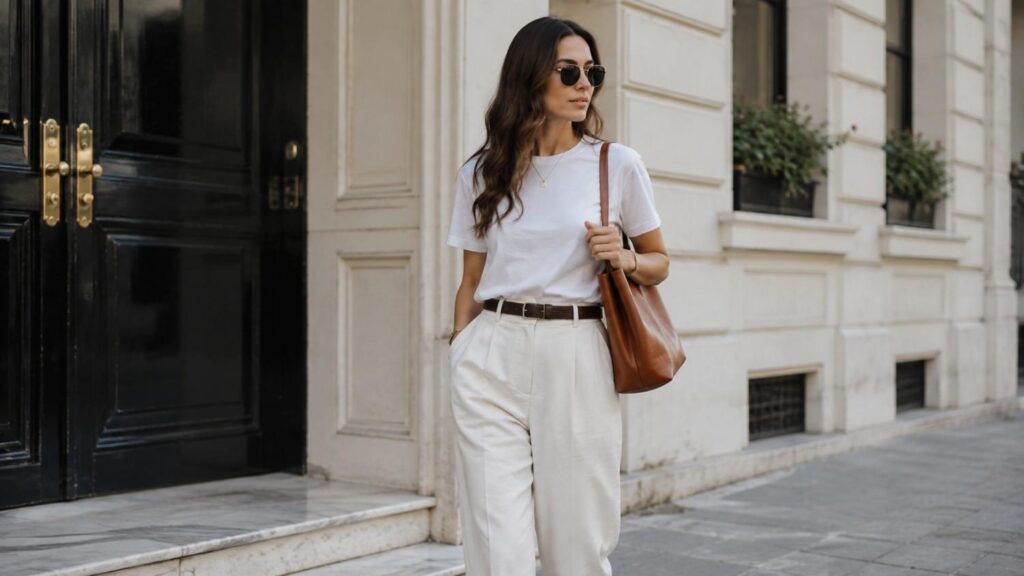
How to Style Basic Pieces for a Chic Look: An Effortless Wardrobe Guide
Learning how to style basic pieces for a chic look can make a familiar wardrobe feel dramatically more useful. Instead of assuming that style requires a constant flow of new clothing, you learn how to change the impact of what you already own through fit, proportion, color, layering, texture, footwear, and accessories.
The first principle is that basics should not be treated as background pieces that require something dramatic to become interesting. A strong basic can carry an outfit when the silhouette is intentional.
Take straight-leg denim as an example. With a tucked tee and ballet flats, the look feels simple and light. Add an oversized blazer and loafers, and it becomes more structured. Replace the blazer with a cardigan and leather belt, and the same jeans shift toward a softer everyday style.
The second principle is editing. When an outfit contains basic pieces, the temptation can be to keep adding accessories or layers because the combination feels “too simple.” Often, the opposite response is stronger. Improving the tuck, changing the shoe, or removing one competing element may create more impact.
The third principle is consistency. If the shoes are polished but the shirt is badly wrinkled, or the jacket is structured while the trousers pool awkwardly at the floor, the visual message becomes less clear.
One thing I always check first is the overall silhouette from a few steps away. Before worrying about jewelry or trends, determine whether the lengths, volumes, and proportions work together.
That single habit can improve basic dressing more than buying another statement piece.
Start With Well-Chosen Wardrobe Basics
The strongest basics are not necessarily the pieces that appear on every “must-have wardrobe” checklist. They are the items that repeatedly solve dressing problems in your actual life.
Someone working in a formal office may genuinely need several tailored trousers and button-down shirts. Someone working remotely may receive more value from high-quality knitwear, jeans, casual trousers, and comfortable footwear. Climate also matters. A heavy wool coat can be a classic piece and still be irrelevant in a warm region.
his emphasis on versatile classic wardrobe staples also aligns with broader fashion guidance that prioritizes pieces capable of working across different outfits and occasions.
Start by observing what you already wear frequently. Which pieces work across several combinations? Which clothes repeatedly stay unworn because they require something very specific to make them function?
Current wardrobe guides commonly highlight white shirts, tees, straight or relaxed denim, tailored trousers, crewneck knits, simple dresses, blazers, trenches, loafers, ballet flats, and versatile sneakers. Their usefulness comes from the fact that they can move between different styling contexts.
A basic should ideally participate in several outfit formulas. Tailored black trousers, for instance, can work with a tee and sneakers, knitwear and loafers, a button-down and flats, or a blazer and elegant shoes.
| Basic Piece | Casual Styling | Chic Upgrade |
|---|---|---|
| White T-shirt | Jeans + sneakers | Trousers + belt + loafers |
| Button-down shirt | Denim + flats | Tailored pants + structured bag |
| Straight jeans | Tee + trainers | Blazer + slingbacks or loafers |
| Black trousers | Knit + sneakers | Crisp shirt + elegant flats |
| Simple cardigan | Tee + denim | Tonal trousers + jewelry |
| Blazer | Tee + jeans | Monochrome base + polished shoes |
The more combinations one piece supports, the easier it becomes to create chic everyday outfits without increasing wardrobe size.
Prioritize Fit Before Trends
Fit should be evaluated before trends because proportion determines how a garment interacts with the body and the rest of the outfit.
This does not mean that every piece needs to follow traditional tailored standards. Oversized blazers, relaxed shirts, wide-leg trousers, and loose denim can all look deliberate. The key difference is whether the volume appears purposeful.
Start with the shoulders on structured tops and jackets. If the garment is intentionally oversized, the drop should feel consistent with the design. If it is meant to fit conventionally, excessive pulling or collapsing can make the piece look wrong regardless of price.Next, examine lengths. Trouser hems influence the relationship between clothing and footwear. Sleeve length affects whether a blazer feels clean or sloppy. A shirt ending at an awkward point can disrupt the balance of an otherwise good outfit.
Tailoring can be useful for pieces you genuinely wear. Hemming trousers, adjusting a waistband, or shortening sleeves may create more value than replacing the item.Fit also includes comfort. Clothes that require constant pulling, adjusting, or checking rarely create an effortless impression.
Choose shapes that allow you to move naturally while maintaining the silhouette you want. When basics fit in a way that feels intentional, styling becomes significantly easier because the foundation is already visually coherent.
| Wardrobe Basic | Best Styling Pairings | Polished Detail | Overall Style Effect |
|---|---|---|---|
| White T-shirt | Tailored trousers, straight-leg jeans, blazer | Leather belt or structured bag | Clean and effortless |
| Button-down shirt | Denim, tailored pants, midi skirt | Loafers or simple jewelry | Refined and versatile |
| Straight-leg jeans | Blazer, fitted knit, crisp shirt | Belt and polished footwear | Casual but elevated |
| Tailored trousers | T-shirt, knitwear, button-down | Loafers or ballet flats | Sophisticated and balanced |
| Simple cardigan | Tonal trousers, denim, fitted tee | Delicate jewelry | Soft and polished |
| Blazer | T-shirt, shirt, jeans, trousers | Structured handbag | Instantly more refined |
Build a Useful Neutral Foundation
Neutral colors are useful because they reduce the number of decisions required to create a coordinated outfit. Black, white, cream, navy, grey, camel, brown, olive, denim blue, and similar shades tend to combine easily with one another and with brighter colors.However, a neutral foundation should not become a rule that eliminates personality.
Think of neutrals as connectors. A cream trouser can support a black knit, red cardigan, blue shirt, brown blazer, or patterned coat. A white tee can work beneath almost any jacket. Dark denim can connect casual and polished elements.Tonal dressing is another effective technique. Instead of wearing identical shades, combine several related tones: ivory with cream and camel, charcoal with light grey, navy with washed blue, or chocolate with warm tan.
Texture prevents these combinations from appearing flat. A soft knit beside structured wool, smooth cotton beside denim, or leather accessories against matte fabric adds depth even when the palette is restrained.
If you love strong color, use it confidently. A wardrobe can still be versatile when the recurring foundation includes colors that genuinely suit your preferences.The important point is coordination, not beige.
A useful palette allows multiple garments to communicate with one another. When the colors repeat and relate across the wardrobe, creating polished combinations becomes faster because fewer pieces feel isolated.
Maintain the Pieces You Already Own
Garment condition plays a larger role in polished dressing than many people realize, particularly when the outfit is simple.
A minimalist combination exposes details. If the white tee has a stretched neckline, the knit is covered in pills, or the shoes are heavily scuffed, there is no statement print or complex layering to distract from those issues.
Begin with routine maintenance. Follow the care instructions provided with the garment, since washing and drying methods vary by fabric and construction. Steam or iron wrinkled pieces when appropriate. Remove pilling carefully from knitwear. Replace missing buttons and repair hems before damage becomes worse.
Footwear deserves equal attention. Cleaning leather, suede, fabric, or synthetic shoes according to the manufacturer’s instructions can improve an outfit immediately. Worn-down soles or badly damaged heels may also affect how refined the entire look feels.
Storage influences longevity. Heavy knitwear can stretch when hung incorrectly, while jackets may benefit from supportive hangers that preserve the shoulders.
Review your wardrobe periodically and separate three questions: Does this piece need replacing? Does it need repairing? Or does it simply need cleaning and better styling?
That distinction can reduce unnecessary shopping.
Maintaining basics also creates a practical advantage: when your core pieces are clean, pressed, and ready to wear, getting dressed requires less effort. A chic wardrobe functions best when the pieces you rely on are consistently available in good condition.
Related Articles
How to Style Basic Pieces for a Chic Look Step by Step
A repeatable styling process removes much of the uncertainty from getting dressed. Instead of evaluating your entire wardrobe at once, begin with one anchor piece and build around it.
The anchor can be anything reliable: straight-leg jeans, black trousers, a white shirt, a simple knit, or a plain dress. Once that element is selected, look at the outfit as a composition rather than a collection of garments.
First ask what kind of silhouette you want. Relaxed? Tailored? Long and fluid? Cropped and structured? This decision helps you choose the second piece more intelligently.
A similar approach to simple chic styling focuses on refining everyday pieces through thoughtful combinations rather than relying on complicated outfits.
Next, create either harmony or contrast. A fitted knit with wide trousers creates contrast in volume. A relaxed shirt with straight denim creates a more uniform silhouette. Neither approach is inherently better.
Then consider color. You can create cohesion through tonal dressing, classic combinations, or one accent shade.
The next layer is texture or structure. A blazer over a tee adds structure. Knitwear softens tailored trousers. A leather belt creates definition between two simple pieces.
Finish with shoes and accessories only after the foundation works.
A useful formula is:
- Select the anchor basic.
- Decide the silhouette.
- Balance volumes and lengths.
- Coordinate the color palette.
- Add texture, structure, or contrast.
- Choose footwear.
- Add only the accessories that improve the result.
- Remove anything that makes the outfit feel unnecessarily busy.
Following the same order repeatedly makes wardrobe styling faster because you are solving one visual question at a time.
Balance Your Outfit Proportions
Proportion describes the visual relationship between lengths, widths, and volumes within an outfit. It is one of the most important styling tools because changing proportion can completely alter the effect of basic clothing.
Consider wide-leg trousers. With an equally oversized shirt left loose, the outfit becomes intentionally voluminous. With a fitted top or tucked shirt, the trousers become the dominant shape and the waist gains definition.Neither formula is universally correct.
Instead of following rigid rules, decide where you want the visual emphasis to sit. If the upper half is dramatic, you may want the lower half to provide contrast. If you prefer relaxed silhouettes, you can keep volume throughout but introduce structure through footwear, a belt, or a jacket.Small adjustments matter. Rolling sleeves exposes the wrist and changes the visual weight of a shirt. Opening the top buttons changes the neckline. A full tuck emphasizes the waist, while a partial tuck creates less definition.
Look at the outfit from several feet away. The overall outline often reveals more than close inspection.
Ask whether one area appears disproportionately heavy, whether the garment lengths divide the body awkwardly, or whether the footwear visually supports the trouser shape.Once proportions feel deliberate, even extremely simple combinations gain sophistication because the silhouette itself provides the interest.
Use Layering, Texture, and Color Strategically
Layering is most effective when each added piece changes the outfit in a meaningful way.
A blazer over a T-shirt introduces structure. A button-down beneath a sweater creates a crisp collar and hem. A fine cardigan over a tank adds softness and creates a more complex neckline.Avoid layering solely to add more clothing. If the extra piece does not improve proportion, warmth, texture, color, or function, it may simply make the outfit feel crowded.
Texture is equally useful. Smooth cotton, crisp poplin, denim, wool, leather, suede, silk-like fabrics, and textured knitwear reflect light differently. Combining them gives basic outfits visual depth even when the colors remain restrained.For example, black trousers and a black knit can feel flat if the materials are extremely similar. Add a leather belt and textured coat, and the monochromatic outfit becomes much richer.
Color should also have a clear role. Tonal dressing creates continuity. Complementary neutrals create calm contrast. One brighter accent can provide focus.If you are uncertain, use the “one dominant idea” principle. Let either color, texture, or silhouette lead the outfit rather than asking every element to compete.
A strong green cardigan over a white tee and straight denim may already have enough visual interest. It may need only understated accessories.Strategic styling means understanding when to add—and when the outfit is already complete.
| Styling Element | Simple Approach | Elevated Approach | Visual Result |
|---|---|---|---|
| Fit | Standard-size basic | Tailored or intentionally relaxed fit | Cleaner silhouette |
| Proportion | Similar volumes throughout | Contrast between fitted and relaxed pieces | Better outfit balance |
| Color | Multiple unrelated shades | Neutral or coordinated color palette | More cohesive look |
| Layering | Random extra pieces | Purposeful layers with different lengths | Added dimension |
| Texture | Similar fabrics | Mix cotton, denim, knitwear, leather or suede | More visual interest |
| Footwear | Basic everyday shoes | Shoes that complement the outfit’s structure | More polished finish |
| Accessories | Several unrelated pieces | One or two coordinated details | Intentional appearance |
Finish the Look With Shoes and Accessories
Shoes and accessories influence the interpretation of an outfit because they communicate formality, structure, and personality very quickly.Take jeans and a plain shirt. With running-style sneakers and a tote, the combination reads casually. Replace those pieces with loafers and a structured bag, and the outfit immediately becomes more polished. Add sleek ankle boots, and it moves in another direction again.
Choose footwear after checking the trouser or skirt length. The shoe should work visually with the hem rather than being treated as an isolated accessory.Belts are useful for more than holding trousers in place. They can define the waist, create contrast, or visually connect shoes and bags. A simple leather belt can make a tucked tee and trousers feel significantly more intentional.
Jewelry works best when it supports the neckline and mood. Small hoops, a pendant, a watch, or a few rings can be enough. More expressive jewelry can also work if it is meant to become the focal point.Handbags add structure and texture. A structured bag can sharpen knitwear and denim, while a softer bag can relax tailoring.
Do not measure chicness by accessory quantity.Before leaving, remove one item if the look feels visually crowded. Often, the polished version of an outfit is the edited version.
Quick Answer About How to Style Basic Pieces for a Chic Look
The simplest way to understand how to style basic pieces for a chic look is to focus on presentation rather than complexity. Begin with clean, versatile clothes such as a T-shirt, button-down shirt, straight-leg jeans, tailored trousers, cardigan, blazer, or simple dress. Then consider how the pieces relate to one another.
Fit comes first. A basic garment that sits correctly and falls cleanly usually looks more intentional than a trendier item with distracting fit problems. Next, check proportions. Pairing volume with definition, adjusting a tuck, rolling sleeves, or changing the visible length of a top can completely alter the silhouette.
Color is the next layer. Neutral combinations are easy to coordinate, while tonal dressing can make simple clothing feel sophisticated. You can also keep most of the outfit understated and introduce one accent color.
Finally, use footwear and accessories as finishing tools rather than decorations added automatically. Loafers, streamlined sneakers, flats, a structured bag, a leather belt, or simple jewelry can change the mood of a familiar outfit.
Current wardrobe guides continue to highlight classic shirts, tees, jeans, trousers, blazers, trenches, and refined footwear because their value comes from versatility rather than novelty. A chic outfit does not need many elements. It needs a clear visual idea, balanced proportions, and details that feel deliberate.
What makes a basic outfit look chic?
A basic outfit looks chic when the individual choices appear connected. The shirt, trousers, shoes, colors, and accessories should feel as though they belong to the same visual idea rather than being selected independently.
Start with the silhouette. If you wear relaxed trousers, consider whether the top should be tucked, fitted, cropped, or partially defined at the waist. If the top is oversized, check whether the lower half needs a cleaner line or whether a structured jacket could give the outfit shape.
Then evaluate condition. Wrinkles, stretched collars, pilling, damaged footwear, and poorly maintained accessories can weaken an otherwise strong combination. Basic clothing draws more attention to these details because there are fewer statement elements to distract from them.
Color coordination also matters. A black top with charcoal trousers, cream knit with beige pants, or white shirt with dark denim creates a clear relationship between pieces.Finally, introduce one purposeful finishing element. A belt can define proportion, loafers can sharpen denim, and jewelry can add visual interest near the face.
The goal is not perfection. Chic styling is largely the art of editing. When every element supports the same silhouette, color story, and mood, even simple clothes can look highly considered.
Do you need expensive clothes to look polished?
You do not need expensive clothes to create a polished wardrobe. Price can affect fabric quality, construction, and longevity, but it does not automatically create good proportion, thoughtful coordination, or personal style.An affordable cotton T-shirt that fits correctly and is well maintained can look excellent with trousers, a clean belt, and well-kept shoes. A designer shirt can still look awkward if the proportions do not suit the outfit or if it is badly wrinkled.
I recommend judging wardrobe spending according to use, fit, and longevity rather than label prestige. Pieces worn frequently may justify more investment if higher construction quality makes them more comfortable or durable. However, alteration, care, and styling can often extend the usefulness of less expensive clothes.Current capsule-wardrobe coverage regularly mixes price levels, which reinforces the idea that versatility is more important than a single luxury threshold.
Before upgrading a basic because it looks “cheap,” identify what actually bothers you. Is the fabric too sheer? Is the neckline stretched? Is the length wrong? Does the color no longer coordinate with your wardrobe? Can a tailor improve it?Specific problems can be solved more intelligently than simply spending more.Polish comes from consistent choices: fit, care, restraint, coordination, and appropriate finishing details.
FAQ Section
Frequently asked questions about basic styling usually focus on situations where the clothes themselves feel “too ordinary.” Jeans, T-shirts, sneakers, neutral trousers, button-down shirts, and simple knitwear are easy to wear, but their familiarity can make people assume that another purchase is required before the outfit becomes interesting.
In most cases, styling provides more opportunities than shopping.Start by identifying exactly what feels unfinished. If the silhouette lacks shape, adjust the tuck or add a belt. If the colors feel disconnected, repeat one shade elsewhere. If the outfit feels too casual, change the footwear or add a structured outer layer. If everything looks flat, introduce texture.
This diagnostic approach is useful because it turns “I don’t like this outfit” into a specific styling problem.
The FAQ section below focuses on the most common practical situations: elevating jeans and a tee, looking polished without shopping, selecting colors, choosing accessories, wearing sneakers, and identifying genuinely useful wardrobe basics.There are no universal answers because personal style, climate, dress code, body proportions, and lifestyle differ. The goal is therefore not to prescribe one uniform “chic wardrobe.”
Instead, each answer provides a principle you can adapt.The broader rule is consistent: simple outfits become more refined when fit, proportion, condition, coordination, and finishing choices support one another.
Frequently Asked Questions About How to Style Basic Pieces for a Chic Look
People researching how to style basic pieces for a chic look often assume they need a completely different wardrobe. In practice, many of the strongest improvements come from learning how to reuse familiar items differently.The first question to ask is whether the problem belongs to the garment or the styling. A shirt that pulls badly at the shoulders may genuinely need replacing or altering. A perfectly good shirt that simply feels boring may need a different tuck, trouser shape, sleeve treatment, layer, or accessory.
The second issue is occasion. “Chic” does not have to mean formal. A polished airport outfit, weekend outfit, office outfit, and dinner outfit can all use basics while requiring different footwear, fabrics, and proportions.The third issue is personal preference. Minimalist fashion is often associated with black, white, beige, tailoring, and restrained jewelry, but those elements are not mandatory. Someone who loves strong color can use the same principles with cobalt, red, green, or print.The questions below focus on adaptable methods rather than strict rules.
When an outfit feels wrong, move through this order: check fit, check proportions, look at the color relationship, evaluate the shoes, then consider accessories. Do not begin by adding several details at once.This step-by-step approach makes it easier to understand why a combination works and gradually develops styling instinct.
How can I make jeans and a T-shirt look chic?
Jeans and a T-shirt are one of the best examples of how styling changes basic pieces because the foundation is extremely simple.
Start with the jeans. Check the rise, leg shape, and hem. Straight, relaxed, wide, slim, or cropped denim can all look refined when the proportions work with the rest of the outfit.Next, style the T-shirt deliberately. A full tuck emphasizes the waist, a partial tuck creates a relaxed shape, and a clean untucked hem works when the length is balanced with the jeans.Then introduce one structural element. A blazer, trench, leather belt, or crisp cardigan can create enough contrast to elevate the outfit.
Footwear determines the final mood. Loafers create a classic polished effect. Ballet flats soften the combination. Boots add structure. Clean streamlined sneakers keep the look relaxed but intentional.Add a bag or jewelry only after the silhouette works.
A practical formula is dark straight denim, white tee, leather belt, loafers, and a blazer. Another is relaxed jeans, fitted tee, ballet flats, and a structured shoulder bag.The individual pieces remain basic, but their proportions and finishing choices create the sophistication.
How can I look chic without buying new clothes?
Begin by styling your wardrobe as though shopping were temporarily unavailable. This removes the automatic assumption that every outfit problem requires another item.Pull out the basics you wear most often and create new combinations from them. Pair dressier pieces with casual ones. Wear tailored trousers with a tee instead of always choosing a blouse. Add a blazer to denim. Style a button-down open over a tank rather than wearing it only for work.Then experiment with small adjustments.
Roll sleeves, change the tuck, open the collar, add a belt, switch the shoes, or wear a bag you normally reserve for more formal outfits.Wardrobe maintenance can also create surprising improvement. Steam wrinkled shirts, clean footwear, remove pilling, repair loose hems, and replace missing buttons.
Another useful exercise is photographing outfits. A mirror can make you focus on individual areas, while a photograph often reveals the overall proportion more clearly.
Finally, identify repeated gaps only after experimenting. If ten outfits would genuinely improve with one pair of versatile loafers, that is a useful purchase. If you simply feel bored with your clothes, another random top may not solve the problem.Chic dressing without shopping comes from extracting more combinations from the pieces you already own.
What colors make basic outfits look elegant?
No single group of colors has exclusive ownership of elegance. What usually makes an outfit feel polished is coordination, not whether every garment is neutral.
Neutrals are useful because they are easy to combine. Black, cream, navy, grey, brown, camel, white, and denim can create a strong foundation with relatively little effort.Tonal dressing is particularly effective. Combine multiple values of one color family rather than wearing one exact shade from head to toe. Cream trousers, an ivory knit, and a camel coat create variation while maintaining visual continuity.
Contrast can work equally well. A crisp white shirt with black trousers is classic because the relationship is clear. Navy with cream, chocolate with pale blue, or grey with burgundy can achieve a similarly coordinated effect.Strong colors can also look chic. A red knit with dark denim, green coat over neutrals, or cobalt bag against grey tailoring can create a memorable outfit without becoming chaotic.
If color combinations feel difficult, repeat one shade in two places. For example, brown loafers and a brown belt can connect an otherwise simple look.Elegant color styling is largely about restraint and relationship. Choose a dominant palette, decide where contrast belongs, and avoid adding another color simply because the outfit feels basic.
How many accessories should I wear with a simple outfit?
There is no ideal accessory count because accessories vary greatly in size, visual weight, and purpose.
A single statement necklace can have more impact than several small pieces. A structured handbag and bold sunglasses may already provide enough detail. Conversely, several delicate rings, small earrings, and a watch can coexist without making an outfit feel crowded.Start with function. Choose the bag and footwear required for the day. Add a belt if it improves fit or proportion. Then decide whether jewelry, eyewear, a scarf, or another detail actually improves the combination.
Consider the clothing itself. A plain crewneck tee creates a simple background that can support stronger jewelry. A blouse with dramatic sleeves or an unusual neckline may require less.Accessories can also help repeat color or texture. A leather belt can connect leather shoes. Metal jewelry can introduce a subtle polished element. A bag can provide the only strong color in a neutral outfit.
The most useful question is not “How many accessories am I allowed to wear?” but “Which item is supposed to lead?”If several accessories compete equally for attention, edit the look. If the outfit is intentionally maximalist, coordination becomes even more important.Chic styling is not defined by minimalism alone. It is defined by intentional visual hierarchy.
Can sneakers look chic with basic clothes?
Sneakers can work extremely well with polished basics when the casual effect is intentional.The easiest combinations create contrast. Tailored trousers with streamlined sneakers feel more interesting than trousers styled exclusively with formal shoes. A blazer over denim and sneakers balances structure and comfort. A simple dress with minimal sneakers can create a clean daytime look.
Condition matters significantly. Sneakers that are visibly dirty or heavily damaged may undermine an otherwise polished outfit, especially when the rest of the clothing is simple.Shape also affects the result. Sleek, low-profile sneakers create a different relationship with tailored trousers than bulky athletic shoes. Chunkier sneakers can still work, but they become a stronger visual element and should be balanced accordingly.
Pay attention to the trouser hem. The length should interact intentionally with the footwear rather than collapsing unpredictably around it.Color can create cohesion as well. White sneakers can echo a white tee. Black sneakers can continue a dark monochromatic look. A colored sneaker can become the focal point of an otherwise neutral outfit.Sneakers do not automatically make clothes look casual in a negative sense. Modern chic style often depends on mixing different levels of formality.
When the rest of the outfit is well proportioned and maintained, comfortable footwear can feel just as deliberate as loafers or flats.
What basic clothes are most useful for a chic wardrobe?
The most useful basics are the pieces that solve repeated wardrobe needs, not necessarily every item found on a generic essentials checklist.
A reliable starting group often includes a T-shirt or simple top, button-down shirt, jeans, versatile trousers, knitwear, a jacket or blazer, practical outerwear, and shoes that work across several outfits.However, your lifestyle should determine the exact list.If you rarely attend formal environments, several crisp office shirts may not deserve wardrobe space. If dresses dominate your style, your basics may include simple dresses and knit layers instead of multiple pairs of trousers.
Focus on outfit participation. A useful basic should connect with several existing pieces.Before buying, mentally create at least three realistic outfits using items you already own. If the new garment works only with something else you would also need to purchase, it may not be a true foundation piece.Color compatibility matters as well. Basics are easier to use when their shades communicate with the rest of the wardrobe.
Current capsule and wardrobe-essential guides continue to highlight shirts, denim, trousers, tees, simple knitwear, blazers, trenches, and versatile footwear because these categories support many combinations.Use those lists as inspiration, not rules.The best basic wardrobe is one that reflects the life you actually live and allows you to get dressed with less friction.
Conclusion
The central lesson of basic-piece styling is that sophistication is created through relationships. A pair of trousers may fit beautifully, but the wrong shoe can disrupt the silhouette. A plain tee may seem too casual until a structured jacket changes its context. A neutral outfit may appear flat until texture gives it depth.
This is why learning to style is often more valuable than simply collecting better clothes.
he process begins with fit and garment condition. Once the foundation is strong, proportion determines the silhouette. Color creates cohesion. Texture and layering provide depth. Shoes and accessories establish the final level of formality and personality.
You can apply the same method to almost any basic outfit.For example, begin with black trousers and a white tee. Check whether the tee should be tucked. Decide whether the trousers need a belt. Add loafers for polish or sneakers for a relaxed contrast. Introduce a cardigan, blazer, or coat only if the outfit needs another layer. Add jewelry or a bag last.
This order prevents overstyling.The broader benefit is wardrobe confidence. Once you understand why combinations work, you rely less on copying complete outfits from other people. Inspiration still helps, but you can translate it into your own clothes.A polished wardrobe also becomes easier to maintain when you know which pieces genuinely perform well.
Instead of replacing entire categories every season, you can update proportions, shoes, accessories, or styling details while continuing to use reliable foundations.That flexibility is what makes basics such powerful wardrobe tools.
Conclusion
Learning how to style basic pieces for a chic look is ultimately about developing a reliable visual decision-making process.
Begin with clothes that fit well enough to create the silhouette you want. Maintain them carefully so that basic fabrics and simple designs look intentional rather than neglected. Build a palette that allows several combinations, but leave room for colors and prints that reflect your personality.From there, think in terms of proportion. Decide where you want volume, definition, length, and structure. Use layering and texture when an outfit needs depth, not simply because layering is fashionable.Footwear and accessories should be considered part of the composition rather than last-minute decorations.
A blazer does not automatically make an outfit chic. Neither does a luxury handbag, gold jewelry, or neutral color palette. The pieces have to work together.This is also why personal style becomes more important as your wardrobe becomes simpler. With fewer visually dominant garments, your preferred silhouettes, colors, shoes, jewelry, and styling habits become more recognizable.
Current fashion coverage continues to return to classic wardrobe categories because they provide a stable base for changing styling ideas. The white shirt remains useful, but its fit, tuck, layering, and proportions evolve. Denim remains useful, but the preferred leg shape and footwear combination can change.A well-styled basic wardrobe therefore does not need to look frozen in time.It needs enough consistency to feel coherent and enough flexibility to evolve with you.
Simple Does Not Have to Mean Boring
Simple outfits become boring only when they lack intentional choices.
A white shirt and black trousers can support dozens of variations. Tuck the shirt fully and add loafers for structure. Leave it slightly relaxed with ballet flats for softness. Roll the sleeves, open the collar, add a belt, change the bag, or layer a knit over the shoulders.Each adjustment modifies the mood while preserving the same basic foundation.
Texture is another way to prevent simplicity from becoming flat. Crisp cotton beside soft knitwear, denim with leather, or matte tailoring with a slightly reflective accessory creates visual interest without requiring patterns or dramatic colors.Personal details matter as well. Jewelry, eyewear, a scarf, lipstick, hairstyle, or signature shoe can become part of the outfit’s identity.
When a simple combination feels unfinished, resist the immediate impulse to add another garment.Ask more specific questions. Does the silhouette need definition? Does the footwear feel disconnected? Is the color balance too flat? Would one textured accessory help?Often, only one adjustment is necessary.
Simple dressing can actually require more styling awareness because every detail is visible. That is also its advantage. When the proportion, fit, and finishing choices are strong, the result feels clear, confident, and sophisticated rather than complicated.
Make Chic Style Personal
Chic style becomes sustainable only when it reflects the person wearing it.
Fashion inspiration is useful for discovering combinations, but copying someone else’s wardrobe exactly can produce clothes that look correct visually while feeling disconnected from your life.Pay attention to repeated preferences.Do you consistently like oversized shirts? Structured blazers? Soft knitwear? Flat shoes? Monochromatic outfits? Bold earrings? Wide trousers? Dark denim?Those repetitions are clues to personal style.
Your lifestyle should influence the formula too. Someone walking extensively each day may build refined outfits around loafers, sneakers, and comfortable flats rather than heels. Someone working in a creative environment may use brighter color or relaxed tailoring. Someone in a conservative workplace may rely more heavily on structured basics.Climate matters just as much.Do not force the classic trench, wool blazer, or heavy knit into a wardrobe where the weather makes those pieces impractical. Find equivalents that perform the same visual role.
The goal is not to achieve a universal definition of chicness.It is to make the wardrobe feel intentional, coherent, and recognizably yours.Once you identify your preferred shapes, palette, accessories, and level of formality, basic clothing becomes easier to personalize because you are no longer asking, “What should everyone own?”You are asking, “How do I want my clothes to work for me?”
