

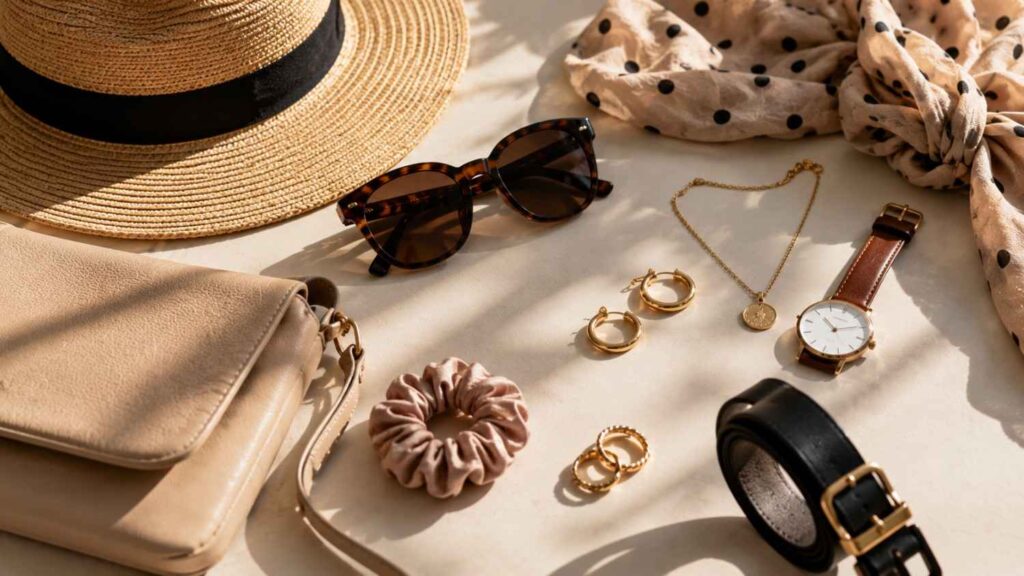
Top 5 Budget-Friendly Accessories to Elevate Your Look
Looking stylish does not require a large clothing budget or a wardrobe filled with new seasonal pieces. In many cases, the difference between an ordinary outfit and a polished one comes from thoughtful accessories. A simple shirt, pair of jeans, neutral dress, or basic suit can look noticeably different when it is styled with the right jewelry, scarf, belt, handbag, or sunglasses.
Accessories are especially valuable because they influence the way an outfit is perceived. They can add color to neutral clothing, create contrast between fabrics, highlight a specific area, or introduce structure to loose garments. They also allow you to express your personality without replacing the clothing you already own. A colorful scarf may create a creative and relaxed look, while a structured bag and simple earrings can make the same outfit appear more professional.
Budget-friendly fashion is not about buying the cheapest products available. It is about selecting useful items that offer good value through repeated wear. A low-cost accessory that works with ten outfits may be a better investment than an expensive piece you wear once.
In this guide, I will explain the top five budget-friendly accessories to elevate your look, how to choose each item carefully, and how to combine them without making your outfit appear crowded. You will also learn how to build a practical accessory capsule that supports both everyday dressing and special occasions.
Why Accessories Are a Smart Budget Wardrobe Upgrade
Accessories are one of the most practical ways to refresh your wardrobe because they allow you to create multiple looks from the same clothing. Instead of purchasing a separate outfit for work, dinner, travel, or a casual event, you can adjust the appearance of clothing you already own. A plain dress can look professional with a structured bag and slim belt, relaxed with a printed scarf, or suitable for an evening event with statement earrings and a small handbag.
This flexibility makes accessories especially useful for people who prefer a capsule wardrobe or who want to reduce unnecessary spending. Clothing usually takes up more storage space and may require more careful sizing, while accessories are often easier to mix, store, and repeat. A small collection of coordinated pieces can support dozens of outfit combinations.
Accessories also help you control the balance of an outfit. A belt can create definition in loose clothing, while a long necklace can introduce a vertical line. A bright scarf can direct attention toward the face, and a structured bag can provide contrast against soft or oversized garments. These small adjustments influence shape, proportion, and visual interest.
The key is to buy intentionally. Before purchasing an accessory, think about its purpose, color, size, comfort, and compatibility with your wardrobe. An item should ideally solve a styling problem, such as adding color to neutral outfits or providing a practical bag for work. When accessories are chosen for a clear reason, they become valuable wardrobe tools rather than unused decorations.
| Outfit Type | Recommended Accessory | Styling Purpose | Overall Effect |
|---|---|---|---|
| Casual Jeans and T-Shirt | Minimal Jewelry | Adds subtle elegance | Clean and polished everyday look |
| Plain Dress | Fashion Belt | Defines shape and creates balance | More structured appearance |
| Office Wear | Structured Bag | Enhances professionalism | Smart and organized style |
| Neutral Outfit | Printed Scarf | Introduces color and texture | Creates visual interest |
| Summer Outfit | UV-Protective Sunglasses | Adds function and style | Modern and confident appearance |
Accessories Create Variety Without Replacing Clothes
A limited wardrobe does not have to feel repetitive when you know how to use accessories strategically. The same pair of trousers and simple blouse can create several distinct looks depending on the accessories you choose. For example, delicate earrings and a structured handbag can create a professional appearance, while a colorful scarf and crossbody bag may make the outfit feel more casual and creative.
This approach is useful when you want to reduce clothing purchases without sacrificing personal style. Instead of focusing on how many garments you own, focus on how many combinations you can create. A neutral wardrobe often becomes more versatile when you add accessories in different textures, shapes, and accent colors.
One thing I always recommend is the three-outfit test. Before buying an accessory, imagine at least three outfits from your existing wardrobe that could work with it. Be realistic about your lifestyle and the occasions you attend. If you cannot identify three suitable combinations, the item may be too specific.
Versatile accessories should support your clothing rather than require additional purchases. When one item works with office wear, weekend clothing, and evening outfits, it provides better value and reduces the likelihood of becoming unused clutter.
One Strong Detail Can Improve the Whole Outfit
A well-styled outfit does not need several bold accessories at the same time. In fact, one strong detail often looks more refined than multiple pieces competing for attention. The goal is to create a clear visual focus and allow the rest of the outfit to support it.
For example, large statement earrings may provide enough interest around the face, so a heavy necklace may not be necessary. A brightly patterned scarf can become the main feature of a neutral outfit, while jewelry and the handbag remain simple. Similarly, a wide belt with a noticeable buckle may look best when paired with understated shoes and accessories.
This principle is particularly useful when styling affordable pieces. Simple coordination can make inexpensive accessories appear more intentional and polished. Too many decorative details may create visual confusion and make it difficult to appreciate each item.
Begin by choosing one focal accessory. Then select one or two quieter supporting pieces based on color, shape, or finish. A structured black bag, for instance, can support bold sunglasses without competing with them. By controlling the number of focal points, you create balance, improve visual clarity, and make the overall outfit feel professionally styled.
1. Simple Jewelry That Works With Multiple Outfits
Jewelry is one of the easiest and most accessible accessories to include in a budget wardrobe. Even a small pair of earrings, a delicate necklace, or a simple bracelet can make an everyday outfit feel more complete. Jewelry brings light and visual detail close to the face and hands, which are areas people naturally notice during conversation.
The most useful jewelry pieces are usually those with uncomplicated shapes and practical finishes. Small hoops, studs, slim chains, plain rings, and simple bangles can be worn with work clothing, casual outfits, formal dresses, and layered weekend looks. These pieces do not have to be expensive to appear polished. Their condition, proportion, and compatibility with the outfit are often more important than the brand or price.
When selecting affordable jewelry, pay attention to the material description and construction. Check whether clasps close securely, earring backs fit properly, and chain connections appear strong. The Federal Trade Commission’s Jewelry Guides explain the importance of accurate descriptions for precious metals, plated products, gemstones, and imitation materials. Reading product details carefully can help you understand what you are purchasing.
Jewelry should also be comfortable enough for the length of time you plan to wear it. Lightweight pieces are usually more practical for daily use, while larger statement items may be better for shorter events. Proper storage is equally important. Keeping jewelry away from water, perfume, and excessive humidity can help preserve its appearance and extend its useful life.
Choose Versatile Shapes and Practical Finishes
The shape and finish of jewelry determine how easily it can be combined with different outfits. Simple geometric forms, delicate curves, small hoops, and clean chains usually remain wearable even when trends change. These designs are less likely to clash with patterned clothing or other accessories, which makes them suitable for an accessory capsule.
You may prefer silver-tone, gold-tone, rose-gold-tone, or mixed-metal jewelry. There is no universal rule requiring every piece to match, but choosing a dominant finish can make daily styling easier. For example, if most of your handbag hardware, belt buckles, and watch details are gold-tone, jewelry in a similar finish can create a coordinated appearance.
Practical construction should be considered alongside style. Examine closures, clasps, hinges, chain links, and earring posts. A beautiful piece offers poor value if it breaks or becomes uncomfortable after a few wears.
For maximum versatility, begin with one pair of everyday earrings, one necklace, and one bracelet or ring. Once you know which sizes and shapes you wear regularly, you can add bolder pieces. This gradual approach reduces unnecessary purchases and helps you build a jewelry collection around your actual habits.
Consider Comfort and Possible Skin Sensitivity
Comfort is essential when selecting jewelry, especially when pieces will be worn for long periods. Heavy earrings may pull on the earlobes, rough bracelet edges can irritate the wrist, and poorly designed rings may feel uncomfortable during normal hand movement. Always consider how a piece feels, not only how it looks.
Some people also experience skin reactions to metals commonly used in jewelry. The American Academy of Dermatology explains that nickel may be present in earrings, necklaces, rings, watches, and other personal items. People with nickel sensitivity may benefit from choosing jewelry described as nickel-free or hypoallergenic. Surgical-grade stainless steel and certain higher-purity precious metals may also be suitable, depending on individual sensitivity.
Product labels should be read carefully because terms such as plated, filled, coated, and solid describe different types of construction. When information is unclear, ask the seller for details before purchasing.
Jewelry should be removed before swimming, showering, exercising, or applying perfume and skincare products. After wearing it, gently wipe the surface and store each item separately. These habits help reduce tarnishing, skin irritation, and scratching, allowing affordable pieces to remain attractive and wearable for longer.
2. A Versatile Scarf for Color, Texture, and Personality
A scarf is one of the most flexible accessories you can own because it can be styled in several ways and used throughout different seasons. Depending on its size and fabric, a scarf may be worn around the neck, in the hair, over the shoulders, around the waist, or tied to a handbag. This variety allows one affordable item to create multiple looks.
Scarves are particularly useful for adding color and pattern to neutral wardrobes. If most of your clothing is black, white, cream, navy, brown, or denim, a printed scarf can introduce personality without making the outfit difficult to coordinate. It can also connect separate colors within an outfit. For example, a scarf containing navy, cream, and burgundy may visually connect a navy jacket, cream shirt, and burgundy handbag.
Fabric affects how a scarf behaves. Lightweight materials create soft folds and are easy to tie, while firmer fabrics hold structured knots more effectively. Larger scarves can function as wraps or light layers, while smaller square scarves work well around the neck, hair, or handbag handles.
When shopping, consider the colors, scale of the pattern, care requirements, and likely uses. A scarf may look attractive when displayed flat but appear different when folded or tied. Choose designs that remain appealing when only part of the pattern is visible. A thoughtfully selected scarf can become a signature accessory while still supporting many different outfits.
Wear One Scarf in Several Different Ways
One of the main advantages of a scarf is that it can change function depending on how it is folded and tied. A square scarf can be folded into a triangle and worn loosely around the neck, rolled into a narrow band for the hair, or tied around the handle of a simple handbag. A longer scarf may be wrapped over the shoulders, looped around the neck, or used as a soft belt over a dress.
These options allow you to repeat the same accessory without creating the same appearance every time. A neck scarf places color close to the face, while a scarf tied to a bag introduces a smaller accent. Wearing it in the hair creates a more relaxed effect, and styling it around the waist makes it part of the outfit’s structure.
Practice simple knots before attempting complex styles. The accessory should feel secure but comfortable. Avoid tying delicate fabric too tightly, as this may create permanent creases or damage the material.
Recent fashion styling has demonstrated scarves worn as belts, hair accessories, neck accents, and lightweight layers. You do not need to copy every trend. Instead, use these ideas to identify the styling methods that fit your wardrobe, comfort, and daily routine.
Match the Scarf to the Scale of Your Outfit
The size, print, and color intensity of a scarf should support the scale of the outfit. A large, brightly patterned scarf can become the main focal point when worn with a plain dress, simple coat, or monochrome outfit. In contrast, a smaller scarf or subtle print may be more suitable when the clothing already contains strong patterns or decorative details.
Proportion is also important. A very large scarf may overwhelm a fitted, lightweight outfit, while a narrow scarf may disappear against an oversized coat. Consider the visual weight of the clothing and choose an accessory with a similar or intentionally contrasting presence.
Color coordination does not require an exact match. A scarf can repeat one existing color, introduce a related tone, or create controlled contrast. For example, a rust-colored scarf may complement navy, cream, olive, or denim without matching any item exactly.
Pay attention to fabric texture as well. Soft materials create an elegant or relaxed effect, while woven or textured scarves can make simple outfits feel more layered. By considering scale, color, and fabric together, you can make the scarf appear connected to the outfit rather than added as an afterthought.
3. A Well-Shaped Belt That Improves Proportion
A belt is often viewed as a purely functional item, but it can also be one of the most effective styling tools in an affordable wardrobe. It can define the waist, add structure to oversized clothing, create contrast, or connect the colors of shoes, bags, and jewelry hardware.
The usefulness of a belt depends on its width, buckle, material, and fit. Slim belts work well with tailored trousers, skirts, and lightweight dresses, while medium-width belts provide greater versatility. Wider belts create a stronger focal point and may be worn over dresses, cardigans, coats, or oversized blazers.
A belt should fit comfortably in the position where you intend to wear it. A belt used at the natural waist may require a different length from one worn through trouser loops or lower on the hips. Check the number and placement of adjustment holes before purchasing. The buckle should also close securely without feeling unnecessarily heavy.
Neutral colors such as black, brown, tan, cream, navy, or burgundy tend to offer the greatest flexibility. However, a bold belt can be useful when most of your clothing is simple. Rather than buying several similar belts, begin with one well-shaped design that works with both trousers and dresses. A properly selected belt can improve the overall proportion of an outfit and make loose or basic garments appear more intentional.
Select the Right Width for Your Outfit
Belt width has a noticeable effect on proportion. Slim belts create a subtle line and work well with delicate fabrics, fitted dresses, skirts, and formal trousers. They are useful when you want definition without making the belt the main feature of the outfit.
Medium-width belts are usually the most practical option because they can be worn through trouser loops, over dresses, and with jackets or cardigans. They provide enough structure to be visible while remaining easy to coordinate. Wide belts create a stronger visual statement and are often best suited to loose dresses, long shirts, coats, or oversized blazers.
Your body proportions, clothing style, and comfort should guide your choice rather than fixed fashion rules. Try the belt at different heights and observe how it changes the length of the upper and lower body. A belt placed at the natural waist creates a different effect from one worn lower.
The buckle should also match the scale of the belt and outfit. A simple buckle is easier to repeat, while a decorative buckle becomes a focal point. For a first purchase, a clean medium-width belt with a secure, understated buckle usually provides the greatest styling flexibility.
Use Belts to Create Balance Rather Than Restriction
A belt should improve the balance of an outfit, not make clothing uncomfortable or overly tight. Although belts are commonly used to define the waist, they can also divide a long block of color, organize layers, and give loose garments a clearer shape.
For example, a belt over an oversized blazer can create structure while maintaining the relaxed character of the garment. On a loose dress, it can prevent the fabric from appearing shapeless. With high-waisted trousers, a belt can create a clean finishing line when a shirt or blouse is tucked in.
Experiment with placement because a small adjustment can change the overall proportion. A higher position may visually lengthen the legs, while a lower placement can create a more relaxed appearance. The correct position depends on the cut of the garment and how freely you can move.
Avoid pulling the belt too tightly. The fabric should not bunch excessively, and the belt should remain comfortable when sitting or bending. A well-styled belt creates controlled definition while allowing the garment to fall naturally. When used this way, it becomes a practical tool for balance rather than a restrictive accessory.
4. A Structured Everyday Bag With a Polished Shape
A handbag occupies a visible part of an outfit, which means its shape, condition, and construction can strongly influence the overall appearance. Even an affordable bag can look polished when it has clean lines, balanced proportions, secure handles, and tidy stitching.
Structured and semi-structured bags are particularly useful because they maintain their shape when placed on a surface or carried throughout the day. A simple tote, compact shoulder bag, top-handle design, or clean crossbody style can support work outfits, casual clothing, travel, and social events.
The outside of the bag should be examined carefully, but the interior is equally important. Look for useful compartments, secure pockets, a durable lining, and enough space for the items you carry regularly. A bag that looks attractive but does not support your daily needs may quickly become frustrating.
Color also affects versatility. Black, brown, tan, navy, cream, taupe, olive, and burgundy are common choices because they coordinate with many wardrobes. However, the most useful neutral is the one that matches your clothing, shoes, and lifestyle.
Avoid judging quality only by brand names or logos. Construction, usability, and maintenance usually have a greater effect on how the bag looks over time. By choosing a practical shape and caring for it properly, you can make an affordable handbag a long-term part of your wardrobe.
Prioritize Shape and Construction Over Branding
A recognizable logo does not automatically make a bag look refined. In many cases, a simple unbranded or lesser-known design appears more polished because it has clean proportions and reliable construction.
Begin by examining the stitching. Seams should appear reasonably straight, and thread should not be loose or uneven. Handles should feel secure at the attachment points, while zippers, snaps, and magnetic closures should operate smoothly. Check the corners because these areas often show wear first.
Structure is also important. A bag does not need to be completely rigid, but it should hold its basic shape when lightly filled. A collapsing bag may still suit a relaxed style, but it will create a different appearance from a structured work tote or top-handle design.
Hardware should support the design rather than overwhelm it. Simple metal details generally remain versatile, while highly decorative hardware may be more difficult to coordinate.
Before buying, consider the bag’s actual function. Test whether your phone, wallet, keys, and other daily items fit comfortably. A well-constructed affordable bag that supports your routine will usually provide better value than a branded item chosen mainly for its label.
Select a Color That Supports Your Real Wardrobe
The best handbag color is not necessarily the most popular one. It is the color that works with the clothing and shoes you genuinely wear. Review your wardrobe before purchasing and identify the shades that appear most often.
Black is practical for many people, but it may feel too strong with a wardrobe based on cream, tan, soft blue, or warm brown. In that case, taupe, chocolate, burgundy, olive, or navy may create a more natural connection. Cream and light neutral bags can look elegant but may require more frequent cleaning.
A contrasting bag can also be useful. A red, green, blue, or yellow bag may become a controlled accent when worn with mostly neutral clothing. However, the color should still work with several outfits rather than a single look.
Consider the hardware and strap as part of the color decision. Gold-tone, silver-tone, black, or mixed hardware can connect the bag with jewelry, belts, and shoes.
Once you choose a suitable color, maintain the bag carefully. Avoid overfilling it, store it in a supported position, and clean stains according to the material instructions. Good maintenance helps any color remain polished and presentable.
5. Sunglasses That Combine Style With Eye Protection
Sunglasses can instantly change the mood of a daytime outfit. A classic frame can create a polished appearance, while a bold shape may add confidence and personality. However, sunglasses are not only fashion accessories. Their protective function should be considered before color, shape, or trend.
The American Academy of Ophthalmology recommends choosing sunglasses that provide 100 percent ultraviolet protection or UV absorption up to 400 nanometres, commonly described as UV400. Dark lens color alone does not confirm adequate UV protection. For this reason, clear product labeling from a reliable seller is more important than how dark or reflective the lenses appear.
Polarization and UV protection should not be confused. Polarized lenses can reduce glare from reflective surfaces such as roads or water, while UV protection relates to ultraviolet radiation. Some sunglasses provide both features, but one does not automatically guarantee the other.
Frame fit is equally important. Sunglasses should sit securely without pressing behind the ears, sliding down the nose, or touching the cheeks uncomfortably. A frame that looks attractive but causes discomfort will not provide good value.
For a first budget-friendly pair, consider a versatile frame in black, brown, tortoiseshell, navy, or another wardrobe neutral. Once you have a practical everyday pair, you can add a brighter or more unusual style for variety.
Check UV Protection Before Frame Style
UV protection should be the first feature you evaluate when choosing sunglasses. A stylish frame provides limited practical value if the lenses do not offer appropriate ultraviolet protection.
Look for clear labels stating 100 percent UVA and UVB protection or UV400. When this information is missing or unclear, ask the retailer for verification. Avoid assuming that a high price, dark lens, mirror coating, or designer-inspired appearance guarantees protection.
Lens darkness affects brightness but does not confirm UV performance. Similarly, polarization is designed primarily to reduce glare and may improve comfort during driving, outdoor sports, or time near water. It is a separate feature from ultraviolet protection.
The frame should also provide reasonable coverage. Larger lenses or wraparound designs may reduce the amount of light reaching the eyes from the sides, although style and comfort still matter.
Purchase sunglasses from sellers that provide accurate product descriptions and clear return policies. If you already own a pair and are uncertain about its protection, an optical professional may be able to assess the lenses. By checking safety information first, you can then choose the shape, color, and style with greater confidence.
Match the Frame to Comfort and Proportion
Face-shape guides can provide inspiration, but they should not be treated as strict rules. The most important factors are comfort, proportion, and how the sunglasses interact with your features.
The frame should sit securely on the bridge of the nose without creating pressure. The temples should rest comfortably over the ears, and the frame should not slide when you move your head. Check whether the lenses touch your eyelashes or whether the lower edge presses against your cheeks when you smile.
Proportion matters more than following a specific shape category. A very small frame may look unbalanced on a broader face, while an oversized frame may overwhelm delicate features. The top line should generally work with the eyebrows, although personal preference remains important.
Neutral frames provide the greatest versatility, but a colored or patterned frame can act as the main accessory in a simple outfit. Consider how the frame works with your hairstyle, jewelry, and usual clothing colors.
Try the sunglasses in natural light and view them from the front and side. A comfortable, balanced pair is more likely to be worn regularly and therefore offers better value.
How to Build an Affordable Accessory Capsule
An accessory capsule is a small, coordinated collection of jewelry, scarves, belts, bags, and other pieces that work with your wardrobe and with one another. The goal is not to own the smallest possible number of items. Instead, it is to reduce unused purchases and make everyday styling easier.
Begin by reviewing the clothing you wear most often. Identify your dominant neutrals, preferred accent colors, common silhouettes, and typical occasions. Someone who works in a formal environment may need structured bags, simple jewelry, and slim belts, while a casual wardrobe may benefit more from scarves, crossbody bags, and relaxed accessories.
Each item should serve a clear function. You may need a polished work bag, an everyday pair of earrings, or a belt that works with both trousers and dresses. Purchasing according to missing functions is more effective than buying similar items repeatedly.
An accessory capsule should also reflect your lifestyle. Avoid building a collection around events you rarely attend. Focus first on daily needs, then add occasional pieces.
Quality should be evaluated in relation to use. An inexpensive item worn frequently may provide excellent value, while a costly accessory that remains unused offers little practical benefit. By reviewing your wardrobe, identifying gaps, and testing compatibility, you can gradually create a collection that feels coordinated without appearing repetitive.
| Accessory | Best For | Budget Buying Tip | Long-Term Value |
|---|---|---|---|
| Simple Jewelry | Everyday outfits, office wear | Choose timeless designs in hypoallergenic materials | Easy to wear with multiple outfits |
| Printed Scarf | Adding color and texture | Pick neutral-based prints that match existing clothing | Can be styled in several different ways |
| Fashion Belt | Defining the waist and improving proportions | Buy a neutral color with a simple buckle | Suitable for dresses, trousers, and blazers |
| Structured Bag | Daily use, work, and travel | Focus on stitching and durability instead of branding | Maintains a polished appearance for years |
| UV-Protective Sunglasses | Outdoor activities and travel | Verify UV400 protection before purchasing | Combines eye protection with everyday style |
Step 1: Review Your Most-Worn Colors
The first step in building an accessory capsule is identifying the colors you wear most often. Open your wardrobe and look at the clothing you have worn during the past month rather than focusing on items you hope to wear someday.
Write down two or three dominant neutrals, such as black, navy, cream, brown, grey, or denim. Then identify one or two accent colors that appear regularly. These colors may include burgundy, olive, blue, pink, rust, or green.
Use this information to guide accessory purchases. A wardrobe based on black, cream, denim, and olive may coordinate well with gold-tone jewelry, a tan or black belt, a structured dark bag, and a scarf containing green or warm neutral shades.
Accessories do not need to match every garment exactly. They should create a visual connection through related colors, finishes, or levels of contrast.
This color review prevents isolated purchases. When an accessory reflects the palette of your real wardrobe, it becomes easier to repeat and combine. As a result, you spend less time deciding what to wear and reduce the risk of buying pieces that look attractive but never feel suitable.
Step 2: Buy for Missing Functions
After reviewing your colors, identify which accessory functions are missing. This step prevents duplication and keeps your budget focused on items that solve actual wardrobe problems.
You may already own several handbags but lack comfortable everyday earrings. You may have jewelry and scarves but no belt that works with both dresses and trousers. In another case, you may own stylish sunglasses without verified UV protection and need a practical replacement.
Create a short priority list based on frequency of use. A basic starter capsule might include one pair of everyday earrings, one simple necklace or bracelet, one versatile scarf, one neutral belt, one structured bag, and one pair of UV-protective sunglasses.
Do not purchase every category immediately. Start with the item that will improve the largest number of outfits. Wear it several times and observe whether the color, size, and style suit your needs.
This process also helps you refine future purchases. For example, after using a small bag, you may realize that you need more compartments. After wearing a scarf, you may prefer a larger or softer fabric. Buying by function turns each purchase into useful information for building a stronger collection.
Step 3: Test Every Purchase Against Three Outfits
The three-outfit test is one of the simplest ways to decide whether an accessory belongs in your wardrobe. Before removing tags or deciding to keep an item, style it with three outfits you already wear.
The outfits should represent different situations, such as work, casual activities, and a social event. This helps you evaluate versatility rather than confirming that the accessory works with only one look.
Check the item in natural light. Colors and finishes may appear different from how they looked in a store or online photograph. Consider comfort, scale, and practicality. A bag may appear polished but feel too heavy. Earrings may look attractive but become uncomfortable. A belt may work with a dress but not fit through your trouser loops.
Take photographs of each outfit if possible. A picture can reveal proportion and color balance more clearly than a quick mirror check.
When an accessory fails the test, return or exchange it rather than forcing it into your wardrobe. This disciplined habit reduces clutter, improves cost per wear, and ensures that your accessory capsule remains useful, coordinated, and easy to style.
Quick Answer About Top 5 Budget-Friendly Accessories to Elevate Your Look
The top five budget-friendly accessories that can elevate your look are versatile jewelry, a well-designed scarf, a properly fitted belt, a structured everyday bag, and UV-protective sunglasses. These accessories are effective because they improve different visual elements of an outfit without requiring you to purchase new clothing. Jewelry introduces shine and creates a focal point, while scarves add color, texture, and pattern. Belts improve proportion and give loose clothing more structure. A well-shaped bag makes an outfit look organized, and sunglasses add personality while protecting your eyes from ultraviolet radiation.
The best approach is to choose accessories that work with several outfits instead of purchasing items for only one event. Neutral colors usually provide more styling flexibility, but a carefully chosen statement piece can add personality to a basic wardrobe. Before buying anything, consider whether the accessory matches at least three outfits you already own. You should also check comfort, construction quality, material descriptions, and care requirements.
Affordable does not have to mean disposable or poorly made. A simple, well-maintained accessory often looks more polished than an expensive item that does not match the outfit. By focusing on versatility, proportion, and practical quality, you can build a small accessory collection that makes everyday outfits feel more complete, stylish, and personal.
Frequently Asked Questions
Budget-friendly accessories attract many practical questions because shoppers want to improve their appearance without wasting money or sacrificing comfort. The most common concerns involve versatility, quality, coordination, and the number of pieces needed to create a polished look.
The best answers depend on lifestyle and wardrobe habits. A professional working in an office may prioritize simple jewelry, structured bags, and classic belts, while someone with a casual lifestyle may rely more heavily on scarves, sunglasses, and crossbody bags.
The price of an accessory should not be evaluated in isolation. Consider how often you will wear it, how many outfits it supports, and how well it meets a practical need. An inexpensive item that requires additional purchases may not be truly budget-friendly. In contrast, a moderately priced piece worn several times each month may provide stronger long-term value.
Care also affects affordability. Proper storage, gentle cleaning, and careful use can help jewelry, bags, scarves, and sunglasses remain presentable for longer.
The following answers address common People Also Ask-style questions about affordable accessories. They are designed to help you make practical decisions while keeping your style personal. Use them as guidelines rather than rigid rules, and adapt each recommendation according to your wardrobe, comfort requirements, and daily routine.
Which Accessories Can Instantly Improve a Basic Outfit?
The accessories that can improve a basic outfit most quickly are a structured handbag, simple earrings, a properly fitted belt, a printed scarf, and well-shaped sunglasses. Each one changes a different element of the outfit.
Earrings add light and visual interest near the face, while a scarf introduces color and pattern. A belt gives shape to loose clothing, and a structured handbag makes the outfit appear more organized. Sunglasses can add confidence and definition to a daytime look.
For the strongest result, choose one accessory as the focal point. A bold scarf may be paired with simple jewelry, while statement earrings may work best with a plain bag and understated neckline.
You do not need to use all five accessories at once. Select the item that solves the main styling problem. If an outfit feels shapeless, add a belt. If it feels plain, introduce jewelry or a scarf. If it lacks polish, choose a structured bag. This focused approach improves the outfit without making it feel crowded or overdesigned.
How Can I Look Stylish Without Buying New Clothes?
You can look more stylish without buying new clothes by changing how you combine, layer, and accessorize the items you already own. Begin with a familiar outfit and identify what it lacks. It may need structure, color, texture, or a clearer focal point.
A belt can change the shape of an oversized shirt or loose dress. A scarf can introduce a pattern and connect different colors. Changing small earrings to a more noticeable pair can shift attention toward the face. A structured bag may make casual clothing appear more intentional.
You can also experiment with clothing placement. Try tucking in part of a shirt, rolling sleeves evenly, layering a necklace over a plain neckline, or wearing a jacket open with a visible belt.
Photograph different combinations so you can remember the successful ones. This prevents the feeling that you have nothing to wear and helps you recognize the versatility of your wardrobe.
Style develops through repetition and observation. By making small adjustments and reusing accessories in different ways, you can create new visual combinations without purchasing additional garments.
What Accessories Make an Outfit Look More Expensive?
Accessories that appear clean, simple, and well maintained often make an outfit look more expensive. The effect comes from polish and coordination rather than the actual price.
Structured handbags, minimal jewelry, smooth belts, and sunglasses with balanced frames can create a refined appearance. Look for straight stitching, secure clasps, tidy edges, proportionate hardware, and surfaces that are free from visible scratches or peeling.
Color also matters. Neutral or carefully coordinated accessories often appear more intentional because they connect with the clothing. However, one strong accent color can still look refined when the rest of the outfit remains simple.
Avoid combining too many shiny finishes, logos, patterns, or decorative details at once. These elements can compete and reduce visual clarity.
Maintenance is equally important. Wipe jewelry after wearing, store bags so they keep their shape, clean sunglasses properly, and avoid crushing scarves.
An inexpensive accessory that fits the outfit, remains in good condition, and serves a clear purpose can look more polished than a costly piece that is damaged, poorly proportioned, or difficult to coordinate.
How Many Accessories Should I Wear at Once?
There is no universal number of accessories that works for every outfit, but one focal piece supported by one or two quieter items is a reliable starting point.
For example, statement earrings may be worn with a simple handbag and belt. A bold scarf can be paired with small studs and neutral sunglasses. If the belt has a large decorative buckle, choose understated jewelry so the outfit does not develop several competing focal points.
The amount of detail already present in the clothing should guide your decision. Patterned dresses, embroidered tops, or highly textured fabrics may require fewer accessories. Plain or monochrome outfits can usually support a stronger scarf, bag, or jewelry piece.
Your environment also matters. Work settings may call for quieter combinations, while social events may allow more expressive styling.
Before leaving, view the complete outfit rather than evaluating each accessory separately. Remove one item if the look feels crowded or if your attention moves in too many directions. Balanced accessorizing is not about reaching a specific number. It is about ensuring that each piece contributes to the overall appearance.
Is Inexpensive Jewelry Safe for Sensitive Skin?
Inexpensive jewelry may be suitable for some people with sensitive skin, but price alone does not determine whether a reaction will occur. The material and construction are more important than the cost.
Nickel is a common cause of contact allergy and may be present in earrings, necklaces, bracelets, watches, and rings. People with known sensitivity should look for clear descriptions such as nickel-free or hypoallergenic. Surgical-grade stainless steel and certain higher-purity precious metals may also be appropriate, although individual reactions vary.
Avoid relying only on vague labels. Ask the seller for specific material information when the description is incomplete. Plating may wear over time and expose the underlying metal, so observe how the jewelry changes with use.
Remove jewelry if it causes itching, redness, swelling, or discomfort. Persistent reactions should be discussed with a qualified healthcare professional.
Care can also reduce irritation. Keep jewelry clean and dry, avoid wearing it during exercise or bathing, and allow perfume or skincare products to dry before putting it on. These steps do not eliminate allergies, but they can reduce unnecessary exposure and improve comfort.
Which Accessory Should I Buy First?
The first accessory you should buy is the one that solves the biggest problem in your current wardrobe. There is no single correct starting item for everyone.
If your everyday outfits feel incomplete, simple earrings or a necklace may provide the fastest improvement. If loose dresses and oversized shirts lack shape, a versatile medium-width belt may be more useful. Someone who carries an unsuitable or worn bag every day may benefit most from a structured handbag. For daytime travel or outdoor activities, UV-protective sunglasses may be the priority.
Review your weekly routine and identify which accessory would be used most frequently. Then apply the three-outfit test. The item should work with at least three outfits you already own and should not require additional clothing purchases.
Choose a practical color and comfortable design for your first purchase. Highly decorative pieces can be added later once the basic function is covered.
Starting with a real wardrobe need improves cost per wear and reduces impulse buying. It also gives you a stronger foundation for building an accessory capsule gradually.
Conclusion
The Top 5 Budget-Friendly Accessories to Elevate Your Look are simple jewelry, a versatile scarf, a well-shaped belt, a structured everyday bag, and UV-protective sunglasses. Each accessory improves a different part of an outfit, which is why a small coordinated collection can create so many styling possibilities.
Jewelry adds shine and directs attention toward the face. Scarves introduce color, texture, and pattern. Belts improve proportion and create structure, while handbags influence the overall level of polish. Sunglasses provide visual personality and, when properly labeled, practical ultraviolet protection.
The most important lesson is to choose accessories according to your real wardrobe and lifestyle. Avoid buying an item simply because it is inexpensive or currently popular. Instead, review your most-worn colors, identify a missing function, and apply the three-outfit test before keeping a new purchase.
Maintenance also plays an important role. Proper storage, careful cleaning, and avoiding unnecessary exposure to water or harsh products can help affordable accessories last longer.
You do not need to purchase all five categories at once. Begin with the item that will improve the greatest number of outfits, wear it regularly, and learn from the experience before adding another piece. With intentional choices, stylish accessories on a budget can make simple clothing feel more polished, versatile, and personal.
