

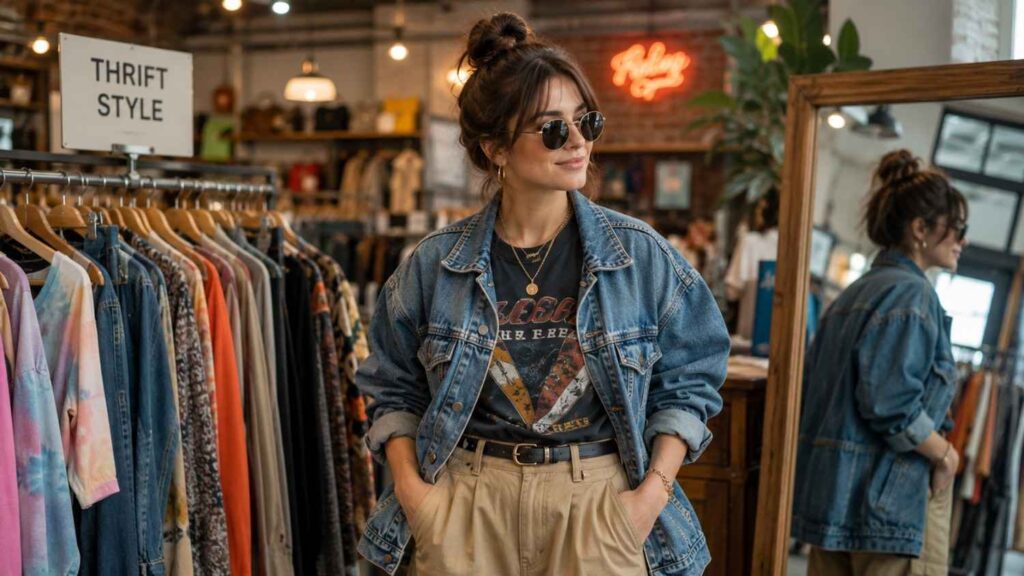
How to Style Thrifted Clothes Like a Pro
Thrifting can introduce personality, craftsmanship, and variety into a wardrobe in ways that conventional shopping often cannot. A secondhand store may contain structured wool coats, broken-in denim, embroidered shirts, unusual accessories, and quality fabrics from different decades. However, finding an interesting garment is only the first step. The real skill lies in turning individual discoveries into outfits that look cohesive, modern, and suitable for everyday life.
Learning how to style thrifted clothes like a pro requires a combination of creativity and practical judgment. You need to understand which shapes suit you, how different garments interact, when an alteration is worthwhile, and which modern basics will support older pieces. The goal is not to make every thrifted item look new. It is to present the garment in a way that feels intentional and relevant to your personal style.
Condition also plays an important role. A garment with an excellent shape can lose its impact when it is wrinkled, stained, missing buttons, or paired with items that compete for attention. In contrast, a modestly priced secondhand piece can look sophisticated when it is clean, properly fitted, and styled with restraint.
Secondhand clothing also supports longer garment use. According to the U.S. Environmental Protection Agency, 17 million tons of textiles entered the American municipal solid waste stream in 2018. Reusing garments can help keep wearable clothing in circulation for longer while giving consumers more control over how they build and maintain their wardrobes.
What Makes Thrifted Clothes Look Professionally Styled?
Professional-looking thrifted outfits have a sense of order, even when the individual garments are unusual. The wearer has made clear decisions about the focal point, silhouette, color palette, and level of detail. Nothing appears accidental. A vintage jacket may be oversized, but the sleeves are intentionally pushed back and the base layer is fitted. A patterned skirt may be dramatic, but the top and footwear remain controlled. These decisions create visual confidence.
Price is rarely the defining factor. Viewers notice fit, fabric behavior, garment condition, and outfit balance before they know what an item cost. A low-priced wool coat with a strong shoulder line can look impressive when it is brushed, steamed, and paired with clean footwear. At the same time, an expensive vintage dress can look careless when the hem is uneven or several competing accessories overwhelm its design.
Professional styling also requires an understanding of context. An outfit should make sense for the setting, climate, and level of formality. A sequined evening jacket can work during the day when balanced with denim and simple shoes, while a casual workwear shirt can become office-appropriate when paired with tailored trousers and a structured bag.
The most successful secondhand fashion styling reflects the wearer rather than a passing trend. Goodwill has similarly encouraged shoppers to begin with the mood or feeling they want from their clothes instead of following every trend. When you understand the impression you want to create, it becomes easier to decide which thrifted pieces belong in the outfit and which should be saved for another occasion.
Intentional Styling Is More Important Than Price
A professionally styled outfit communicates purpose. The colors relate to one another, the fit appears considered, and the accessories support the overall direction. None of these qualities require luxury labels. In fact, relying too heavily on brand names can distract from the more useful question: does the garment contribute something meaningful to the outfit?
Before purchasing or styling a secondhand item, define its role. It may serve as a neutral foundation, a practical layer, a focal point, or an accent. A navy wool blazer can become a reliable foundation for work and casual outfits. A brightly embroidered vest is more likely to function as a statement piece. Knowing the role prevents you from expecting every garment to perform every task.
Intentional styling also means considering how often the piece can be worn. Ask whether it works with several items you already own and whether it fits your lifestyle. A beautiful garment that requires an entirely new wardrobe may remain unused. A less dramatic piece that connects naturally with existing trousers, shoes, and layers may provide far greater value. Professional style develops when purchases support a broader system rather than existing as isolated discoveries.
One Item Should Lead the Outfit
Most strong outfits have a visual hierarchy. One item attracts attention first, while the remaining pieces create structure and support. In thrifted outfits, the leading piece is often the garment with the most distinctive print, texture, shape, or history. Allowing that piece to lead helps prevent the outfit from looking cluttered.
Suppose you find a patterned silk blouse with several strong colors. Instead of pairing it with equally dramatic trousers, choose a solid bottom that repeats one of the quieter colors in the print. Add simple shoes and a bag with clean lines. The blouse remains memorable, but the outfit becomes easier to understand visually.
The same principle applies to shape. If the leading item is a voluminous skirt, use a more fitted or neatly tucked top to define the silhouette. If the focal point is an oversized leather jacket, keep the layers beneath it streamlined. This does not mean every outfit must be minimal. Advanced dressers can combine several statement pieces successfully, but the relationship between them still needs to be intentional. Beginners usually achieve more consistent results by selecting one clear focal point and allowing everything else to reinforce it.
How to Start With Fit, Fabric, and Condition
Before thinking about colors, shoes, or accessories, examine the garment itself. Fit, fabric, and condition form the foundation of every successful thrifted outfit. When these elements are ignored, styling becomes an attempt to conceal problems rather than highlight strengths. A jacket that collapses at the shoulder or trousers that twist around the leg will remain difficult to wear regardless of how attractive the surrounding pieces may be.
Begin by trying the garment on with the type of clothing you would normally wear beneath it. A winter coat should be tested over a knit or light jacket, not only over a thin shirt. A fitted dress should be evaluated with the undergarments and shoes likely to accompany it. This gives you a more accurate understanding of movement, comfort, and proportion.
Fabric quality also deserves attention. Natural fibers are not automatically superior, and synthetic materials are not automatically poor. The more important questions involve drape, durability, surface condition, breathability, and suitability for your lifestyle. A polyester blouse that maintains its shape and washes easily may be more useful than a delicate silk piece you are reluctant to wear.
Finally, inspect every area that commonly shows wear. Look closely at collars, cuffs, underarms, waistbands, pockets, knees, hems, and fastenings. Check the lining and turn the garment inside out when possible. A careful inspection helps you distinguish minor, repairable flaws from structural problems that may not be worth the cost or effort.
Check the Fit at the Most Important Points
Not every fit issue carries the same level of difficulty. Some areas can be altered relatively easily, while others require extensive reconstruction. For jackets, coats, and structured shirts, shoulder placement should be the first priority. When the shoulder seam sits far beyond or inside your natural shoulder without an intentional oversized design, the garment may be difficult to correct.
For trousers, evaluate the rise, seat, and upper thigh before focusing on the hem. Length can often be changed, but pulling, twisting, or excess fabric around the hips may require more complex work. Dresses should be checked at the armholes, bust, waist, and hip. You should be able to sit, walk, reach, and breathe comfortably without the fabric straining.
Pay attention to how the garment moves rather than judging it only while standing still. Lift your arms, bend your knees, and sit down. A piece that looks attractive in front of a mirror may become uncomfortable during normal activity. In my experience, slightly generous sizing is often more adaptable than a garment that is already too tight. Extra fabric may be shaped through tailoring, tucking, belting, or layering, while insufficient fabric leaves fewer options.
Inspect Fabric and Construction
A careful fabric and construction check can reveal whether a thrifted garment is likely to become a lasting wardrobe piece. Hold the item in natural light and examine the surface from several angles. Look for discoloration, pilling, thinning areas, snags, small holes, stretched sections, and uneven fading. Pay particular attention to high-friction zones such as underarms, inner thighs, elbows, collars, and cuffs.
Next, inspect the seams and internal finishing. Well-secured seams should lie relatively flat without large gaps, broken stitching, or fabric pulling away from the thread. Check whether the lining remains attached and whether zippers, buttons, hooks, and snaps operate correctly. Minor issues such as a missing button are often manageable, but widespread seam damage may indicate that the garment has weakened.
Read any surviving fiber and care labels. They can help you estimate cleaning needs, comfort, and potential maintenance costs. In the United States, the Federal Trade Commission’s Care Labeling Rule requires covered garments to include instructions for regular care. These instructions should guide washing, drying, bleaching, ironing, or dry-cleaning decisions. When a label is missing, use additional caution, especially with wool, silk, leather, suede, and embellished fabrics.
| What to Check | Why It Matters | Recommended Action |
|---|---|---|
| Fit | Proper fit creates a polished appearance | Choose pieces that fit well or can be tailored |
| Fabric Quality | High-quality fabrics last longer and look premium | Inspect fabric for wear, pilling, or thinning |
| Stitching | Strong stitching improves durability | Check seams for loose threads or damage |
| Buttons & Zippers | Missing hardware reduces garment value | Replace damaged buttons or repair zippers |
| Care Label | Prevents fabric damage during washing | Follow the recommended care instructions |
| Overall Condition | Clean garments look more professional | Remove stains, odors, and wrinkles before wearing |
How to Build an Outfit Around a Thrifted Statement Piece
A thrifted statement piece becomes easier to wear when it is treated as the foundation of the outfit rather than an afterthought. Many styling problems occur because a distinctive item is added to a combination that already contains several competing ideas. Starting with the statement piece allows you to build deliberately around its color, volume, texture, and level of formality.
Begin by identifying why the garment stands out. A piece may attract attention because of its print, unusual tailoring, bold color, decorative details, or material. Once you understand its strongest characteristic, choose supporting items that either echo or calm that feature. A heavily textured jacket may need smooth, simple layers beneath it. A brightly colored skirt can be supported by neutrals or by one repeated shade from the fabric.
The outfit should also reflect the statement piece’s visual weight. A large coat or dramatic pair of trousers occupies more space than a small vintage brooch. Larger pieces generally require quieter support, while smaller statement accessories can be combined with slightly more detail elsewhere.
Context remains important. A sequined top may seem formal, but denim and flat shoes can make it suitable for a casual dinner. A rugged workwear jacket can become more refined with tailored trousers and a clean knit. Building around a focal item does not mean accepting its original styling category. The most interesting thrifted outfit ideas often come from placing a distinctive garment in a new, carefully controlled context.
Pair Character Pieces With Reliable Basics
Reliable basics act as visual anchors. They help unusual thrifted garments feel wearable without making them appear ordinary. Useful basics may include plain T-shirts, fine-knit sweaters, straight-leg denim, tailored trousers, simple skirts, solid button-down shirts, and streamlined footwear. These pieces do not need to be expensive, but they should fit well and be maintained properly.
Choose basics according to the statement piece rather than applying the same formula to every outfit. A structured vintage blazer might work with a soft T-shirt and relaxed denim, creating contrast between formal and casual elements. A flowing printed skirt may need a compact knit or fitted shirt to balance its movement. An embroidered cardigan can be worn over a monochromatic base so its texture remains visible.
Color choice matters as much as simplicity. Black and white are useful, but they are not the only neutral options. Navy, cream, gray, olive, camel, chocolate, and muted denim may create softer combinations. Consider the undertone of the thrifted garment and select basics that harmonize with it. The goal is not to erase the character of the secondhand piece. It is to create enough stability around it that its strongest qualities can be appreciated.
| Wardrobe Basic | Pairs Best With | Style Benefit |
|---|---|---|
| White T-Shirt | Vintage jackets, printed shirts | Keeps the outfit clean and modern |
| Straight-Leg Jeans | Statement tops and blazers | Creates balanced proportions |
| Tailored Trousers | Vintage blouses and knitwear | Gives a refined appearance |
| Neutral Sneakers | Casual thrifted outfits | Adds a contemporary touch |
| Structured Blazer | Dresses and denim | Elevates everyday outfits |
| Minimal Accessories | Any thrifted statement piece | Prevents the outfit from looking cluttered |
Repeat One Detail to Create Cohesion
Repeating one visual detail is one of the easiest ways to make a mixed outfit feel connected. The repeated element may be a color, metal, texture, shape, or degree of structure. This technique gives the eye a clear relationship between separate pieces without requiring exact matching.
For example, a vintage jacket with brown buttons can be paired with a brown belt or shoes. A printed scarf containing burgundy can connect with a burgundy bag. Silver hardware on a secondhand leather jacket can be echoed through silver earrings or a watch. Even the shape of an accessory can create cohesion: rounded glasses may complement rounded buttons or a softly curved handbag.
The repetition should remain subtle. Using the same strong color in several large areas can make the outfit look overly coordinated. In many cases, one small echo is enough. Advanced styling may involve repeating several elements at different scales, such as a dominant color in the garment, a smaller version in the shoes, and a very small accent in jewelry.
This approach is especially helpful when combining clothing from different eras or brands. The pieces may not have been designed to work together, but a repeated visual detail gives them a shared language.
How to Use Proportion, Color, and Texture Like a Stylist
Fit describes how an individual garment sits on the body, while proportion describes how all the garments relate to one another. Understanding that difference is essential when styling secondhand clothing because vintage and thrifted pieces often use shapes that differ from current mainstream silhouettes. A jacket may have broader shoulders, trousers may sit higher on the waist, or a skirt may contain more volume than modern versions.
A successful outfit does not require every item to fit closely. Instead, it needs a deliberate relationship between loose, fitted, long, cropped, structured, and fluid elements. When every piece is oversized, the body may disappear beneath the clothing unless there is another point of definition. When every garment is very fitted, the outfit may lack movement or visual depth.
Color and texture add another layer of control. A limited palette can make several thrifted pieces feel connected, while texture creates interest without relying on additional prints. Denim, wool, leather, linen, silk, corduroy, and knitwear each reflect light and move differently. Combining them thoughtfully can make a simple outfit feel sophisticated.
Beginners should start with one proportion contrast, two or three main colors, and two textures. More experienced dressers can gradually introduce additional volume, pattern, or texture while maintaining a clear focal point. The purpose of these guidelines is not to restrict creativity. They provide a structure that makes experimentation easier to evaluate and repeat.
Balance Volume With Structure
Balancing volume does not necessarily mean pairing every loose item with something tight. The goal is to create enough definition that the silhouette feels purposeful. An oversized blazer, for example, can be worn with a fitted top and straight trousers, but it can also work with wide-leg trousers when the shirt is tucked and the waistline remains visible.
When styling oversized thrifted clothes, identify where the outfit will create structure. That structure may come from the shoulders, waist, hem, footwear, or fabric. A loose men’s shirt can be half-tucked to reveal the waist, tied at the front, or worn open over a fitted base. A full skirt may look balanced with a compact jacket that ends near the waist.
Length also affects volume. A long coat over wide trousers can work when the coat hangs cleanly and the shoes provide enough visual weight. However, a long shapeless cardigan over a long skirt may require a belt, shorter top layer, or visible ankle to prevent the outfit from feeling unresolved.
Use a full-length mirror and take a photograph when possible. Photos often reveal proportion issues that are less obvious while you are moving. Adjust one element at a time until the silhouette feels balanced.
Limit the Color Story
A controlled color palette helps secondhand outfits look intentional, particularly when the garments come from different decades or design styles. Begin by choosing one dominant color, one supporting color, and one optional accent. The dominant shade usually appears in the largest garment, while the accent may be repeated through a bag, shoe, scarf, or piece of jewelry.
Neutral colors are useful because they reduce visual competition, but neutral does not have to mean black. Cream, navy, charcoal, olive, tan, chocolate, and denim can all create a stable background. Softer neutrals may suit muted vintage fabrics better than high-contrast black and white.
Texture can replace additional color when an outfit feels too plain. A cream silk blouse, beige wool trousers, and a tan leather belt may use closely related colors while remaining visually interesting because each material behaves differently. Similarly, an all-black outfit can gain depth through velvet, denim, knitwear, and polished leather.
When working with a multicolored print, select one quieter shade from the design and repeat it elsewhere. Avoid trying to match every color. A restrained palette makes the print feel sophisticated and gives the outfit a clear visual direction.
How to Make Thrifted Clothes Look Expensive and Modern
Making thrifted clothing look elevated does not require disguising its age or imitating luxury branding. The most effective improvements focus on presentation, fit, and consistency. Clean fabric, smooth seams, secure fastenings, and appropriate proportions communicate care. These details affect how the outfit is perceived before anyone considers the garment’s label or original price.
Modern styling often comes from contrast. A vintage piece appears more current when combined with contemporary basics, simple footwear, or a streamlined bag. The goal is not to remove every historical detail. Those details are often what make the garment valuable. Instead, the surrounding pieces should place it in a present-day context.
Restraint is equally important. Several ornate vintage items can be worn together successfully, but doing so requires careful control of color, scale, and silhouette. For most everyday outfits, one or two distinctive elements create a stronger result. Excessive embellishment, too many competing prints, or several unrelated accessories can make even high-quality garments look less refined.
Small maintenance steps offer some of the greatest improvements. Steaming, brushing, depilling, polishing shoes, replacing damaged buttons, and adjusting a hem can change the entire impression of an outfit. These actions are often inexpensive and repeatable.
The most expensive-looking outfits are usually not those with the most decoration. They are the ones in which every visible item appears chosen, cared for, and appropriate to the overall composition.
Mix Different Eras Instead of Wearing a Costume
Wearing several items from the same decade can create an intentional period look, but it may also make an everyday outfit feel like a costume. Mixing eras gives vintage clothing a more personal and contemporary appearance. A 1980s blazer can be paired with a modern tank and relaxed denim. A 1990s slip dress can be worn with a current cropped jacket or simple flat shoes.
The key is to identify which historical feature you want to preserve. It may be the shoulder shape, print, fabric, or neckline. Keep that feature visible while updating the surrounding elements. A high-necked vintage blouse may look current with wide-leg trousers and minimal jewelry. A traditional tweed jacket can be refreshed with a plain T-shirt and clean sneakers.
Hair, makeup, and accessories also influence whether the look feels historical or modern. Combining a vintage dress, vintage shoes, period jewelry, and era-specific hair can create a complete costume effect. Replacing two or three of those elements with contemporary alternatives changes the interpretation.
The Guardian has featured similar advice from sustainable-fashion professionals, emphasizing the value of using vintage garments without dressing entirely according to one decade. Mixing eras allows the piece’s original character to remain visible while making the outfit feel relevant to the wearer’s current life.
Use the Smallest Effective Upgrade
A thrifted garment does not always need a complete redesign. Small, precise improvements frequently produce the strongest results because they preserve the original character while correcting the feature that makes the item feel dated, damaged, or difficult to wear.
Begin with presentation. Steam wrinkled fabric, remove lint, polish hardware, and trim loose threads. Replace cracked plastic buttons with simple alternatives that suit the garment’s weight and color. If the sleeves are slightly long, rolling or pushing them back may improve the proportion before professional alterations are considered.
Next, evaluate styling adjustments. A dated dress may become more current with a modern belt, simpler shoe, or different jacket. Trousers that gather heavily at the ankle may need only a cuff or shortened hem. A wide blouse can be tucked, tied, layered open, or worn beneath a structured jacket.
Use the following table to identify efficient improvements:
| Styling Problem | Professional Fix | Likely Result |
|---|---|---|
| Oversized blazer feels shapeless | Push up the sleeves and add a fitted base layer | Creates definition and controlled volume |
| Dress looks dated | Replace the belt and simplify the footwear | Updates the styling without altering the dress |
| Trousers gather at the ankle | Shorten or temporarily cuff the hem | Produces a cleaner vertical line |
| Loud print overwhelms the outfit | Add solid pieces in a repeated neutral shade | Keeps the print as the clear focal point |
| Garment looks tired | Steam, brush, depill, and replace damaged buttons | Improves condition and visual polish |
| Shirt appears too boxy | Tuck, half-tuck, tie, or layer it open | Creates shape without permanent alteration |
| Jacket hardware feels dated | Replace buttons or polish metal details | Refreshes the garment while preserving its structure |
How to Alter, Clean, and Finish Thrifted Clothing
Alteration and garment care are essential parts of secondhand style. A thrifted item may have excellent fabric and construction but require minor adjustments before it feels fully wearable. Treating repairs, cleaning, and tailoring as part of the purchase process helps prevent clothing from remaining unused in the wardrobe.
Before buying, estimate the complete investment rather than focusing only on the ticket price. Consider professional cleaning, replacement hardware, seam repairs, new elastic, or tailoring. A low-cost garment that requires major reconstruction may be less practical than a moderately priced piece that needs only a shortened hem.
Cleaning decisions should be based on the garment’s fiber, construction, and care label. Secondhand clothing may contain delicate finishes, unstable dyes, weakened seams, or trims that react poorly to standard machine washing. Aggressive cleaning can cause more damage than the original wear.
Finishing details should be checked after cleaning. Press seams carefully, reshape collars, secure loose buttons, and ensure hems hang evenly. Store the garment appropriately so the improvements last. Heavy knitwear may stretch on a hanger, while structured jackets may lose shape when folded.
For advanced readers, garment maintenance can become part of a broader wardrobe-management system. Keep spare buttons, record alteration measurements, and note reliable local repair professionals. This approach extends the usefulness of thrifted clothing and reduces the likelihood that minor damage will turn into a reason to discard an otherwise valuable piece.
Know Which Alterations Are Worth Considering
The value of an alteration depends on the garment’s quality, expected wear, repair complexity, and replacement difficulty. Simple changes such as shortening a hem, adjusting straps, replacing buttons, closing a small seam opening, or taking in a straightforward waistband often provide a strong return. These modifications can correct the most visible fit issue without changing the garment’s essential design.
More complex alterations require careful consideration. Reshaping shoulders, changing armholes, reconstructing a lined jacket, resizing a heavily embellished dress, or modifying leather may involve substantial labor. The final cost can exceed the garment’s purchase price, which is not automatically a problem if the piece is exceptional and will be worn often. However, the decision should be deliberate.
Ask a tailor or seamstress for an estimate when you are uncertain. Bring the shoes and undergarments you plan to wear with the garment so the final length and fit can be assessed accurately. Explain how you expect to use the piece and how much ease you prefer.
A useful decision test is to imagine the garment after alteration. Would it fill a real wardrobe need? Can it be styled in at least three ways? Will you wear it enough to justify the total cost? If the answers are positive, tailoring thrifted clothes can turn an imperfect find into a long-term staple.
Clean According to the Garment, Not Assumptions
Secondhand garments should generally be cleaned before regular wear, but the method must suit the item. Begin by reading the care label and checking the fiber content, lining, decorative trims, and overall condition. A sturdy cotton shirt may tolerate machine washing, while a lined wool coat, silk blouse, suede jacket, or beaded dress may require specialist care.
Inspect pockets and close zippers before washing. Separate colors, especially when the fabric appears highly saturated or has not been tested for colorfastness. Use a mesh bag for delicate items and avoid high heat unless the care instructions specifically allow it. Heat can shrink fibers, damage elastic, distort synthetic materials, and weaken decorative adhesives.
When a care label is missing, choose the least aggressive reasonable method. Spot testing on an inconspicuous area can help identify dye transfer or fabric reaction. Valuable, fragile, or structurally complex items should be taken to a professional cleaner with experience handling vintage garments.
The Federal Trade Commission’s care-label guidance explains that covered instructions may address washing or dry cleaning, drying, bleaching, and ironing. These instructions are more reliable than assumptions based only on appearance. After cleaning, reshape the garment carefully and inspect it again before storage or wear. Proper care improves presentation while helping prevent avoidable damage.
How to Style Thrifted Clothes Like a Pro With Repeatable Formulas
Repeatable outfit formulas make thrifted wardrobes easier to use. Without a system, unusual secondhand pieces may feel exciting in the store but difficult to combine at home. A formula provides a dependable structure that can be adapted to different colors, textures, seasons, and levels of formality.
An outfit formula is not a rigid uniform. It is a relationship between garment types. For example, “statement jacket, simple top, straight trousers, and streamlined shoes” can be interpreted in many ways. The jacket may be tweed, leather, embroidered, or brightly colored. The trousers may be jeans, chinos, or tailored wool. The structure remains consistent while the visual result changes.
Formulas also reveal wardrobe gaps. When several outfits would work better with a particular shoe, base layer, or pair of trousers, that item becomes a more useful shopping target than another unrelated statement piece. This reduces impulse purchases and improves wardrobe cohesion.
Beginners can start with three reliable formulas and photograph each successful variation. Advanced dressers may create seasonal formulas, workwear formulas, or combinations based on specific proportions. Recording what works can save time and make future thrift shopping more focused.
The purpose of a formula is not to remove creativity. It creates a stable framework within which creativity becomes easier. Once you know that a particular jacket shape works with a tucked knit and straight trousers, you can experiment confidently with color, pattern, accessories, and footwear.
Try These Reliable Outfit Formulas
The following formulas provide practical starting points for different types of thrifted clothing:
-
Vintage blazer + plain T-shirt + straight jeans + loafers: This combination balances formal structure with casual simplicity. It works particularly well for oversized or patterned blazers.
-
Printed blouse + tailored trousers + simple belt + flats: Tailored trousers control the visual energy of a detailed blouse, while the belt creates a finished waistline.
-
Oversized shirt + fitted tank + narrow skirt + boots: The fitted base and streamlined bottom balance the shirt’s volume.
-
Thrifted dress + modern jacket + minimal jewelry: A contemporary outer layer and restrained accessories help prevent the dress from appearing overly period-specific.
-
Statement skirt + fine knit + neutral shoes: A fitted or neatly tucked knit allows the skirt’s print, texture, or shape to lead.
-
Vintage denim + crisp shirt + structured handbag: This formula uses clean, refined pieces to balance the casual wear and fading of older denim.
-
Textured cardigan + monochromatic base + simple boots: The single-color base creates a clean background for embroidery, beading, or unusual knitwork.
Photograph each successful outfit in natural light. Include notes about footwear, underlayers, and weather. Over time, this personal archive becomes a practical styling reference built around the clothing you actually own.
Build a Cohesive Secondhand Wardrobe
A cohesive thrifted wardrobe contains enough visual and practical connection between pieces to create multiple outfits. It does not need to be neutral, minimalist, or limited to a fixed number of garments. Cohesion comes from repeated colors, compatible silhouettes, suitable layers, and a clear understanding of your daily needs.
Begin by identifying three to five colors that already appear frequently in your wardrobe. They may include neutrals, accent colors, or both. New thrifted purchases do not need to match perfectly, but they should connect with at least part of this palette. Next, identify the shapes you wear most often, such as high-waisted trousers, cropped jackets, straight skirts, or relaxed shirts.
Before purchasing an item, imagine at least three complete outfits using clothing you already own. Include shoes and outerwear in that exercise. A blouse that works with three bottoms and two jackets offers more flexibility than one that requires a specific new skirt.
WRAP has reported that extending the average life of clothing by nine months can reduce associated carbon, water, and waste footprints by up to 20 percent. Keeping garments in active use through care, repair, and thoughtful styling supports this longer-life approach.
The Ellen MacArthur Foundation also describes a circular vision for fashion in which products remain in use and materials avoid becoming waste. A well-planned thrifted capsule wardrobe supports that principle while making daily dressing easier.
Quick Answer About How to Style Thrifted Clothes Like a Pro
Styling secondhand clothing professionally is less about hiding where the item came from and more about making every choice look deliberate. The strongest thrifted outfits usually begin with one piece that has character, such as a patterned blouse, structured jacket, textured handbag, or distinctive pair of trousers. That item becomes the visual focus, while simpler pieces create balance around it.
Fit and condition matter just as much as creativity. A well-pressed inexpensive jacket with properly positioned shoulders will often look more polished than a costly garment that wrinkles, pulls, or hangs unevenly. Before building the outfit, check the hem, seams, buttons, lining, and overall shape. Small improvements such as steaming, replacing hardware, shortening sleeves, or adjusting the waist can transform the appearance of a secondhand piece.
Modern styling also depends on contrast. Pair older garments with contemporary basics, streamlined shoes, and restrained accessories. Avoid using several heavily detailed vintage pieces at once unless an intentionally maximalist look is the goal. Instead, repeat one color, texture, or material elsewhere in the outfit to create cohesion.
The most reliable approach is simple: choose one thrifted statement piece, add two dependable basics, include one practical finishing layer, and complete the look with one intentional accessory. This formula helps beginners make confident choices while giving experienced dressers enough flexibility to experiment with proportions, textures, and unusual combinations.
The Direct Answer
To understand how to style thrifted clothes like a pro, begin by identifying the garment’s strongest feature. It may be the color, pattern, fabric, shape, embroidery, or construction. Build the outfit around that feature rather than allowing every piece to compete for attention. A bold printed shirt, for example, usually looks more refined with simple trousers and minimal shoes than with another strong print and several oversized accessories.
Next, improve the garment’s presentation. Wash or professionally clean it according to the care label, remove wrinkles, trim loose threads, and replace visibly damaged buttons. Check whether the shoulders, waist, sleeves, and hem create a flattering line. Even a minor adjustment can make an older garment look current and intentional.
Finish by adding contemporary elements. Straight-leg denim, plain knitwear, simple sneakers, loafers, clean boots, and structured bags can modernize vintage pieces without removing their personality. One thing I always check before finalizing a thrifted outfit is whether the eye has a clear place to rest. When the focal point is obvious and the supporting pieces are controlled, the entire look feels more professional.
The Professional Formula
A dependable styling formula is one thrifted statement piece, two simple basics, one finishing layer, and one accessory that connects the outfit. This structure works because it controls visual competition while still allowing the secondhand item to feel distinctive. The statement piece may be a vintage blazer, patterned skirt, leather jacket, or embroidered blouse. The basics might include a plain shirt, tailored trousers, straight jeans, or a neutral knit.
The finishing layer adds shape or practical depth. Depending on the outfit, it could be a coat, cardigan, overshirt, belt, or tucked waistline. The final accessory should support the look rather than introduce a completely unrelated theme. A brown belt can echo the warm tones in a printed blouse, while silver earrings can repeat the hardware on a vintage handbag.
After assembling the outfit, review the proportions from several angles. Check whether the top and bottom create balanced volume, whether the hemline works with the shoes, and whether any accessory distracts from the main piece. Removing one unnecessary item often improves the result. Professional styling is not always about adding more. It is frequently about editing the outfit until every visible element has a clear purpose.
Frequently Asked Questions
People searching for secondhand styling advice often face the same practical challenges. They may find an exciting garment but remain unsure how to modernize it, clean it, alter it, or combine it with the rest of their wardrobe. Others worry that thrifted outfits will look dated, overly complicated, or less polished than clothing purchased new.
The answers below focus on the decisions that have the greatest effect on the final result. These include garment condition, fit, proportion, color control, tailoring, and the relationship between vintage and contemporary pieces. Each answer can be applied to inexpensive thrift-store finds as well as higher-value vintage garments.
Beginners should avoid trying to solve every styling issue at once. Start with the garment’s condition, then assess fit, and only afterward build the outfit. This sequence prevents accessories from becoming a distraction from unresolved problems. More experienced readers can use the same principles when experimenting with unusual silhouettes, mixed prints, historical references, or intentionally oversized shapes.
There is no single correct way to wear secondhand clothing. Personal style, climate, workplace expectations, comfort, and cultural context all influence the best choice. However, intentionality remains consistent across successful outfits. The garment should appear cared for, the silhouette should be understandable, and the supporting pieces should contribute to a clear visual direction.
The following frequently asked questions address the most common concerns while offering practical techniques that can be adapted to different wardrobes, body shapes, budgets, and personal aesthetics.
How do you make thrifted clothes look good?
Start by improving the garment before building the outfit. Clean it according to the care instructions, remove wrinkles, brush away lint, secure loose buttons, and trim hanging threads. These small maintenance steps immediately make secondhand clothing appear more deliberate and better cared for.
Next, assess the fit at the shoulders, waist, sleeves, hips, and hem. A garment does not have to fit closely, but its shape should look intentional. Use tucking, cuffing, belting, or layering to create definition. Consider professional alterations when a small adjustment would significantly increase wearability.
Build the outfit around one focal piece. Pair a patterned blouse with solid trousers, or balance an oversized jacket with a streamlined base. Keep the color palette controlled and repeat one small detail, such as a shade or metal, elsewhere in the outfit.
Finally, choose clean, appropriate footwear and restrained accessories. Shoes strongly influence whether a thrifted garment feels current, formal, casual, or dated. A polished overall presentation matters more than the original price or age of the clothing.
How can I make thrift store clothes look expensive?
Thrift store clothing tends to look elevated when the fabric, fit, and finishing details appear controlled. Select garments with clean construction, stable seams, useful drape, and minimal visible damage. High-quality texture can help, but even ordinary materials look better when they are freshly cleaned, pressed, and properly shaped.
Pay attention to hardware. Broken zippers, tarnished buckles, and cracked buttons can reduce the perceived quality of an otherwise strong garment. Replacing buttons or polishing metal details is often inexpensive and highly visible. A shortened hem or adjusted sleeve length can also create a more tailored appearance.
Use a restrained color palette and avoid overcrowding the outfit with unrelated accessories. One structured bag, simple belt, or carefully chosen piece of jewelry is usually more effective than several decorative additions. Footwear should be clean and visually compatible with the garment’s weight.
The goal is not to imitate a specific luxury brand. It is to create consistency. When every element looks maintained, proportionate, and purposeful, the outfit communicates quality regardless of how little the individual garments cost.
How do I style vintage clothes without looking dated?
The most reliable strategy is to mix vintage and modern clothing rather than styling every element from the same period. Choose one or two historical features to highlight, such as a strong shoulder, unusual print, dramatic collar, or traditional fabric. Pair them with contemporary basics that have simpler lines.
A vintage floral dress can be worn with a modern jacket and minimal shoes. An older tailored blazer may work with a plain T-shirt and relaxed jeans. High-waisted vintage trousers can be combined with a fitted knit and a current handbag. These contrasts allow the original garment to remain distinctive without turning the entire outfit into a period reproduction.
Accessories, hair, and makeup also affect the result. Wearing era-specific clothing, shoes, jewelry, and styling together creates a more literal vintage look. Replacing some of those elements with modern alternatives shifts the outfit toward everyday fashion.
Avoid changing every older feature simply because it is not currently trending. The purpose of vintage clothing styling is to preserve character while making the garment relevant to your own wardrobe and lifestyle.
Should thrifted clothes be washed before wearing?
Cleaning thrifted clothing before regular wear is generally a sensible practice, but the method should be determined by the care label, fabric, construction, and condition. Not every secondhand item should be placed directly into a washing machine. Wool coats, silk garments, leather, suede, lined tailoring, and heavily embellished pieces may require specialist care.
Begin by checking pockets, fastenings, stains, loose seams, and decorative trims. Separate colors and use a gentler process when you are uncertain about colorfastness or fabric stability. Delicate garments may benefit from hand washing or a protective mesh bag when the label allows washing.
Avoid automatically using high heat. Heat can shrink fibers, weaken elastic, distort synthetic materials, and damage decorative details. Follow the permanent care instructions whenever they remain attached.
For garments without labels, test a hidden area and choose the least aggressive effective method. Valuable or fragile items should be assessed by an experienced cleaner. Cleaning is important, but preserving the garment’s structure is equally important. Once the item is clean, reshape and store it correctly before styling.
Is tailoring thrifted clothes worth the cost?
Tailoring is worth considering when an alteration turns a good-quality garment into something you will wear regularly. Simple changes such as shortening hems, adjusting straps, taking in a basic waist, or replacing buttons often provide strong value. They correct visible problems without requiring major reconstruction.
The decision becomes more complex when the garment needs shoulder work, extensive resizing, lining changes, leather alterations, or modifications around heavy embellishment. These jobs may cost significantly more and should be discussed with a professional before purchase whenever possible.
Evaluate the total investment rather than the thrift-store price alone. Include cleaning, repair, alteration, and any replacement hardware. Then consider how often the garment is likely to be worn and whether it fills a genuine wardrobe need.
A useful test is to imagine three complete outfits you could wear after the alteration. If the item would become a dependable work jacket, formal dress, or frequently worn pair of trousers, the cost may be justified. If it remains difficult to style even after tailoring, the alteration may not solve the underlying problem.
How do you style an oversized thrifted blazer?
Begin with the shoulders. Some oversized blazers are intentionally broad, while others are simply several sizes too large. The shape should still hang cleanly without collapsing, twisting, or pulling backward. Once the shoulder line works, create definition elsewhere in the outfit.
Wear the blazer over a fitted tank, T-shirt, blouse, or fine knit. Straight jeans, tailored trousers, a short skirt, or structured shorts can help control the volume. Wide trousers can also work, but a tucked top or visible waistline usually prevents the silhouette from becoming shapeless.
Adjust the sleeves to suit your proportions. Pushing them toward the forearm reveals the wrist and can make the jacket feel lighter. A belt may be added when the fabric and button placement support it, although not every oversized blazer needs waist definition.
Choose footwear with enough visual weight to balance the jacket. Loafers, clean boots, streamlined sneakers, or simple heels can all work. Keep other accessories controlled so the blazer remains the leading element rather than competing with several additional statement pieces.
How can I create a cohesive thrifted wardrobe?
Begin with an honest review of the clothing you already wear. Identify recurring colors, shapes, fabrics, and outfit formulas. These patterns reveal your real preferences more accurately than a general style label. A cohesive wardrobe grows from those repeated choices.
Create a flexible color palette that includes several core shades and a few accents. New thrifted pieces should connect with that palette or work with multiple existing garments. Before purchasing, imagine at least three complete outfits, including shoes and outerwear. If the item only works in one highly specific combination, it may offer limited value.
Keep a list of genuine wardrobe gaps. You may need a neutral jacket, comfortable work trousers, a lightweight knit, or shoes that connect several outfits. Shopping from this list helps prevent a collection of unrelated statement pieces.
Photograph combinations that work and record useful alteration details. Over time, this creates a personal styling library. A cohesive thrifted wardrobe does not require every item to match. It requires enough connection between pieces that getting dressed feels flexible, efficient, and representative of your personal
Conclusion
Successful secondhand style combines creativity with practical decision-making. The excitement of discovering an unusual garment should be followed by a careful evaluation of fit, fabric, condition, and usefulness. These factors determine whether the piece will become a regular part of the wardrobe or remain an isolated purchase.
The most polished thrifted outfits usually have a clear focal point. One garment leads, while the surrounding basics provide structure, contrast, and context. Proportion is balanced, the color story is controlled, and accessories support rather than compete. This does not mean every outfit must be simple. It means the complexity should appear intentional.
Maintenance and alteration are equally important. Cleaning according to the care label, replacing worn hardware, steaming fabric, and making small fit adjustments can dramatically improve presentation. Treat these actions as part of the styling process rather than separate chores.
Repeatable outfit formulas make the process easier. Once you know which silhouettes, colors, and layers work for you, future thrift shopping becomes more focused. You can identify pieces that solve real wardrobe needs rather than buying only because an item is inexpensive or unusual.
Learning how to style thrifted clothes like a pro is ultimately about developing judgment. With practice, you become better at recognizing quality, imagining alterations, balancing volume, and integrating distinctive pieces into everyday outfits. The result is a wardrobe that feels personal, practical, and difficult to duplicate.
Focus on Fit and Intention
Fit should always be evaluated in relation to the garment’s design. An oversized coat does not need to follow the body closely, but its shoulders, sleeve length, and overall drape should look purposeful. A fitted dress should allow comfortable movement without pulling across seams. Professional style begins when the silhouette supports both appearance and function.
Intention extends beyond fit. Every item should have a reason for being present. A belt may create shape, repeat a color, or introduce texture. A jacket may add warmth, structure, or formality. Accessories should reinforce the outfit rather than fill empty space.
Before leaving home, review the outfit from a distance. Identify the focal point and check whether any other element competes with it unnecessarily. Consider removing one accessory, changing the footwear, adjusting a cuff, or refining the tuck. Small edits often create the strongest improvement.
When learning how to style thrifted clothes like a pro, focus less on making every piece appear fashionable and more on making the entire outfit feel coherent. A well-considered outfit remains effective even when individual trends change.
Develop a System You Can Repeat
A repeatable system turns secondhand styling from occasional inspiration into a practical daily skill. Begin with several outfit formulas that suit your lifestyle, such as a statement jacket with simple trousers or a printed skirt with a fitted knit. Save photographs of successful combinations so you do not have to reconstruct them from memory.
Organize your wardrobe in a way that makes useful connections visible. Grouping clothing by category, color, or season can reveal combinations that are easy to overlook. Keep a small repair area for loose buttons, simple mending, and garment-care tools. Record items that need professional alteration so they do not remain forgotten.
Use future thrift trips to fill documented gaps. A written list helps you distinguish between an exciting discovery and a useful purchase. It also makes your wardrobe more cohesive over time.
Personal style develops through repetition and refinement. You may discover that certain jacket lengths, trouser rises, color combinations, or accessories consistently work well. Those observations become your own styling rules. They can be adjusted whenever your needs change, but they provide a reliable foundation for creating polished secondhand outfits.
