

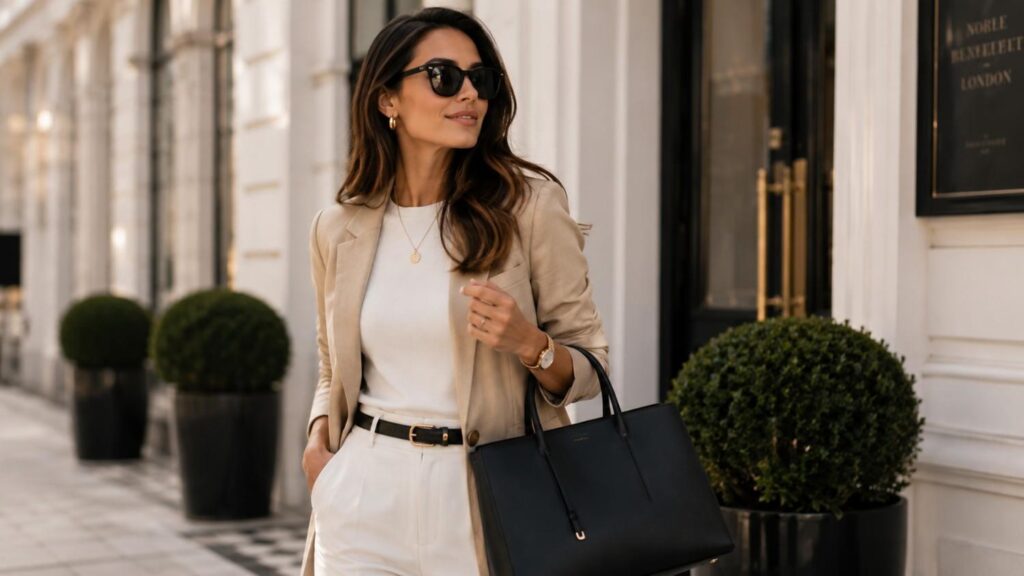
How to Look Expensive on a Budget
Understanding how to look expensive on a budget does not require copying every luxury trend or filling your wardrobe with designer logos. In most cases, an elevated appearance comes from visual order. The clothing fits correctly, the colour palette feels connected, the fabric behaves well, and each accessory has a clear purpose. Even inexpensive garments can look sophisticated when they are styled carefully and maintained properly.
Price is often less visible than people assume. A viewer cannot usually tell exactly what an unbranded blazer, plain knit, or pair of trousers cost. What they can see is whether the shoulder line sits correctly, whether the garment is wrinkled, whether the shoes are damaged, and whether the outfit feels coordinated. Fit, proportion, cleanliness, and condition communicate more than a label hidden inside the garment.
This approach also helps reduce unnecessary shopping. Instead of searching constantly for a new item that promises an instant transformation, you learn to improve what you already own. A hem can be corrected, a tired button can be replaced, and an ordinary outfit can be strengthened with better colour balance. These small decisions often create more visible value than buying another trend-led piece.
Professional stylists frequently emphasise fit, classic colours, wardrobe versatility, and second-hand shopping as practical ways to make affordable clothing appear more refined. Real Simple, for example, has highlighted these principles in its expert-led guidance on elevating outfits without a luxury budget.
The strategies below are designed for different ages, body shapes, personal aesthetics, workplaces, and climates. They do not require a minimalist wardrobe or a neutral-only style. Instead, they provide a flexible framework for making every purchase and outfit feel more intentional.
Start With Fit, Proportion, and Tailoring
Fit is one of the most influential elements of a polished wardrobe because it determines how clearly a garment’s intended shape can be seen. A beautifully coloured coat will lose its impact if the shoulders collapse or the sleeves cover the hands. Similarly, expensive trousers can look careless when they drag on the floor, twist around the legs, or pull sharply across the hips.
The objective is not to make every piece tight. Good fit means the garment works with its design and the wearer’s body. Relaxed tailoring, oversized shirts, and wide-leg trousers can all appear elegant when their volume is controlled. The problem begins when excess fabric looks accidental rather than intentional or when the proportions hide the wearer completely.
Review the clothes you already own before purchasing replacements. Try each item with the shoes and undergarments you usually wear because these can affect length, balance, and drape. Look at the outfit from the front, side, and back. Notice where fabric pulls, folds, bunches, or collapses.
Simple styling changes may correct some issues. Tucking a shirt, adding a belt, rolling a sleeve evenly, or changing the shoe height can improve proportions without an alteration. Other problems require a tailor, especially when a useful garment is close to fitting but needs a cleaner finish.
This process creates a stronger foundation for the remaining strategies. Once fit and proportion are correct, fabric, colour, accessories, and garment care can enhance the outfit instead of trying to hide structural problems.
Check the Most Visible Fit Points First
Start with the areas people notice immediately: shoulders, sleeve length, waist placement, trouser length, and the overall line of the garment. Jacket and coat shoulders should sit close to the natural shoulder unless the design intentionally uses padding or an oversized shape. Deep dents, excessive overhang, or fabric pulling across the upper back usually indicate that the size or cut is unsuitable.
Sleeves should also look deliberate. A formal jacket sleeve generally appears neater when it ends near the wrist rather than covering most of the hand. Shirt cuffs should not bunch heavily beneath a blazer. On trousers, consider whether the hem is designed to crop above the ankle, lightly touch the shoe, or create a controlled break. Excess fabric collecting around the foot can make the outfit appear unfinished.
Check the centre front and side seams as well. Buttons should close without pulling into obvious horizontal lines, and side seams should fall vertically instead of twisting. Pockets should lie reasonably flat rather than opening under tension.
One thing I always check first is whether the garment creates a recognisable silhouette. If the shape disappears, styling may restore definition through a tuck, belt, structured layer, or more balanced footwear. When styling cannot fix the issue, a different cut is often more effective than simply choosing a larger or smaller size.
Use Affordable Alterations Strategically
Alterations can make moderately priced clothing look selected for your body rather than accepted in its factory-made proportions. The most practical adjustments are usually straightforward: hemming trousers, shortening sleeves, taking in a simple waistband, replacing buttons, or refining a side seam. These changes can improve the visible line of a garment without requiring a costly reconstruction.
Before buying an item that needs work, estimate the total cost rather than considering the sale price alone. A heavily discounted blazer is not necessarily a bargain if the shoulders, armholes, lining, and body all require alteration. Structural tailoring can be technically difficult and may cost more than finding a better-fitting garment.
Prioritise alterations for versatile pieces that you expect to wear regularly. A classic trouser, coat, dress, or blazer that coordinates with several outfits can justify a modest tailoring expense. A highly specific trend item or one-event garment usually provides less value unless it serves an important purpose.
It is useful to maintain a small alteration allowance within your clothing budget. Buying fewer pieces and reserving funds for hemming or minor adjustments often creates a more polished wardrobe than spending the full amount on additional garments that never fit properly.
A tailor can also advise whether a change is realistic before you commit. When possible, take the shoes, belt, or underlayer you plan to wear with the garment so the final length and proportion can be assessed accurately.
These changes can make an inexpensive piece appear selected for your body rather than pulled directly from a generic size chart, especially when you understand which affordable alterations deliver the greatest visual improvement.
Choose Fabrics and Construction That Look Refined
Price does not always indicate whether a garment will look refined or perform well over time. Fabric composition, weight, opacity, drape, stitching, lining, and finishing all influence the final appearance. A simple garment made from stable material with neat seams can appear more polished than a costly piece that wrinkles badly, twists after washing, or uses distracting hardware.
Begin by reading the fibre-content and care labels. In the United States, the Federal Trade Commission requires many textile and wool products to disclose information such as fibre composition, country of origin, and the responsible manufacturer or marketer. Similar labelling requirements exist in many other markets. These details allow shoppers to make a more informed judgement instead of relying entirely on advertising language.
However, fibre content should not be treated as a complete quality score. A garment labelled 100% cotton may still be thin, poorly stitched, or unsuitable for its purpose. A well-designed blend may provide better shape retention, stretch, wrinkle resistance, or durability. The relevant question is whether the fabric supports the garment’s intended structure and use.
Inspect the item in natural or bright light whenever possible. Check whether pale fabrics become excessively transparent, whether the surface already shows pilling, and whether the material hangs evenly. Turn the garment inside out to review the stitching and seam allowances.
These habits become faster with practice. The goal is not to become a textile engineer but to identify visible signs that a garment is likely to retain a clean, stable appearance after normal wear and care.
Assess Fabric by Touch, Drape, and Recovery
Touch can provide useful information about density, softness, surface texture, and stability, although softness alone does not prove quality. Gently move the fabric through your hands and observe whether it feels substantial enough for its purpose. A tailored blazer generally needs more body than a flowing blouse, while a summer shirt should feel breathable without appearing transparent or fragile.
Test the drape by allowing part of the garment to hang naturally. Fabric that falls in smooth lines often creates a more refined silhouette than material that clings unpredictably or forms stiff, awkward folds. For structured pieces, check whether the fabric holds its shape around the collar, lapels, waistband, or pockets.
You can also perform a gentle recovery test. Lightly scrunch a small, inconspicuous area for a few seconds and release it. Some natural wrinkling is expected in linen and certain cotton fabrics, but severe creasing that remains immediately may make the garment difficult to maintain. Stretch fabric should return close to its original shape rather than remaining distorted.
Good On You’s quality-focused guidance similarly recommends examining durability, shape retention, stitching, and care information rather than relying on price or brand reputation alone.
Choose fibres according to function. Cotton can provide crispness, linen offers breathability, viscose creates fluid drape, and wool blends can support tailored shapes. The best option is the one that performs well in the garment you actually need.
Inspect Seams, Linings, Buttons, and Hardware
Construction details often reveal whether a garment will maintain a polished appearance. Turn the item inside out and examine the seams. Stitching should be reasonably even, without long loose threads, skipped sections, or fabric pulling away from the seam line. Apply very gentle tension to check whether large gaps appear between stitches.
Look at the hem and edge finishing. A straight, secure hem usually hangs better and is less likely to unravel. On patterned garments, check whether stripes, checks, or large motifs align at prominent seams. Perfect alignment is not always possible at every point, but obvious mismatching across the centre front or major side seams can make the piece appear less considered.
Linings should sit smoothly without pulling, twisting, or extending below the outer garment. On jackets, coats, dresses, and skirts, a good lining can improve comfort and help the outer fabric fall more cleanly.
Buttons, zips, buckles, and clasps should operate smoothly and feel appropriate for the garment. Loose buttons, scratched plating, noisy chains, and lightweight plastic hardware can weaken the overall effect. Replacing simple buttons can provide an inexpensive upgrade when the fabric and fit are otherwise strong.
For bags, inspect handle attachment, edge paint, lining, zip movement, and stitching at stress points. A clean, unbranded bag with stable construction will generally look more sophisticated than a poorly made imitation covered in counterfeit logos.
Build Expensive-Looking Outfits With Colour and Simplicity
A cohesive outfit appears more intentional because the eye can understand its visual structure quickly. When too many unrelated colours, textures, logos, prints, and accessories compete for attention, even individually attractive pieces can look chaotic. Simplicity does not require removing personality; it means deciding which part of the outfit should lead and allowing the remaining elements to support it.
Colour is one of the easiest tools to use because it does not necessarily require buying anything new. Begin by identifying which colours already dominate your wardrobe. If most of your trousers are black, navy, or brown, choose tops, jackets, and shoes that connect easily with those shades. This creates more complete outfits from fewer items.
A neutral colour palette is useful because shades such as cream, camel, black, grey, chocolate, navy, olive, and white tend to combine easily. However, neutral dressing is not automatically elegant. Poor fit, visible damage, and mismatched undertones can still make a neutral outfit appear careless.
Bright colours and prints can look equally sophisticated when controlled. Use one strong colour as the focal point, repeat a shade in a smaller detail, or surround a print with simpler pieces. The important factor is visual hierarchy.
Texture also prevents simple outfits from feeling dull. Combining smooth cotton, soft knitwear, polished leather, and structured wool-like fabric can create depth even within a limited colour family. This allows affordable clothing to look layered and considered without relying on excessive decoration.
Creating expensive-looking outfits is often more about thoughtful colour coordination, fit, and styling than the price of individual pieces.
Use Neutrals, Tonal Dressing, and Controlled Contrast
Neutral colours provide a practical foundation because they can be repeated frequently without making each outfit feel identical. Black, navy, brown, camel, cream, grey, olive, and white are especially useful for trousers, coats, shoes, bags, and knitwear. These pieces can support brighter colours while making the wardrobe easier to coordinate.
Tonal dressing involves combining several shades within the same colour family. For example, chocolate trousers can be paired with a caramel knit, a dark-brown belt, and tan shoes. The shades do not need to match exactly. Slight differences often create more depth and prevent the outfit from looking like a uniform.
Monochrome outfits use one dominant colour from head to toe. This can create a long, continuous visual line, especially when the pieces have clean proportions. To keep the look interesting, vary the texture or intensity. A navy knit, deep-blue trousers, and a slightly lighter coat can feel richer than three identical flat fabrics.
Controlled contrast is equally effective. A white shirt beneath a dark blazer creates a strong, classic contrast, while a burgundy bag can provide a deliberate focal point within a grey outfit.
Pay attention to undertones when combining pale neutrals. A cool, blue-based grey may clash with a strongly yellow cream, while warmer browns and ivories may feel more connected. The goal is not perfect colour theory but a palette that looks deliberate rather than accidental.
Follow a Simple Outfit Formula
An outfit formula is a repeatable combination that reduces rushed decisions and helps you use your wardrobe more efficiently. It provides structure without forcing you to wear the same pieces every day. Once you identify two or three formulas that suit your lifestyle, you can vary colour, texture, and accessories while maintaining a consistently polished result.
A reliable formula begins with a clean base. This might be tailored trousers with a fitted knit, dark jeans with a tucked shirt, or a column dress with simple footwear. Add one structured layer, such as a blazer, coat, overshirt, or cardigan with a defined shape. Choose shoes that match the outfit’s level of formality, then add one focal accessory.
Before leaving, review the complete look and remove anything that creates unnecessary competition. This final editing step is especially useful when several accessories, patterns, or layers have been added.
A practical five-step formula is:
- Choose a streamlined base.
- Add a structured or purposeful layer.
- Coordinate the shoes with the outfit’s formality.
- Select one focal accessory.
- Remove any element that makes the look feel crowded.
Repeating successful formulas creates a recognisable personal style. It also makes shopping more strategic because you can evaluate whether a new garment fits an existing formula. When a piece cannot be styled in several realistic ways, it may not deserve space in a budget-conscious wardrobe.
Shop More Strategically Instead of Buying More
A sophisticated wardrobe is created through selection and editing, not simply accumulation. Buying many inexpensive trend items can produce a crowded wardrobe in which individual garments do not coordinate. The result is often a feeling of having plenty of clothes but nothing complete to wear.
Begin by identifying your most common activities. Consider work, commuting, social events, errands, religious or cultural occasions, travel, and seasonal conditions. Your budget should support these real situations before it is spent on fantasy purchases that suit a lifestyle you rarely live.
Create a short list of wardrobe gaps. Be specific. “I need clothes” is too broad, while “I need dark trousers that work with three existing tops and two pairs of shoes” provides a useful shopping standard. Photographing successful outfits can also reveal which colours, cuts, and combinations you use most.
When shopping online, review the complete description, fibre content, measurements, return policy, delivery cost, and customer-service information. The Federal Trade Commission advises consumers to examine total costs and seller credibility and to be cautious when branded products are offered at prices that appear unusually low.
Avoid treating every sale as a saving. A discounted item that remains unworn is still wasted money. A full-price piece that fits well, fills a genuine gap, and is worn regularly may provide better value.
Strategic shopping also makes personal style clearer. When each new purchase must coordinate with existing clothing, the wardrobe gradually becomes more connected, versatile, and visually consistent.
Related Articles
Spend According to Wear, Not Category Hype
Cost per wear is a simple way to evaluate value. Divide an item’s total cost—including necessary alterations or repairs—by the number of times you realistically expect to use it. The calculation does not need to be exact. Its purpose is to shift attention from the purchase price toward practical usefulness.
A coat worn repeatedly throughout winter may justify a larger share of the budget than a highly distinctive top worn once. Comfortable work shoes may provide more value than an impractical designer-inspired pair that remains in the wardrobe. The right priorities depend on your climate, work environment, social life, and personal preferences.
| Wardrobe decision | Higher priority when | Lower priority when |
|---|---|---|
| Tailoring | The garment is versatile and nearly fits | Major reconstruction is required |
| Shoes | They suit regular activities and remain comfortable | They work with only one outfit |
| Outerwear | Your climate requires frequent use | It is primarily a novelty piece |
| Handbag | It carries daily essentials and coordinates widely | The design is highly trend-specific |
| Occasion wear | It can be restyled for several events | It serves one uncertain occasion |
| Accessories | They improve multiple outfits | They duplicate items you already own |
Cost per wear does not mean every frequently worn item must be expensive. Affordable garments can provide excellent value. The method simply helps you direct limited funds toward pieces that contribute consistently to your wardrobe rather than those purchased mainly for excitement.
Use Sales and Second-Hand Shopping Carefully
Sales, consignment stores, second-hand platforms, charity shops, clothing swaps, and resale boutiques can provide access to stronger construction at a lower cost. However, these channels are most useful when approached with the same standards as full-price shopping.
Begin with a list and a budget. Do not allow an impressive original price or designer label to replace an assessment of fit, condition, and usefulness. A heavily discounted item is not valuable when it requires major repairs, cannot be returned, or does not coordinate with your wardrobe.
For second-hand clothing, inspect photographs of cuffs, underarms, collars, hems, fastenings, and linings. These areas often reveal wear more clearly than the main product image. For shoes, examine the soles, heel tips, insoles, and toe area. For bags, check corners, handles, edge paint, lining, zips, and hardware.
Ask for garment measurements because labelled sizing can vary across brands, countries, and manufacturing periods. Confirm return conditions, seller ratings, payment protection, and any authentication policy before purchasing higher-value branded goods.
Be particularly cautious with products advertised as luxury goods at implausibly low prices. Counterfeit items may use poor materials and can involve legal or ethical concerns. A simple, well-constructed unbranded item often creates a more confident impression than a questionable imitation.
The strongest second-hand purchase is one that fits your current wardrobe, requires minimal restoration, and would still appeal to you without the label.
| Wardrobe Essential | Why It Looks Expensive | Budget-Friendly Tip |
|---|---|---|
| Structured Blazer | Creates a sharp silhouette and polished appearance | Choose classic colours like black, navy, or camel and tailor the sleeves if needed |
| Tailored Trousers | Improve overall proportion and outfit balance | Prioritise proper fit over trendy designs |
| Crisp White Shirt | Adds a clean and timeless finish | Steam regularly and replace worn buttons |
| Dark Straight-Leg Jeans | Look refined and pair with multiple outfits | Avoid excessive distressing or fading |
| Neutral Knitwear | Gives outfits a sophisticated layered look | Select medium-weight fabrics with minimal pilling |
| Quality Leather Belt | Defines the waist and completes an outfit | Stick to simple buckles and classic colours |
| Polished Shoes | Instantly elevate casual and formal clothing | Clean, condition, and polish them regularly |
| Structured Handbag | Enhances the overall outfit without designer branding | Choose minimal hardware and solid construction |
Finish the Look With Accessories, Grooming, and Care
Accessories, grooming, and garment care determine whether an outfit feels finished. These details appear around the face, hands, shoes, bag, and outer edges of the silhouette, so small signs of neglect can become highly visible. Clean footwear, neat hair, maintained clothing, and controlled accessories can elevate simple garments more effectively than adding another expensive-looking item.
The goal is not perfection or an elaborate beauty routine. A polished appearance should be manageable within your time, budget, cultural preferences, and lifestyle. Consistency matters more than complexity. Clean nails, tidy hair, moisturised skin, fresh clothing, and well-kept shoes create a strong foundation without requiring luxury products.
Accessories should connect to the outfit rather than compete with it. Repeating a metal tone, leather colour, shape, or texture can make separate pieces feel coordinated. However, rigid matching is unnecessary. Mixed metals and contrasting accessories can look sophisticated when they appear deliberate.
Garment care extends the life and visual quality of clothing. Wrinkles, lint, loose threads, pilling, stains, and damaged heels may make an item appear cheaper or older than it is. A small home-care kit containing a lint roller, fabric comb, sewing supplies, stain treatment, steamer, and suitable shoe-care products can protect the wardrobe more effectively than frequent replacement.
This final stage brings the earlier principles together. Correct fit, good fabric, and thoughtful colour choices achieve their full effect only when the complete presentation looks clean, intentional, and maintained.
| Common Styling Mistake | Elegant Alternative | Result |
|---|---|---|
| Wearing wrinkled clothing | Steam or iron garments before wearing | Cleaner and more polished appearance |
| Over-accessorising | Wear one or two refined accessories | Creates a balanced and sophisticated outfit |
| Mixing too many colours | Follow a neutral or tonal colour palette | Makes outfits appear coordinated |
| Ignoring garment maintenance | Remove lint, repair loose threads, and polish shoes | Clothing looks newer and higher quality |
| Buying trendy pieces only | Invest in timeless wardrobe basics | Better long-term style and versatility |
| Wearing poorly fitted clothes | Choose correct sizing or affordable tailoring | Improves overall silhouette |
| Carrying worn handbags | Maintain or replace damaged accessories | Creates a premium overall impression |
| Choosing flashy logos | Select clean, minimalist designs | Produces a refined and understated look |
Keep Accessories Selective and Well Maintained
Accessories should create focus, balance, or continuity. One watch, pair of earrings, scarf, belt, necklace, or structured bag may be enough to complete an outfit. Adding several statement pieces at once can make the look feel crowded, especially when the clothing already includes strong colour, pattern, or detail.
Choose accessories according to proportion. A very small bag may disappear against an oversized coat, while an extremely large piece of jewellery can overwhelm a delicate neckline. Consider the scale of the wearer and the surrounding garments rather than following a universal rule.
Maintenance is essential. Check jewellery clasps, missing stones, tarnish, scratched surfaces, loose settings, and damaged plating. The Gemological Institute of America recommends protecting jewellery from impact and chemical exposure and arranging appropriate professional inspection for valuable pieces.
Bags should be emptied, cleaned according to their material, and stored so they retain their shape. Belts should not be folded sharply, and shoes should be wiped or polished before visible dirt becomes difficult to remove.
Large logos are not necessary for an elevated result. In many cases, a simple belt, clean watch, neat scarf, or understated pair of earrings looks more refined than an accessory designed primarily to display a brand.
The best accessories support your personal style and repeat across several outfits. They should feel like an intentional finishing decision, not an attempt to prove the cost of what you are wearing.
Make Garment Care Part of Your Style Routine
Clothing care should be treated as part of personal style rather than a separate household task. A garment that is wrinkled, stained, covered in lint, or missing a button cannot present its design effectively. Regular maintenance allows affordable clothing to retain a cleaner and more polished appearance.
Read the permanent care label before washing, drying, ironing, or steaming. The Federal Trade Commission’s Care Labeling Rule requires applicable garments sold in the United States to include regular care instructions and relevant warnings. Following those instructions reduces the risk of shrinkage, colour transfer, fibre damage, or distortion.
Woolmark recommends measures such as turning wool garments inside out before washing, separating colours, folding knits, hanging woven garments appropriately, and using steam carefully. It also notes that pilling can be managed with suitable tools when they are used gently.
Create a weekly maintenance routine. Check garments before returning them to the wardrobe. Remove lint, treat stains promptly, sew loose buttons, trim hanging threads carefully, and allow damp items to dry completely. Steam or iron pieces before the day they are needed rather than rushing immediately before leaving.
Store structured bags with light stuffing, use suitable hangers for coats and jackets, and fold heavy knitwear to prevent stretching. Rotate shoes so they can dry and recover between wears.
These habits reduce replacement costs and make outfit planning easier because more of the wardrobe remains ready to wear.
Quick Answer About How to Look Expensive on a Budget
Learning how to look expensive on a budget starts with understanding that polished style is created by presentation rather than price alone. Clothes look more refined when they fit properly, sit smoothly on the body, coordinate with the rest of the outfit, and remain in good condition. A clean, well-pressed shirt with correctly fitted trousers will often look more sophisticated than an expensive outfit that is wrinkled, poorly proportioned, or overloaded with accessories.
Begin by building outfits around versatile basics in colours that work together. Check fabric opacity, seams, buttons, zips, and lining before buying. Use alterations when a worthwhile garment needs a simple adjustment, such as hemming trousers or shortening sleeves. Add one or two intentional accessories rather than several competing statement pieces.
Maintenance is equally important. Remove lint, steam wrinkles, repair loose buttons, clean footwear, and store garments correctly. Spend more selectively on items you use frequently, and consider sales, resale platforms, and clothing swaps for better construction at a lower cost. The goal is not to imitate wealth or hide your budget. It is to create a wardrobe that looks coherent, cared for, comfortable, and confidently styled.
Frequently Asked Questions About How to Look Expensive on a Budget
Questions about how to look expensive on a budget often focus on colours, tailoring, accessories, and wardrobe essentials. These topics matter, but they work together rather than functioning as isolated tricks. A neutral outfit will not appear polished when it fits badly, and tailoring cannot rescue fabric that is already damaged or unsuitable.
It is also important to separate elegant style from a narrow interpretation of wealth. Looking refined does not require hiding your personality, avoiding colour, or dressing formally every day. A polished casual outfit can be built from jeans, knitwear, clean trainers, and a structured coat. A vibrant dress can look sophisticated when its fit, accessories, and grooming are controlled.
The most effective strategy is to establish repeatable standards. Clothes should fit comfortably, coordinate with several existing pieces, suit real activities, and remain manageable to care for. Accessories should add purpose rather than noise. New purchases should fill genuine gaps rather than create additional styling problems.
Beginners may find it helpful to improve one area at a time. Start with fit, then review colour coordination, footwear, accessories, and garment condition. More advanced readers can refine fabric selection, proportion, tonal dressing, and cost-per-wear decisions.
The following answers address common search questions while keeping the advice practical, inclusive, and realistic for different budgets and personal styles.
What colours make an outfit look expensive?
Neutral and tonal combinations often look refined because they reduce visual competition and make coordination easier. Black, navy, cream, camel, grey, chocolate, olive, and white provide useful foundations for trousers, outerwear, knitwear, shoes, and bags. These shades can be repeated frequently without making every outfit feel the same.
However, no colour is automatically expensive-looking. Condition, fit, fabric, and styling remain more important than the shade itself. A wrinkled beige outfit can look less polished than a well-fitted red dress with simple accessories.
Rich jewel tones such as burgundy, emerald, cobalt, and deep purple can also appear elegant. Use one strong colour as the focus and support it with quieter shades. Tonal dressing is another effective approach. Combine several versions of the same colour, such as cream, camel, and chocolate, while varying the texture.
Pay attention to colour consistency across accessories. Shoes and bags do not need to match exactly, but they should feel connected to the outfit. The best palette is one that suits your colouring, coordinates with your wardrobe, and makes complete outfits easy to build.
How can I make cheap clothes look more expensive?
Begin with fit. Hem trousers, adjust simple waistlines, tuck shirts neatly, and choose undergarments that allow the fabric to sit smoothly. A low-priced garment that fits correctly will usually look more refined than a costly piece with poor proportions.
Next, improve the condition. Steam wrinkles, remove lint, trim loose threads, replace damaged buttons, and treat stains promptly. Check whether the fabric has pilled or stretched beyond repair. Maintenance can improve a garment significantly, but it cannot restore material that is fundamentally failing.
Style the piece with cleaner supporting items. Pair a simple top with structured trousers, a neat belt, polished shoes, and one controlled accessory. Coordinated colours help the garment feel connected to the complete outfit rather than exposed as an isolated inexpensive item.
Avoid adding counterfeit logos or excessive decoration in an attempt to create luxury. Simplicity often produces a stronger result.
Finally, recognise when not to invest additional money. If the fabric is transparent, badly twisted, heavily pilled, or poorly constructed, alterations may not be worthwhile. The goal is to improve useful garments, not spend repeatedly on pieces that cannot perform well.
Is tailoring worth the money?
Tailoring is usually worthwhile when a versatile garment is close to fitting and requires a straightforward adjustment. Hemming trousers, shortening sleeves, refining a waistband, or taking in a simple side seam can create a significant visual improvement without changing the garment’s basic construction.
The value depends on how often the item will be worn. A blazer used regularly for work, travel, or social events may justify a tailoring cost. A novelty item purchased for one uncertain occasion may not.
Ask for an estimate before committing, especially when buying something on sale. The true cost includes the purchase price, alteration fee, transport, and any additional work. A low sale price can become expensive when several structural changes are required.
Some alterations are difficult or uneconomical. Moving shoulders, rebuilding armholes, changing heavily constructed jackets, or resizing garments by several sizes may affect the original balance. A tailor can advise whether the result is realistic.
Bring the shoes and undergarments you expect to wear with the item, particularly for trousers, skirts, and dresses. These details influence the final length and fit.
Tailoring should refine a strong purchase, not rescue a fundamentally unsuitable one. When used selectively, it is one of the most effective tools for creating a polished style on a budget.
Can I look elegant without wearing neutral colours?
Yes. Elegance depends on coordination, proportion, fabric, condition, and intention rather than a specific palette. Neutral colours are popular because they are easy to combine, but they are not a requirement for sophisticated style.
Bright colours can look highly refined when they are controlled. Choose one dominant shade and allow the remaining pieces to support it. A cobalt dress with simple black shoes and small earrings can look more elegant than an uncoordinated all-neutral outfit. A red knit with dark tailored trousers creates a clear focal point without feeling excessive.
Prints can also work well. Keep the silhouette clean, repeat one colour from the print elsewhere in the outfit, and avoid adding several competing patterns. The larger or more detailed the print, the simpler the accessories may need to be.
Consider tonal dressing with colour. Several shades of green, blue, burgundy, or purple can create depth while maintaining a connected visual line.
The most important question is whether the colours suit your personal style and can be repeated across your wardrobe. Clothing looks more confident when the wearer feels comfortable in it. You do not need to adopt beige minimalism to create expensive-looking outfits.
What should I buy first for a polished wardrobe?
Start with the items that solve your most frequent dressing problems. There is no universal list that suits every lifestyle. Someone working in a formal office may need tailored trousers and structured outerwear, while a remote worker may gain more value from polished knitwear, dark jeans, and comfortable shoes.
Review one or two weeks of real activities. Identify which outfits were difficult to complete and why. You may discover that you do not need more tops; you need a versatile layer, reliable footwear, or trousers that coordinate with what you already own.
Strong starting pieces often include well-fitting trousers or dark jeans, a clean shirt, a versatile knit, structured outerwear, and comfortable shoes in good condition. However, each purchase should combine with at least three items already in your wardrobe.
Prioritise fit and usefulness over trend status. A simple coat worn repeatedly is usually a better first investment than a highly distinctive accessory with limited styling options.
Photograph successful outfits and use them as a shopping reference. This prevents buying attractive pieces that do not support your existing wardrobe.
The first purchase should make several outfits easier to create. That practical improvement is more valuable than following a generic “must-have” list.
Do monochrome outfits always look more expensive?
Monochrome outfits can look polished because one dominant colour creates a continuous visual line. This reduces interruption and can make the silhouette appear longer or more streamlined. However, wearing one colour does not automatically create an elevated result.
Fit remains essential. Trousers that drag, a shirt that pulls, or a jacket with collapsing shoulders will still look poorly proportioned within a monochrome outfit. Condition also matters. Fading, pilling, stains, and mismatched blacks may become more visible when the whole outfit relies on one colour.
Use texture to create depth. Combine a smooth shirt, soft knit, structured trouser, and polished shoe within the same colour family. Slight variation prevents the outfit from appearing flat.
The shades do not need to match perfectly. Tonal dressing with navy, ink blue, and slate blue can feel more sophisticated than forcing three pieces with slightly conflicting versions of black.
Accessories can either continue the colour line or provide one controlled contrast. A burgundy bag with a grey outfit, for example, creates a clear focal point.
Monochrome dressing is a useful formula, not a guarantee. It works best when the garments fit well, the textures feel balanced, and the complete outfit suits the occasion.
Conclusion
Learning how to look expensive on a budget is ultimately about developing visual judgement and consistent habits. Designer labels may provide access to certain materials or construction techniques, but they do not replace correct fit, thoughtful coordination, clean presentation, and proper care. An ordinary garment can look highly refined when it sits well, supports the wearer’s proportions, and forms part of a coherent outfit.
Start by reviewing what you already own. Correct hems, replace damaged buttons, remove pilling, steam wrinkles, and identify the colours and silhouettes you wear most successfully. These changes often improve your wardrobe before any new purchase is required.
When shopping, examine fabric, seams, lining, hardware, and care information. Choose pieces that work with several existing garments and suit your real schedule. Spend according to expected use rather than category hype, and include alterations in the total cost.
Use accessories selectively and maintain them carefully. A clean pair of shoes, neat bag, simple jewellery, and controlled grooming can strengthen even a modest outfit. Avoid using logos or imitation luxury details as a substitute for quality and confidence.
Most importantly, do not erase your personality in pursuit of a narrow “quiet luxury” look. Colour, prints, relaxed silhouettes, and casual clothing can all appear polished when styled intentionally. The aim is not to look as though every item was expensive. It is to look comfortable, organised, confident, and attentive to detail.
