

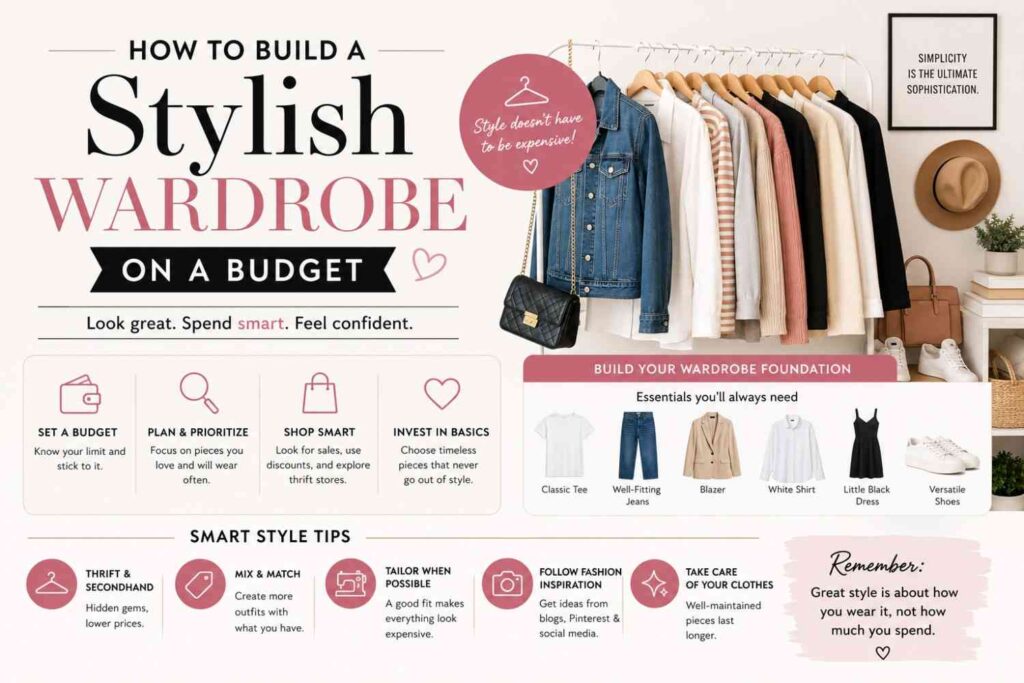
How to Build a Stylish Wardrobe on a Budget
Looking fashionable is often associated with expensive designer labels, luxury boutiques, and constantly changing trends. However, true style has very little to do with how much money you spend and far more to do with how thoughtfully you build your wardrobe. Many of the most stylish individuals rely on timeless pieces, smart shopping habits, and a clear understanding of their personal style rather than continuously purchasing new clothing.
Learning how to build a stylish wardrobe on a budget is one of the most valuable skills for anyone who wants to improve their appearance without creating financial stress. A carefully planned wardrobe allows you to dress confidently, create versatile outfits, and maximize the value of every item you own. Instead of filling your closet with random purchases that rarely get worn, you can focus on building a collection of clothing that works together seamlessly.
The good news is that creating an attractive wardrobe does not require a complete overhaul of your closet or a large upfront investment. By understanding wardrobe essentials, developing a shopping strategy, and focusing on quality over quantity, you can gradually build a wardrobe that reflects your personality and lifestyle while staying within your budget.
Whether you are a student, a working professional, or simply someone who wants to improve their style without overspending, the strategies in this guide will help you create a wardrobe that looks polished, practical, and affordable.
Why a Budget-Friendly Wardrobe Strategy Matters
Many people approach clothing purchases without a clear plan. They buy items based on trends, impulse purchases, or temporary discounts, only to discover later that those pieces do not fit well with the rest of their wardrobe. Over time, this often results in a closet full of clothes and a feeling that there is still “nothing to wear.”
A budget-friendly wardrobe strategy helps eliminate this problem by encouraging thoughtful purchasing decisions. Instead of chasing every trend or purchasing items simply because they are on sale, you focus on building a wardrobe that serves your actual needs. This approach allows you to make better use of your clothing budget while creating a more cohesive and stylish collection of outfits.
One of the greatest advantages of having a wardrobe strategy is financial efficiency. When you purchase clothing intentionally, you reduce wasteful spending and increase the likelihood that every item will be worn frequently. This not only saves money but also helps you develop a stronger understanding of your personal style.
Additionally, a structured wardrobe plan supports sustainability. Buying fewer, better-quality items reduces clothing waste and encourages more responsible consumption habits. As consumers become increasingly aware of the environmental impact of fashion, building a thoughtful wardrobe has become both a practical and ethical choice.
Most importantly, a budget-friendly wardrobe strategy allows you to feel confident in your appearance without constantly feeling pressure to spend more money. Style becomes a reflection of smart choices rather than financial resources, making fashion more accessible and enjoyable for everyone.
The Hidden Cost of Impulse Buying
Impulse buying is one of the biggest obstacles to building a stylish and affordable wardrobe. While a spontaneous purchase may feel exciting at the moment, it often leads to regret when the item does not fit your lifestyle, coordinate with other pieces, or get worn regularly.
Many retailers intentionally create a sense of urgency through limited-time sales, flash promotions, and marketing tactics designed to encourage immediate purchases. As a result, consumers frequently buy clothing based on emotions rather than actual needs. These purchases may seem inexpensive individually, but they can add up significantly over time.
Another hidden cost of impulse buying is wardrobe clutter. When your closet contains numerous items that do not work together, creating outfits becomes more difficult. Instead of simplifying your daily routine, excess clothing can actually make getting dressed more frustrating and time-consuming.
Impulse purchases can also prevent you from investing in higher-quality pieces. Money spent on multiple unnecessary items could often be better allocated toward wardrobe essentials that offer greater versatility and longevity. For example, purchasing several trendy shirts that are rarely worn may cost more in the long run than investing in one high-quality blazer that can be styled in dozens of ways.
Developing the habit of pausing before making a purchase can significantly improve wardrobe quality. Asking yourself whether an item matches your existing clothing, serves a specific purpose, and aligns with your long-term style goals can help eliminate unnecessary spending and lead to better purchasing decisions.
The Benefits of Building a Purposeful Wardrobe
A purposeful wardrobe is built around intention rather than accumulation. Every item serves a function, complements other pieces, and contributes to a consistent personal style. This approach creates a more efficient, versatile, and satisfying wardrobe experience.
One major advantage of a purposeful wardrobe is improved outfit coordination. When clothing items are selected with compatibility in mind, creating outfits becomes significantly easier. Instead of struggling to match random pieces, you can combine items effortlessly to create polished looks for different occasions.
A purposeful wardrobe also saves valuable time. Many people spend unnecessary time deciding what to wear because their clothing options lack organization and versatility. A curated wardrobe reduces decision fatigue and streamlines the dressing process, making mornings more efficient and less stressful.
Financial benefits are equally important. When every purchase is carefully considered, clothing budgets tend to stretch further. Rather than continuously replacing poorly chosen items, you invest in pieces that provide long-term value. This strategy supports both short-term savings and long-term financial health.
Another often-overlooked benefit is increased confidence. Wearing clothing that fits properly, reflects your personality, and works well together can positively influence how you feel throughout the day. Confidence often stems from knowing that your appearance aligns with your personal goals and lifestyle.
Ultimately, a purposeful wardrobe creates a balance between style, functionality, and affordability, allowing you to achieve a polished appearance without unnecessary spending.
How Budget Fashion Supports Long-Term Style
Many people mistakenly assume that budget fashion means sacrificing quality or style. In reality, successful budget fashion focuses on making smart purchasing decisions rather than simply buying the cheapest available options.
Long-term style is built around consistency and versatility. Instead of constantly replacing clothing to keep up with changing trends, individuals who embrace budget-conscious fashion often prioritize timeless pieces that remain relevant year after year. These classic items form the foundation of a wardrobe that evolves gradually rather than requiring frequent overhauls.
Budget fashion also encourages greater awareness of value. Rather than evaluating clothing solely based on price, experienced shoppers consider factors such as durability, versatility, fit, and cost-per-wear. This mindset leads to better purchasing decisions and helps maximize the return on every dollar spent.
Another important advantage is flexibility. By avoiding excessive spending on temporary trends, you maintain room in your budget for future wardrobe upgrades and changing lifestyle needs. Whether transitioning into a new career, adapting to a different climate, or refining your personal style, a budget-conscious approach provides greater financial freedom.
Over time, these habits contribute to a wardrobe that is both stylish and sustainable. The focus shifts away from constant consumption and toward thoughtful curation, allowing you to develop a personal style that remains attractive, practical, and affordable for years to come.
Define Your Personal Style Before Shopping
One of the most common mistakes people make when trying to improve their wardrobe is shopping before they fully understand their personal style. Without a clear sense of what suits your preferences, lifestyle, and body type, it is easy to waste money on clothing that looks appealing in a store but rarely gets worn. Defining your personal style provides a foundation for every future purchasing decision and helps ensure that your wardrobe remains cohesive and functional.
Personal style is more than simply following fashion trends. It reflects your personality, daily activities, professional requirements, comfort preferences, and the image you want to project. When you understand your style, shopping becomes easier because you know exactly what types of clothing deserve your attention and which items should be avoided.
A clearly defined style also helps prevent impulse purchases. Instead of buying clothing because it is popular or heavily discounted, you can evaluate whether it fits your overall wardrobe strategy. This approach reduces unnecessary spending while improving the overall quality and versatility of your clothing collection.
Developing personal style is a gradual process. It involves observation, experimentation, and self-awareness. As your lifestyle evolves, your wardrobe may evolve as well, but having a strong understanding of your preferences makes those transitions much smoother. Before investing in wardrobe essentials or building a capsule wardrobe, taking time to define your style can save both money and frustration in the long run.
Identify Your Lifestyle Needs
A stylish wardrobe should support your everyday life rather than work against it. Before purchasing any clothing, it is important to evaluate how you spend your time and what types of outfits you genuinely need. Many people buy clothing based on idealized versions of themselves rather than their actual lifestyles, which often leads to closets filled with rarely worn items.
Start by assessing your weekly activities. Consider how much time you spend at work, attending social events, exercising, traveling, or relaxing at home. A corporate professional may require more tailored clothing and business attire, while someone working remotely may benefit from versatile casual pieces that offer both comfort and style.
Climate is another important factor. Your wardrobe should reflect the weather conditions in your region. Investing heavily in seasonal clothing that rarely gets used can be an inefficient use of your budget. Instead, prioritize pieces that can be layered and adapted throughout the year.
Understanding your lifestyle also helps establish spending priorities. For example, if you attend formal events frequently, allocating more budget toward quality dress shoes or tailored outfits may make sense. On the other hand, if your daily routine is primarily casual, investing in durable jeans, versatile tops, and comfortable footwear may provide greater value.
By aligning your wardrobe with your real-life needs, you create a practical foundation that maximizes both style and functionality while reducing unnecessary purchases.
Create a Style Inspiration Collection
Building a style inspiration collection is one of the most effective ways to discover what truly appeals to you. Rather than blindly following trends, collecting visual references allows you to identify patterns in your preferences and create a more intentional wardrobe.
Start by saving outfit ideas from fashion blogs, magazines, social media platforms, and style-focused websites. Platforms such as Pinterest can be particularly useful because they allow you to organize images into dedicated boards. As you collect inspiration, pay attention to recurring elements such as colors, silhouettes, fabrics, and accessories.
After gathering a substantial number of images, review them carefully. You may notice that you consistently gravitate toward minimalist outfits, classic tailoring, casual streetwear, or sophisticated business-casual looks. These patterns provide valuable insights into your natural style preferences and can guide future shopping decisions.
A style inspiration collection also helps reduce costly mistakes. Before purchasing an item, you can compare it to the visual direction you have established. If it does not align with your overall aesthetic, it may not be worth buying regardless of how attractive it appears individually.
Additionally, maintaining a style reference library can make seasonal wardrobe updates easier. Instead of starting from scratch each time you shop, you already have a clear framework that supports consistency and helps you stay focused on your long-term wardrobe goals.
Focus on What Makes You Feel Confident
While fashion advice can be helpful, confidence should ultimately guide your wardrobe choices. The most stylish people are often not those wearing the most expensive clothing but those who feel comfortable and authentic in what they wear.
Confidence comes from understanding what works for your body shape, personality, and lifestyle. Clothing that fits properly and reflects your personal preferences naturally creates a stronger impression than trendy items that feel uncomfortable or unnatural. When you feel confident, it positively influences posture, communication, and overall presence.
One common mistake is purchasing clothing solely because it is fashionable or recommended by others. While trends can provide inspiration, they should not override personal comfort and practicality. If a particular style does not align with your preferences or lifestyle, it is unlikely to become a valuable part of your wardrobe.
Experimentation can play an important role in building confidence. Trying new colors, cuts, or styling techniques allows you to discover what makes you feel your best. Over time, these experiences help refine your personal style and improve your understanding of what deserves a place in your wardrobe.
Ultimately, confidence creates consistency. When your clothing choices genuinely reflect who you are, building and maintaining a stylish wardrobe becomes much easier. Instead of constantly seeking external validation, you develop a wardrobe that supports your individuality and helps you feel comfortable in any situation.
Build a Strong Foundation with Wardrobe Essentials
A stylish wardrobe is built on a solid foundation of versatile clothing rather than an endless collection of trendy items. While fashion trends come and go, wardrobe essentials remain relevant because they provide flexibility, functionality, and long-term value. These core pieces serve as the building blocks of countless outfit combinations and make it easier to create a polished appearance without constantly purchasing new clothing.
When building a wardrobe on a budget, it is important to focus on items that can be worn in multiple settings and across different seasons. A well-selected collection of basics allows you to create both casual and more refined outfits by simply changing accessories, layering pieces, or footwear. This versatility helps maximize the value of every purchase and reduces the need for excessive spending.
Wardrobe essentials also simplify decision-making. Instead of dealing with a closet full of mismatched clothing, you create a collection where most items work together naturally. This not only saves time when getting dressed but also ensures that your wardrobe remains cohesive and stylish.
Another benefit of prioritizing essentials is longevity. Because these pieces are often designed with classic styles and neutral colors, they are less likely to feel outdated after a single season. Investing in a strong wardrobe foundation allows you to gradually add trend-driven pieces if desired while maintaining a reliable collection of clothing that remains useful year after year.
Before experimenting with fashion trends, establishing these core essentials should always be the first step toward building a stylish and affordable wardrobe.
Essential Clothing Items Worth Prioritizing
When working with a limited clothing budget, every purchase should serve a clear purpose. Prioritizing wardrobe essentials ensures that you spend money on pieces that offer maximum versatility and frequent use. These foundational items become the backbone of your wardrobe and provide the flexibility needed to create a wide range of outfits.
A quality pair of dark jeans is often one of the most valuable investments because it can be dressed up or down depending on the occasion. Neutral-colored T-shirts and button-down shirts also offer excellent versatility and can serve as layering pieces throughout the year. For professional environments, a well-fitted blazer can instantly elevate even the simplest outfit.
Footwear deserves special attention because it has a significant impact on both comfort and appearance. White sneakers, versatile loafers, and durable boots are examples of shoes that can complement numerous outfits. Rather than purchasing multiple inexpensive pairs, focusing on a few high-quality options often provides better value.
Outerwear is another important category. A classic jacket, trench coat, or versatile coat can transform an outfit while providing practical protection from changing weather conditions. Accessories such as belts, watches, and neutral bags further increase outfit variety without requiring major wardrobe additions.
By focusing on essential clothing items first, you create a wardrobe that functions efficiently across different situations. Once these foundational pieces are in place, adding specialty or trend-driven items becomes much easier and more cost-effective.
Budget-Friendly Wardrobe Essentials Priority Guide
| Clothing Category | Priority Level | Reason for Inclusion | Versatility Rating |
|---|---|---|---|
| White T-Shirt | High | Works with almost every casual outfit | Excellent |
| Dark Wash Jeans | High | Suitable for casual and smart-casual looks | Excellent |
| Button-Down Shirt | High | Can be dressed up or down easily | Excellent |
| Neutral Sweater | High | Ideal for layering across seasons | Very High |
| Blazer | Medium-High | Elevates basic outfits instantly | Very High |
| White Sneakers | High | Complements multiple outfit styles | Excellent |
| Classic Jacket | Medium-High | Adds structure and functionality | High |
| Belt & Watch | Medium | Improves outfit presentation | High |
Choose Neutral Colors First
Color plays a crucial role in wardrobe versatility, and neutral shades are often the smartest starting point when building a stylish wardrobe on a budget. Neutral colors provide flexibility because they coordinate easily with one another, making outfit creation simpler and more efficient.
Common neutral colors include black, white, gray, navy, beige, brown, and cream. These shades form a strong foundation because they rarely go out of style and can be adapted to different seasons and occasions. A wardrobe built around neutral tones allows you to mix and match pieces with minimal effort while maintaining a polished appearance.
One of the biggest advantages of neutral colors is their ability to maximize outfit combinations. For example, a navy blazer can pair with gray trousers, dark denim, or beige chinos. Similarly, a white shirt can be worn in both professional and casual settings. This versatility increases the number of outfits you can create without expanding your wardrobe significantly.
Neutral colors also make future shopping decisions easier. When most of your wardrobe follows a coordinated color palette, new purchases are more likely to integrate seamlessly with existing items. This reduces the risk of buying clothing that only works with one specific outfit.
That does not mean your wardrobe must be completely devoid of color. Once a neutral foundation has been established, accent colors can be introduced through accessories, outerwear, or select statement pieces. Starting with neutrals simply ensures that your wardrobe remains practical, cohesive, and cost-effective while still allowing room for personal expression.
Invest in Timeless Fashion Pieces
One of the most effective ways to save money while maintaining a stylish appearance is to invest in timeless fashion pieces. Unlike trend-driven clothing that may lose popularity within a season, timeless items remain relevant year after year, making them valuable additions to any wardrobe.
Classic fashion pieces are characterized by simple designs, clean lines, and enduring appeal. Examples include a tailored blazer, dark denim jeans, a white button-down shirt, a quality leather belt, a versatile coat, and well-made footwear. These items consistently appear in fashion because they offer both functionality and elegance.
Investing in timeless clothing does not necessarily mean purchasing luxury brands. Instead, the focus should be on selecting well-constructed garments made from durable materials. Paying slightly more for quality can often result in significant long-term savings because these pieces tend to last longer and maintain their appearance better than lower-quality alternatives.
Another advantage of timeless fashion is versatility. These items can be styled in numerous ways and adapted to different settings, from casual gatherings to professional environments. Their flexibility increases cost-per-wear value, allowing you to get more use from every purchase.
Timeless pieces provide one of the greatest returns on investment when building a wardrobe on a budget. They serve as reliable staples that remain useful regardless of changing fashion trends. By prioritizing quality, fit, and versatility over temporary trends, you create a wardrobe that continues to look polished and relevant for many years.
Create a Capsule Wardrobe for Maximum Versatility
A capsule wardrobe is one of the most effective strategies for building a stylish wardrobe on a budget. Rather than focusing on owning a large number of clothing items, a capsule wardrobe emphasizes quality, versatility, and intentional purchasing. The goal is to create a curated collection of clothing that works together seamlessly, allowing you to build numerous outfits from a relatively small number of pieces.
Many people assume that having more clothing automatically creates more outfit options. In reality, a closet filled with random purchases often leads to confusion and frustration because many items do not coordinate well with one another. A capsule wardrobe solves this problem by ensuring that every piece has a purpose and can be combined with multiple other items.
This approach not only simplifies daily dressing but also encourages smarter spending habits. When you focus on purchasing versatile pieces instead of constantly chasing trends, you naturally reduce unnecessary expenses. Each item becomes more valuable because it is worn frequently and integrated into multiple outfits.
Another major advantage is flexibility. Whether your style leans toward casual, professional, minimalist, or classic fashion, a capsule wardrobe can be adapted to suit your preferences. It is not about restricting creativity but about creating a wardrobe that works efficiently and supports your lifestyle.
For anyone looking to improve their style while maintaining financial discipline, a capsule wardrobe offers a practical and sustainable solution. By carefully selecting pieces that complement one another, you can achieve a polished appearance with fewer items and significantly less spending over time.
What Is a Capsule Wardrobe?
A capsule wardrobe is a thoughtfully selected collection of clothing that contains a limited number of versatile pieces designed to work together. While there is no strict rule regarding the exact number of items, most capsule wardrobes focus on quality essentials rather than quantity.
The concept was developed around the idea that many people wear only a small percentage of their clothing regularly. Instead of maintaining an overflowing closet, a capsule wardrobe encourages individuals to keep only the items they genuinely wear and enjoy. Every piece should serve a purpose and contribute to multiple outfit combinations.
A typical capsule wardrobe may include versatile tops, well-fitting bottoms, layering pieces, outerwear, shoes, and accessories. These items are usually chosen in neutral or complementary colors to maximize compatibility. Because the pieces coordinate easily, creating stylish outfits becomes much simpler.
One of the reasons capsule wardrobes have become increasingly popular is their ability to reduce decision fatigue. With fewer but better clothing options, getting dressed each day requires less time and effort. This streamlined approach can be particularly beneficial for busy professionals, students, and individuals who prefer a more organized lifestyle.
Importantly, a capsule wardrobe does not mean sacrificing personal style. Instead, it encourages thoughtful curation. Whether you prefer classic tailoring, modern minimalism, casual comfort, or contemporary fashion, your capsule wardrobe can reflect your unique preferences while remaining functional and budget-friendly.
Build Around Mix and Match Outfits
The success of a capsule wardrobe depends largely on the ability of its pieces to work together in multiple combinations. This principle of mix-and-match styling allows a relatively small number of garments to create a surprisingly large variety of outfits.
When selecting clothing, it is helpful to think beyond individual pieces and consider how each item interacts with the rest of your wardrobe. For example, a neutral blazer may work with jeans, tailored trousers, skirts, or dresses. A simple white shirt can be styled casually with denim or dressed up with professional attire. The more combinations a piece can create, the more valuable it becomes.
Color coordination plays an important role in this process. Choosing a cohesive color palette makes it easier to combine different items without creating visual conflicts. Neutral shades such as navy, black, white, gray, beige, and brown often serve as the foundation because they pair effortlessly with one another.
Layering is another powerful strategy for increasing outfit variety. A sweater worn over a button-down shirt, a blazer layered over a T-shirt, or a lightweight jacket paired with seasonal accessories can completely transform an outfit without requiring additional clothing purchases.
By focusing on mix-and-match potential, you maximize the value of every item in your wardrobe. Instead of purchasing more clothes, you learn to create more outfit combinations using what you already own. This approach supports both style and financial efficiency while helping maintain a clutter-free closet.
Benefits of a Capsule Wardrobe
A capsule wardrobe offers numerous benefits that extend beyond simply saving money. While financial advantages are often the primary reason people explore this approach, the impact on organization, style consistency, and daily convenience can be equally valuable.
One of the most significant benefits is reduced clothing expenses. Because purchases are made strategically rather than impulsively, there is less waste and greater value from every item bought. Instead of constantly replacing trend-driven pieces, you invest in versatile clothing that remains useful over the long term.
Another major advantage is improved wardrobe organization. A smaller, curated collection makes it easier to see what you own and identify potential outfit combinations. This reduces clutter and helps prevent duplicate purchases, which are common in overcrowded closets.
A capsule wardrobe also encourages greater awareness of personal style. By carefully selecting each item, you develop a clearer understanding of the colors, silhouettes, and fabrics that suit you best. Over time, this creates a more consistent and polished appearance.
From a practical standpoint, daily dressing becomes significantly easier. With fewer decisions to make and more coordinated options available, choosing an outfit requires less time and mental energy. This simplicity can be particularly beneficial during busy mornings.
Additionally, capsule wardrobes often support more sustainable fashion habits. Buying fewer, higher-quality pieces reduces overall consumption and helps minimize textile waste. As a result, a capsule wardrobe not only benefits your budget but can also contribute to more responsible shopping practices.
Ultimately, the greatest benefit of a capsule wardrobe is balance. It provides enough variety to keep your style interesting while eliminating the excess that often leads to clutter, wasted money, and unnecessary stress. This balance makes it one of the most practical approaches to building a stylish wardrobe on a budget.
Shop Smarter and Spend Less
Building a stylish wardrobe on a budget is not only about choosing the right clothing pieces—it is also about developing smart shopping habits. Even the most carefully planned wardrobe can become expensive if purchases are made impulsively or without a clear strategy. Learning how to shop effectively allows you to maximize your budget while still acquiring clothing that enhances your style and serves your long-term needs.
Many people assume that spending less means sacrificing quality, but smart shopping is actually about identifying value. This involves understanding when to buy, where to shop, and how to evaluate clothing before making a purchase. By approaching shopping with a plan, you can often acquire higher-quality garments for less money than someone who shops impulsively.
Another important aspect of smart shopping is patience. Building a great wardrobe does not happen overnight. Instead of feeling pressure to replace your entire closet at once, focus on making gradual improvements. Strategic purchases made over time often produce better results than large shopping sprees that lead to buyer’s remorse.
Technology has also made it easier than ever to shop intelligently. Price comparison tools, online reviews, resale marketplaces, and retailer newsletters can help consumers identify the best deals and avoid overpaying. Combined with a clear understanding of your wardrobe needs, these resources can significantly improve purchasing decisions.
Ultimately, shopping smarter allows you to stretch your clothing budget further while maintaining high standards for style, quality, and functionality. By developing disciplined shopping habits, you can continue building an attractive wardrobe without placing unnecessary strain on your finances.
Smart Shopping Methods Comparison
| Shopping Method | Potential Savings | Best For | Things to Consider |
|---|---|---|---|
| End-of-Season Sales | High | Wardrobe essentials and outerwear | Shop with a pre-planned list |
| Outlet Stores | Moderate to High | Brand-name basics | Compare quality carefully |
| Thrift Stores | Very High | Unique and budget-friendly finds | Requires patience and inspection |
| Online Resale Platforms | High | Premium brands at lower prices | Check sizing and seller ratings |
| Retail Promotions | Moderate | Planned purchases | Avoid buying solely because of discounts |
| Full-Price Shopping | Low | Urgent wardrobe needs | Focus on quality and versatility |
Use Sales and Seasonal Discounts
One of the most effective ways to save money on clothing is to take advantage of sales and seasonal discounts. However, successful sale shopping requires planning and discipline. Purchasing items simply because they are discounted can lead to the same problems associated with impulse buying. Instead, discounts should be used as opportunities to acquire pieces that you already intend to purchase.
Retailers typically offer their largest discounts during end-of-season clearance events. Winter clothing often goes on sale as spring approaches, while summer apparel is frequently discounted during late summer and early autumn. Understanding these retail cycles can help you purchase quality clothing at significantly reduced prices.
Creating a shopping list before sale periods can be particularly effective. Rather than browsing aimlessly, identify specific items your wardrobe needs, such as a new blazer, winter coat, or pair of shoes. This focused approach helps ensure that your purchases align with your long-term wardrobe goals.
Another useful strategy is subscribing to retailer newsletters and loyalty programs. Many stores provide exclusive discounts, early access to sales, and promotional offers to subscribers. While not every promotion is worthwhile, these opportunities can sometimes result in substantial savings.
It is also important to compare prices before making a purchase. A product advertised as being heavily discounted may still be available elsewhere at a lower price. Taking a few minutes to research pricing can prevent overpaying and help you make more informed decisions.
When approached strategically, sales and seasonal discounts become powerful tools for building a stylish wardrobe while keeping costs under control.
Explore Thrift and Secondhand Shopping
Secondhand shopping has become one of the most effective ways to build a fashionable wardrobe on a budget. Once viewed primarily as a necessity, thrift shopping is now embraced by fashion enthusiasts, sustainability advocates, and budget-conscious consumers alike. The growing popularity of resale platforms and vintage stores has made quality secondhand clothing more accessible than ever.
One of the biggest advantages of thrift shopping is value. It is often possible to find high-quality garments, including premium brands, at a fraction of their original retail price. This allows shoppers to access better fabrics, superior construction, and more durable clothing without exceeding their budgets.
In addition to affordability, secondhand shopping offers unique style opportunities. Unlike traditional retail stores that stock current collections, thrift stores frequently contain one-of-a-kind pieces that help create a more distinctive personal style. Vintage jackets, classic denim, and timeless accessories can often be found at exceptional prices.
Successful thrift shopping requires patience and attention to detail. Not every visit will produce great finds, and it is important to inspect items carefully for wear, stains, missing buttons, or damaged seams. Evaluating garment quality becomes especially important when purchasing secondhand clothing.
Online resale marketplaces have further expanded opportunities for budget-conscious shoppers. Many platforms allow users to buy and sell gently used clothing, making it easier to locate specific brands, sizes, and styles. This combination of affordability and convenience has contributed to the rapid growth of the secondhand fashion market.
Beyond financial benefits, secondhand shopping supports more sustainable consumption habits by extending the life cycle of clothing. For individuals seeking both value and environmental responsibility, thrift shopping can be an excellent addition to a smart wardrobe-building strategy.
Avoid Fast Fashion Traps
Fast fashion has made trendy clothing more affordable and accessible than ever before. While this convenience can be appealing, relying heavily on fast fashion often creates challenges for individuals attempting to build a stylish wardrobe on a budget. The low initial cost of these garments can sometimes hide higher long-term expenses.
Many fast fashion items are designed to follow short-lived trends rather than provide lasting value. As a result, consumers may find themselves repeatedly replacing clothing that wears out quickly or falls out of style after a single season. Over time, these frequent purchases can cost significantly more than investing in a smaller number of durable, versatile pieces.
Another issue is quality. While not all affordable brands produce low-quality clothing, some fast fashion garments use inexpensive materials and construction methods that may not withstand regular wear. Poor stitching, thin fabrics, and inconsistent sizing can reduce the lifespan of these items and lead to additional replacement costs.
The constant introduction of new trends can also encourage unnecessary spending. Consumers may feel pressure to update their wardrobes frequently, even when their existing clothing remains functional. This cycle often contributes to cluttered closets and financial inefficiency.
Avoiding fast fashion traps does not necessarily mean eliminating affordable retailers entirely. Instead, focus on evaluating each purchase based on quality, versatility, and long-term usefulness. Ask yourself whether the item complements your existing wardrobe, can be worn in multiple situations, and will remain appealing beyond the current trend cycle.
By prioritizing durability and timeless style over short-term fashion trends, you can create a wardrobe that offers greater value, requires fewer replacements, and supports more intentional spending habits. This approach ultimately leads to a more sustainable and financially responsible path toward personal style.
Prioritize Quality Over Quantity
One of the most important principles of building a stylish wardrobe on a budget is understanding the value of quality over quantity. Many people assume that owning more clothing automatically provides more outfit options and better style. In reality, a closet filled with inexpensive, poorly made garments often leads to frustration, clutter, and unnecessary spending. A smaller collection of well-made, versatile pieces typically delivers greater value and creates a more polished appearance.
Prioritizing quality does not mean purchasing luxury brands or spending excessively on every item. Instead, it involves making thoughtful decisions about where to allocate your clothing budget. Investing in durable garments that fit well and can be worn repeatedly often proves more cost-effective than continuously replacing lower-quality alternatives. Over time, this approach reduces waste and helps build a wardrobe that remains functional and stylish.
Another advantage of focusing on quality is consistency. Well-constructed clothing tends to maintain its shape, color, and overall appearance longer than cheaply made garments. This means your outfits continue to look polished after repeated wear and washing, which contributes to a more professional and put-together image.
Quality-focused shopping also encourages more intentional purchasing habits. Instead of buying several items simply because they are inexpensive, you begin evaluating clothing based on durability, versatility, and long-term usefulness. This shift in mindset helps prevent impulse purchases and supports smarter financial decisions.
Ultimately, prioritizing quality over quantity allows you to maximize the value of every purchase. It creates a wardrobe that works harder, lasts longer, and provides greater satisfaction while helping you stay within your budget.
Evaluate Cost-Per-Wear
One of the most effective ways to determine whether a clothing purchase is worthwhile is by evaluating its cost-per-wear. This concept helps move the focus away from the initial purchase price and toward the long-term value that an item provides. Understanding cost-per-wear can significantly improve shopping decisions and prevent overspending on clothing that receives little use.
Cost-per-wear is calculated by dividing the price of a garment by the number of times it is expected to be worn. For example, a jacket that costs $120 and is worn 120 times has a cost-per-wear of just $1. In contrast, a trendy shirt that costs $25 but is worn only twice has a cost-per-wear of $12.50. Although the shirt was cheaper initially, it ultimately provided less value.
This approach encourages shoppers to think strategically about versatility and longevity. Clothing that can be worn in multiple situations, across different seasons, and with various outfit combinations often delivers a much better return on investment. Items such as quality denim, neutral sweaters, classic blazers, and durable footwear frequently have lower cost-per-wear because they remain useful for years.
Evaluating cost-per-wear also helps reduce impulse buying. Before making a purchase, consider how often you will realistically wear the item. If it only works for a specific occasion or trend, its long-term value may be limited. On the other hand, if it fills a genuine wardrobe need and integrates well with existing clothing, it is likely a smarter investment.
By adopting a cost-per-wear mindset, you begin viewing clothing as a long-term asset rather than a short-term expense. This simple shift can dramatically improve both your wardrobe quality and your financial efficiency.
Learn to Assess Fabric Quality
The quality of a garment is often determined by the materials used to make it. Learning how to assess fabric quality is an essential skill for anyone who wants to build a durable and stylish wardrobe without wasting money on poorly constructed clothing.
Natural fibers such as cotton, wool, linen, and silk are generally valued for their comfort, breathability, and durability. While synthetic materials can also have practical uses, understanding the fabric composition of a garment helps you evaluate its expected performance and longevity. Reading clothing labels is one of the easiest ways to gather this information before making a purchase.
In addition to fabric type, pay attention to fabric weight and texture. High-quality materials typically feel substantial, smooth, and well-finished. Thin, rough, or overly stiff fabrics may indicate lower-quality construction. While fabric preferences vary depending on the garment’s intended use, examining how the material feels can provide useful clues about durability.
Stitching and garment construction are equally important. Check seams carefully to ensure they are straight, secure, and evenly sewn. Loose threads, uneven stitching, and poorly finished edges can be signs of lower manufacturing standards. Buttons, zippers, and other hardware should also feel sturdy and well-attached.
Another useful technique is gently stretching the fabric and observing how it responds. Quality fabrics generally return to their original shape more effectively, while lower-quality materials may wrinkle excessively or lose their structure.
Developing the ability to evaluate fabric quality takes practice, but it can significantly improve purchasing decisions. By focusing on materials and construction rather than brand names alone, you can identify clothing that offers better long-term value and greater durability.
Take Care of Your Clothes
Even the highest-quality clothing will not last long without proper care. Maintaining your garments correctly is one of the simplest and most effective ways to protect your investment and extend the life of your wardrobe. Good clothing care not only saves money but also helps preserve the appearance and fit of your favorite pieces.
One of the most important habits is following the care instructions provided by the manufacturer. Clothing labels contain valuable guidance regarding washing temperatures, drying methods, and special care requirements. Ignoring these instructions can lead to shrinkage, fading, fabric damage, or premature wear.
Washing clothing less frequently can also help preserve its condition. Many garments, especially jeans, sweaters, and outerwear, do not need to be washed after every use. Spot cleaning minor stains and airing out clothing between wears can reduce unnecessary stress on fabrics.
Proper storage is another essential factor. Hanging structured garments such as blazers and coats on quality hangers helps maintain their shape. Knitwear and heavier sweaters are often better folded to prevent stretching. Organizing your wardrobe carefully also makes it easier to monitor garment condition and identify minor issues before they become major problems.
Learning basic clothing repairs can provide additional savings. Replacing a button, repairing a loose seam, or fixing a small tear is often much less expensive than replacing an entire garment. These simple maintenance skills can significantly extend the lifespan of clothing.
Ultimately, taking care of your clothes allows you to get the maximum value from every purchase. Well-maintained garments retain their appearance longer, require fewer replacements, and contribute to a wardrobe that remains stylish and functional for years. For anyone building a wardrobe on a budget, proper garment care is just as important as making smart purchasing decisions.
Use Accessories to Elevate Your Style
Accessories are often overlooked when people think about building a stylish wardrobe on a budget, yet they can have a significant impact on overall appearance. While clothing forms the foundation of an outfit, accessories provide the finishing touches that add personality, sophistication, and versatility. In many cases, a few carefully selected accessories can completely transform a simple outfit without requiring the purchase of additional clothing.
One of the greatest advantages of accessories is their cost-effectiveness. Compared to replacing large portions of a wardrobe, investing in versatile accessories allows you to refresh your look while keeping expenses under control. A classic watch, quality belt, stylish handbag, or well-chosen scarf can make existing outfits feel new and more polished.
Accessories also provide an excellent opportunity for personal expression. While wardrobe essentials are often selected for versatility and practicality, accessories can introduce individuality through color, texture, pattern, and design. This balance helps create a wardrobe that feels unique without becoming overly trend-driven or difficult to coordinate.
Another benefit is flexibility. The same clothing can appear dramatically different depending on how it is accessorized. For example, a simple white shirt and dark jeans can look casual with sneakers and a tote bag or more refined with loafers, a structured handbag, and minimal jewelry.
For individuals building a wardrobe on a budget, accessories offer one of the highest returns on investment. By selecting timeless, versatile pieces and using them strategically, you can increase outfit variety, strengthen your personal style, and create a more polished appearance without significantly increasing your clothing budget.
Choose Versatile Accessories
When shopping on a budget, versatility should be the primary consideration when selecting accessories. Rather than purchasing numerous trendy pieces that may only work with specific outfits, it is generally more beneficial to invest in accessories that complement a wide range of clothing and occasions.
A quality leather belt is one of the most practical wardrobe accessories because it can be worn with jeans, trousers, dresses, or skirts. Similarly, a classic watch can add sophistication to both casual and professional outfits. Neutral-colored handbags, backpacks, or tote bags often provide excellent versatility because they coordinate easily with different color palettes and seasonal wardrobes.
Footwear can also function as an accessory that significantly influences the overall appearance of an outfit. Classic white sneakers, versatile loafers, and simple ankle boots are examples of pieces that work across multiple styles and settings. Choosing neutral colors and timeless designs helps maximize their usefulness.
Scarves, sunglasses, and minimal jewelry can further expand outfit possibilities. These accessories allow you to introduce subtle variety without requiring major wardrobe changes. Because they are often less expensive than larger clothing items, they can provide a cost-effective way to refresh your appearance.
Before purchasing an accessory, consider how many outfits it will realistically complement. If it only works with one or two specific looks, it may not provide the best value. By focusing on versatile accessories that integrate seamlessly into your existing wardrobe, you can increase styling options while maintaining financial efficiency.
Balance Trends with Classic Pieces
Fashion trends can be enjoyable and provide inspiration for refreshing your personal style. However, constantly chasing trends can quickly become expensive and may lead to a wardrobe filled with items that lose relevance after a short period. A more sustainable approach is to balance trendy accessories with classic pieces that remain stylish year after year.
Classic accessories serve as reliable wardrobe staples. Items such as leather belts, simple watches, structured handbags, pearl earrings, and timeless sunglasses have maintained their popularity for decades because they complement a wide range of clothing styles. These pieces provide a strong foundation that remains useful regardless of changing fashion trends.
Trendy accessories can then be introduced selectively to add freshness and personality. For example, a fashionable scarf, statement necklace, colorful handbag, or seasonal accessory can update your look without requiring a major financial commitment. Because accessories are often less expensive than clothing, they offer a lower-risk way to experiment with current trends.
This strategy also prevents your wardrobe from feeling outdated too quickly. If a trend falls out of favor, replacing a small accessory is much more affordable than replacing an entire collection of clothing. Meanwhile, your classic pieces continue serving as dependable wardrobe essentials.
Combining timeless accessories with a few carefully chosen trend-driven items creates an ideal balance. It allows you to stay current without sacrificing practicality or overspending. This approach helps maintain a stylish appearance while ensuring that the majority of your wardrobe investments continue providing value over the long term.
Build a Signature Look
One of the most effective ways to develop a memorable personal style is to create a signature look. A signature look does not mean wearing the exact same outfit every day. Instead, it involves incorporating consistent elements that reflect your personality and make your style recognizable.
Accessories often play a central role in establishing this identity. Some people become known for wearing a particular type of watch, a distinctive pair of glasses, a favorite hat, or a specific style of jewelry. Others create consistency through color choices, handbag styles, scarves, or footwear preferences. These recurring elements help create a cohesive and intentional appearance.
Building a signature look can also simplify shopping decisions. Once you identify the accessories and style details that best represent your personality, it becomes easier to determine which purchases align with your overall aesthetic. This reduces the likelihood of buying items that feel disconnected from the rest of your wardrobe.
A signature style can evolve over time as your preferences and lifestyle change. However, maintaining a few consistent elements helps create continuity and strengthens your personal brand. Whether in professional settings, social environments, or everyday life, a recognizable style often contributes to greater confidence and self-expression.
Importantly, a signature look does not need to be dramatic or attention-grabbing. Even subtle details can create a lasting impression when used consistently. By thoughtfully selecting accessories that reflect your personality and complement your wardrobe, you can develop a distinctive style that feels authentic, polished, and uniquely your own.
The ability to create a signature look is one of the reasons accessories are so valuable. They allow you to express individuality without requiring major wardrobe changes, making them an essential tool for anyone seeking to build a stylish wardrobe on a budget.
Maintain and Update Your Wardrobe Strategically
Building a stylish wardrobe on a budget is not a one-time project. Even after creating a strong collection of wardrobe essentials, developing a capsule wardrobe, and improving your shopping habits, ongoing maintenance remains essential. Without a strategy for managing and updating your clothing, it is easy to fall back into old habits that lead to clutter, unnecessary spending, and inconsistent style choices.
A well-maintained wardrobe remains functional, organized, and aligned with your lifestyle. As your career, personal preferences, and daily activities evolve, your clothing needs may change as well. Regular evaluation helps ensure that your wardrobe continues to serve its purpose without becoming overcrowded with items that no longer fit, suit your style, or reflect your current needs.
Strategic wardrobe management also supports better financial decisions. Rather than constantly purchasing new clothing, you focus on maintaining existing pieces, identifying genuine gaps, and making intentional upgrades when necessary. This approach helps maximize the value of your previous purchases while reducing wasteful spending.
Another important benefit is improved outfit coordination. When your wardrobe is organized and up to date, it becomes easier to create stylish outfits using the clothing you already own. You gain a clearer understanding of what works well together and what additions would provide the most value.
Ultimately, maintaining and updating your wardrobe strategically allows you to preserve the benefits of your hard work. It ensures that your clothing collection remains stylish, practical, and budget-friendly over the long term while helping you avoid the cycle of constant shopping that often undermines financial and fashion goals.
Conduct Regular Wardrobe Audits
A wardrobe audit is one of the most effective tools for maintaining an organized and functional clothing collection. Many people continue to purchase new clothing without fully understanding what they already own, which often results in duplicate purchases, unnecessary spending, and cluttered closets. Conducting regular wardrobe audits helps prevent these issues while keeping your wardrobe aligned with your current lifestyle and style preferences.
A wardrobe audit involves reviewing every item in your closet and evaluating its usefulness. Start by examining each garment individually and asking a few simple questions. Does it fit properly? Have you worn it within the past year? Does it match your current style? Can it be easily combined with other pieces in your wardrobe? Honest answers to these questions can reveal which items still deserve a place in your closet.
Many people discover that a significant portion of their clothing goes unworn. These items often occupy valuable space while creating unnecessary visual clutter. Removing pieces that no longer serve a purpose makes it easier to identify wardrobe gaps and appreciate the items you genuinely enjoy wearing.
Wardrobe audits can also highlight patterns in your purchasing habits. For example, you may notice that you repeatedly buy similar items or gravitate toward certain colors and styles. Understanding these patterns can help improve future shopping decisions and prevent wasteful purchases.
Ideally, wardrobe audits should be conducted at least twice a year, often during seasonal transitions. Regular reviews help ensure that your wardrobe remains organized, efficient, and tailored to your evolving needs.
Create a Clothing Budget
A clothing budget is one of the most powerful tools for maintaining financial control while continuing to improve your wardrobe. Without a defined spending limit, it is easy for clothing purchases to become impulsive and inconsistent, particularly during sales events or when new trends emerge. Establishing a realistic budget creates structure and encourages more thoughtful purchasing decisions.
The ideal clothing budget varies depending on income, lifestyle, career requirements, and personal priorities. Some individuals may require a larger clothing allocation due to professional dress codes, while others may have relatively modest wardrobe needs. The key is determining an amount that supports your goals without negatively affecting other financial responsibilities.
Once a budget has been established, it is helpful to divide spending into categories. For example, a portion can be allocated to wardrobe essentials, another to seasonal updates, and a smaller amount to accessories or occasional trend-driven purchases. This system helps ensure that essential needs are prioritized before discretionary spending occurs.
Tracking clothing purchases throughout the year can provide valuable insights into spending habits. Many people underestimate how much they spend on fashion because purchases are spread across multiple months. Monitoring expenses allows you to identify areas where adjustments may be necessary and helps maintain accountability.
A clothing budget should also include room for future investments. Rather than spending every available dollar immediately, setting aside funds for high-quality items can make it easier to purchase durable pieces when the right opportunity arises.
By treating clothing as part of an overall financial plan, you can continue developing a stylish wardrobe while maintaining healthy spending habits and long-term financial stability.
Replace Items Intentionally
One of the most common reasons wardrobes become cluttered is the habit of constantly adding new items without removing or replacing older ones. Intentional replacement is a more strategic approach that focuses on maintaining quality and functionality rather than simply increasing quantity.
The concept is straightforward: when a garment becomes worn out, no longer fits properly, or no longer aligns with your style, it should be evaluated for replacement rather than automatically supplemented with additional clothing. This process helps maintain balance within your wardrobe and prevents unnecessary accumulation.
Intentional replacement also encourages higher-quality purchasing decisions. When replacing an item, take the opportunity to assess what worked well and what could be improved. Perhaps a previous pair of shoes lacked durability, or a jacket did not coordinate well with other pieces. Using these insights can lead to better investments that provide greater long-term value.
Another benefit of intentional replacement is improved wardrobe cohesion. Because new purchases are selected to fill specific needs, they are more likely to integrate successfully with existing clothing. This creates a collection where most items work together naturally, increasing outfit versatility and reducing decision fatigue.
Before replacing an item, consider whether it truly needs to be replaced at all. Sometimes a garment can be repaired, altered, or restyled instead of discarded. This approach not only saves money but also supports more sustainable fashion practices.
Over time, intentional replacement creates a wardrobe that continuously improves in quality and functionality. Rather than growing larger, your wardrobe becomes more refined, versatile, and aligned with your personal style. This long-term strategy is one of the most effective ways to maintain a stylish wardrobe while staying within budget and avoiding unnecessary purchases.
Frequently Asked Questions
Frequently Asked Questions (FAQs) are an important part of any fitness guide because they provide quick, clear answers to the most common doubts people have. Instead of going through long explanations, readers can use FAQs to understand key concepts in a simple and direct way.
In fitness, people often struggle with similar concerns such as workout routines, diet plans, progress timelines, and motivation. FAQs help simplify these topics and make it easier to apply practical steps in real life.
They also serve as a quick summary of the most important points covered in a guide. By reviewing FAQs, readers can reinforce their understanding and make better decisions about their fitness journey.
How can I look stylish without spending a lot of money?
Looking stylish does not require a large clothing budget. In most cases, style comes from fit, coordination, grooming, and confidence rather than expensive brands. Focus on building a wardrobe around versatile basics that fit well and complement one another. Neutral colors, timeless designs, and quality wardrobe essentials often create a more polished appearance than constantly chasing trends.
Another effective strategy is to invest in fewer, better-quality pieces and maximize their use through mix-and-match outfit combinations. Accessories can also help elevate simple outfits without requiring major wardrobe upgrades. By shopping strategically, avoiding impulse purchases, and developing a clear personal style, you can achieve a fashionable appearance while spending significantly less money.
What should I buy first when building a wardrobe?
When building a wardrobe from scratch, it is important to prioritize foundational pieces that provide maximum versatility. Start with wardrobe essentials such as a quality pair of dark jeans, neutral-colored T-shirts, a white button-down shirt, comfortable shoes, and a versatile jacket or blazer. These items can be combined to create numerous outfits suitable for different occasions.
The goal is to establish a strong foundation before investing in trend-driven or specialty items. Once your core wardrobe is in place, you can gradually add accessories, seasonal pieces, and statement items that reflect your personality. Focusing on essentials first helps ensure that every purchase contributes to a functional and cohesive wardrobe.
Is a capsule wardrobe good for saving money?
Yes, a capsule wardrobe can be one of the most effective ways to save money on clothing while maintaining a stylish appearance. Because a capsule wardrobe focuses on a smaller collection of versatile pieces, it encourages intentional purchasing and reduces unnecessary spending. Each item is selected for its ability to coordinate with multiple other pieces, increasing outfit variety without requiring a large number of garments.
This approach also helps reduce impulse buying because purchases are typically made to fill specific wardrobe needs rather than satisfy temporary desires. Over time, a capsule wardrobe can lead to lower clothing expenses, less clutter, and a more organized closet while making it easier to maintain a consistent personal style.
How often should I update my wardrobe?
There is no universal rule for updating a wardrobe because clothing needs vary depending on lifestyle, profession, climate, and personal preferences. However, most people benefit from reviewing their wardrobe at least twice a year, particularly during seasonal transitions. These reviews help identify items that need repair, replacement, or removal.
Instead of frequently buying new clothing, focus on intentional updates based on actual needs. Replace worn-out essentials, fill genuine wardrobe gaps, and make improvements gradually. This strategy helps maintain a fresh and functional wardrobe while avoiding unnecessary spending. Regular wardrobe audits can also help ensure that your clothing collection continues to align with your current style and lifestyle.
Where can I find affordable clothing?
Affordable clothing can be found through a variety of sources, including seasonal sales, outlet stores, thrift shops, consignment stores, and online resale platforms. Shopping during end-of-season clearance events is often one of the best ways to purchase quality clothing at reduced prices. Many retailers offer substantial discounts when transitioning between seasonal collections.
Secondhand shopping has also become increasingly popular because it provides access to high-quality garments at significantly lower prices. Whether shopping online or locally, taking the time to compare prices and evaluate quality can help you find excellent value. The key is to focus on durability and versatility rather than simply choosing the lowest-priced option available.
Should I follow fashion trends on a budget?
Fashion trends can be enjoyable, but relying too heavily on them can quickly become expensive. Trends often change rapidly, which may result in clothing that feels outdated after only a short period. For individuals building a wardrobe on a budget, it is generally more practical to prioritize timeless fashion pieces that remain stylish for years.
That does not mean you must completely avoid trends. Instead, consider incorporating them selectively through accessories, seasonal accents, or a small number of statement pieces. This allows you to refresh your look without committing significant financial resources. Balancing classic wardrobe staples with occasional trend-driven elements often provides the best combination of style and affordability.
How much should I spend on clothes each month?
The amount you should spend on clothing depends on your income, lifestyle, career requirements, and financial priorities. There is no universal budget that works for everyone. The most important factor is ensuring that clothing expenses fit comfortably within your overall financial plan and do not interfere with essential obligations or savings goals.
Many people find success by establishing a dedicated clothing budget and allocating funds throughout the year rather than making large, unplanned purchases. This approach provides greater flexibility and helps prevent overspending. Tracking your purchases can also reveal spending patterns and help identify opportunities for improvement. Ultimately, the ideal clothing budget is one that supports both your style goals and your long-term financial well-being.
Conclusion
Building a stylish wardrobe on a budget is not about restricting yourself or sacrificing personal style. Instead, it is about making intentional decisions that maximize value, versatility, and long-term satisfaction. By focusing on quality over quantity, defining your personal style, and prioritizing wardrobe essentials, you can create a clothing collection that looks polished and professional without requiring excessive spending.
Throughout this guide, we explored the importance of strategic wardrobe planning, smart shopping habits, capsule wardrobes, quality assessment, and proper garment care. Each of these elements plays a crucial role in helping you get the most from your clothing budget while maintaining a cohesive and attractive personal style. Small changes in purchasing habits can produce significant results over time, allowing you to build a wardrobe that serves your needs efficiently and reflects your individuality.
It is also important to remember that style is a long-term journey rather than a short-term destination. The most successful wardrobes are built gradually through thoughtful purchases and consistent refinement. Rather than feeling pressure to buy everything at once, focus on making steady improvements and investing in pieces that provide lasting value.
A stylish wardrobe does not depend on designer labels or unlimited spending. It is the result of understanding what works for you, shopping with purpose, and maintaining a collection of clothing that supports your lifestyle. By applying the strategies discussed in this article, you can confidently build a wardrobe that is both fashionable and financially sustainable for years to come.
